


Timor-Leste Foreign Minister urges stronger regional cooperation at ESCAP session in Bangkok
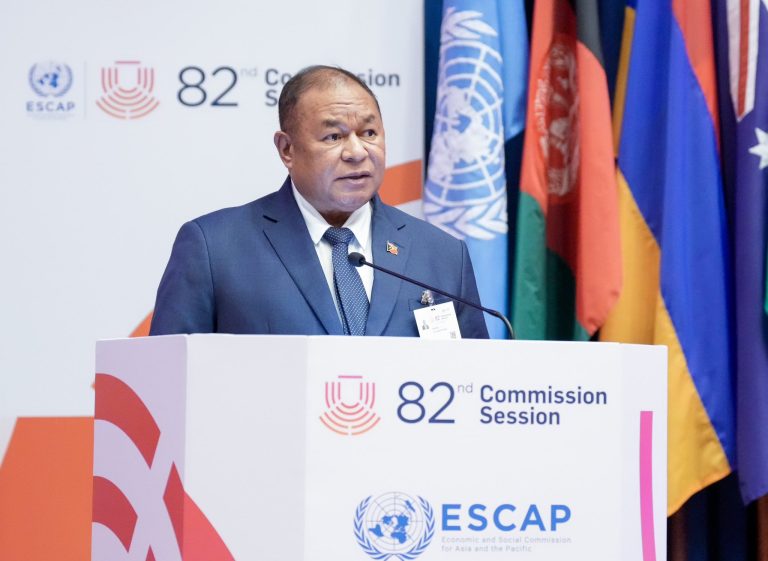
DILI, 21 April 2026 (TATOLI) — Timor-Leste’s Minister of Foreign Affairs and Cooperation, Bendito dos Santos Freitas, took part in the opening of the 82nd session of the United Nations Economic and Social Commission for Asia and the Pacific (ESCAP), held from 20 to 24 April at the United Nations Conference Centre in Bangkok.
The session was officially opened by Thailand’s Prime Minister, Anutin Charnvirakul, and co-hosted by the governments of Azerbaijan and Thailand. It is chaired by Jeyhun Bayramov.
The annual gathering brought together ministers from across Asia and the Pacific and other key stakeholders to exchange views on opportunities and solutions for a sustainable future.
Held under the theme “Leaving No One Behind: Advancing a Society for All Ages in Asia and the Pacific,” this year’s session provided a platform to discuss current and emerging demographic trends and socioeconomic priorities, including decent work, full and productive employment across age groups, healthy and active ageing, women’s economic empowerment, the future of care and overall social integration.
According to ESCAP, Asia and the Pacific, home to more than 60 per cent of the world’s population, is undergoing a profound demographic transition. Some countries are experiencing rapid population ageing, while others continue to have large youth populations. This transformation poses a critical policy challenge: how to create decent jobs, enhance labour productivity, and build cohesive and inclusive societies amid demographic shifts and the megatrends of climate change, urbanization, digitalization and artificial intelligence.
“Ensuring that no one is left behind requires rethinking economic and social systems so that people of all ages can contribute to and benefit from sustainable development,” ESCAP said in a statement. “This entails strengthening intergenerational equity, expanding lifelong learning and reskilling opportunities, and supporting women’s full and decent participation in the labour market, including through investments in the care economy as a public good. Promoting healthy and active ageing and age-friendly workplaces will also be central to achieving a society for all ages.”
Addressing the plenary under Agenda Item 2 on “Opportunities and Solutions for a Sustainable Future,” Freitas reaffirmed Timor-Leste’s commitment to building a sustainable, inclusive, and resilient future.
Minister Freitas highlighted Timor-Leste’s dual vulnerability as both a Small Island Developing State and a Least Developed Country, stressing the importance of stronger regional cooperation, accessible climate and development finance, digital transformation, and sustained investment in youth and human capital.
The Minister also underscored that Timor-Leste’s membership in ASEAN and its Chairmanship of the LDC Group on Climate Change 2026–2027 reinforce the country’s commitment to regional solidarity, climate leadership, and the achievement of the Sustainable Development Goals.
TATOLI