


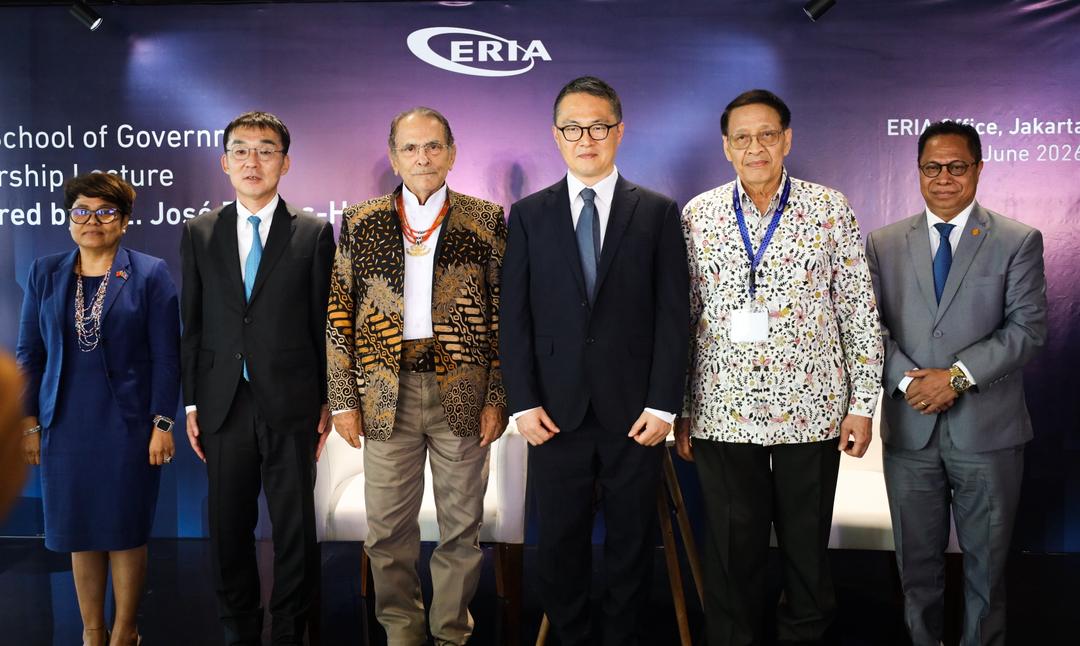
DILI, 02 June 2026 (TATOLI) – Following his participation in the Shangri-La Dialogue in Singapore, the President of the Republic, Jose Ramos-Horta, traveled to Jakarta, Indonesia, to deliver a keynote lecture at the ERIA School of Government on June 2, 2026.
Invited as the guest speaker of honor for the fourth edition of the prestigious Leadership Lecture Series, the Head of State participated in a high-level forum promoted by the Economic Research Institute for ASEAN and East Asia (ERIA).
The initiative brought together regional leaders, policymakers, academics, and experts with the aim of fostering strategic thinking, strengthening governance, and deepening cooperation in Southeast Asia.
Under the theme “Leadership in Dangerous Times: Human Rights, Nation-Building, and Regional Diplomacy,” President Ramos-Horta shared reflections on Timor-Leste’s historic struggle for independence and his vast experience in international conflict mediation and resolution.
During the lecture and the subsequent dialogue session, moderated by Professor Nobuhiro Aizawa, Dean of the ERIA School of Government, the President highlighted the importance of leadership based on principles, strategic vision, and resilience to face the challenges of the current international context. He also underlined Timor-Leste’s ongoing commitment to regional integration and the progress achieved in the process of full accession to the Association of Southeast Asian Nations (ASEAN).
The session was opened by the President of ERIA, Tetsuya Watanabe, and Professor Aizawa. The event is part of a series of conferences that, over the years, has featured the participation of former Heads of State and Government from Indonesia, Cambodia, and Thailand.
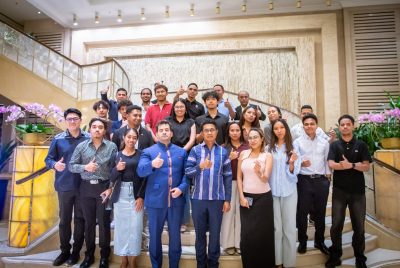
At the conclusion of his participation, President Ramos-Horta signed the ERIA Wall of Fame, took part in a commemorative photo session, and attended a luncheon reception with the guests.
The visit reaffirms the commitment of the Presidency of the Republic to share Timor-Leste’s unique experience in the state-building process, simultaneously contributing to the regional debate on leadership, governance, and the future of diplomacy in Southeast Asia.
TATOLI