


ASEAN, Japan reaffirm strategic partnership, pledge stronger cooperation on regional security and economic resilience
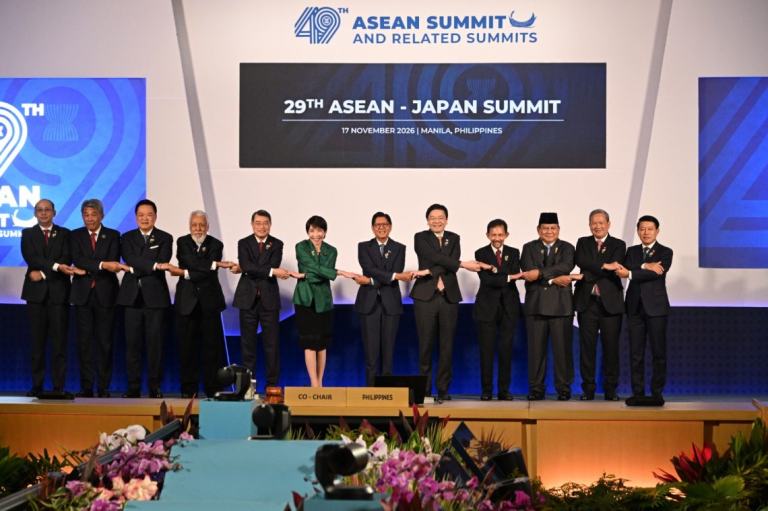
DÍLI, 17 November 2026 (TATOLI) – ASEAN and Japan have reaffirmed their strategic partnership, pledging to strengthen cooperation in regional security, economic resilience, technological innovation, energy and food security, and sustainable development.
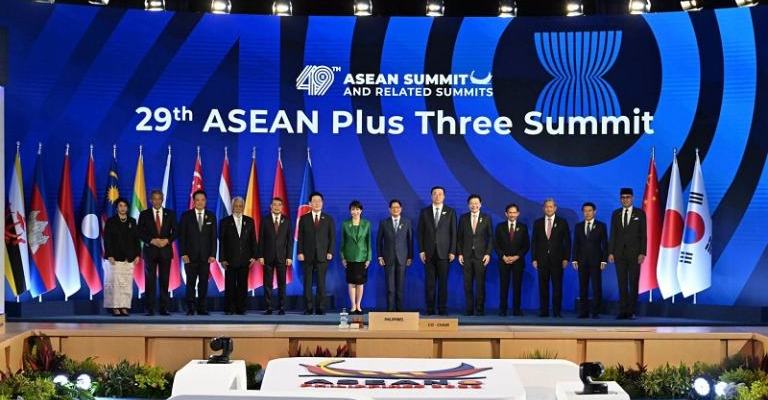
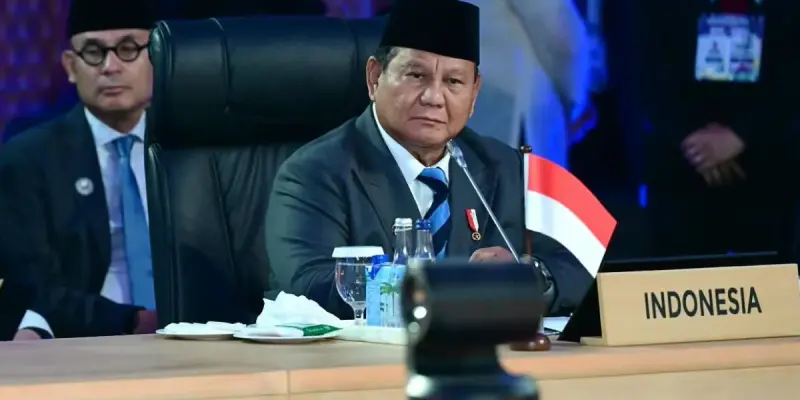
The commitment was reaffirmed at the 29th ASEAN-Japan Summit in Manila, attended by Japanese Prime Minister Sanae Takaichi, Secretary-General of ASEAN, Dr. Kao Kim Hourn, and ASEAN leaders, including Timor-Leste Prime Minister Kay Rala Xanana Gusmão.
In his opening remarks, Philippine President Ferdinand R. Marcos Jr. highlighted Japan’s support for ASEAN centrality and the ASEAN Outlook on the Indo-Pacific, underscoring their shared commitment to regional peace and stability.
He also emphasized cooperation in defence, combating transnational crime, online scams and cyber threats, including through the ASEAN Defence Ministers’ Meeting-Plus and the Japan-ASEAN Ministerial Initiative for Enhanced Defence Cooperation.
On economic cooperation, Marcos highlighted efforts to deepen regional integration through the Regional Comprehensive Economic Partnership (RCEP) and the ASEAN-Japan Comprehensive Economic Partnership Agreement, including discussions on a possible upgrade.
He also welcomed initiatives to promote economic co-creation, artificial intelligence, energy and resource security, including the ASEAN Power Grid and Japan-backed regional energy cooperation programmes.
The two sides also reaffirmed their commitment to food security through initiatives such as the ASEAN Plus Three Emergency Rice Reserve (APTERR) and the MIDORI Corporation Plan.
People-to-people exchanges remain another key pillar of the partnership, with programmes such as the Japan-East Asia Network of Exchange for Students and Youth, the Ship for Southeast Asian and Japanese Youth Program, WA Project 2.0 and the Sakura Science Exchange Program helping strengthen ties among younger generations.
Japan’s support for the ASEAN Centre for Public Health Emergencies and Emerging Diseases and the ASEAN Coordinating Centre for Humanitarian Assistance on Disaster Management also contributes to strengthening regional health security and disaster resilience.
Japanese Prime Minister Sanae Takaichi said Japan would take a greater role in upholding an international order grounded in freedom, openness, diversity, inclusiveness and the rule of law, amid rising geopolitical tensions and global uncertainty.
She stressed the importance of securing supply chains, particularly for critical minerals, while mitigating risks from export restrictions and emerging challenges linked to rapid AI development.
Takaichi identified three key areas for strengthening Japan-ASEAN cooperation: maritime security and combating organized scams, advancing AI and digital connectivity, and promoting disaster preparedness, youth exchanges and scientific and technological innovation.
Takaichi pledged Japan’s support for strengthening the participating countries’ “resilience” to advance regional peace and sustainable development, saying that “Amid trans-boundary challenges, Japan will support each country to work together to enhance their freedom to decide for themselves.”
TATOLI