


ASEAN Plus Three leaders pledge stronger regional cooperation amid global economic uncertainty
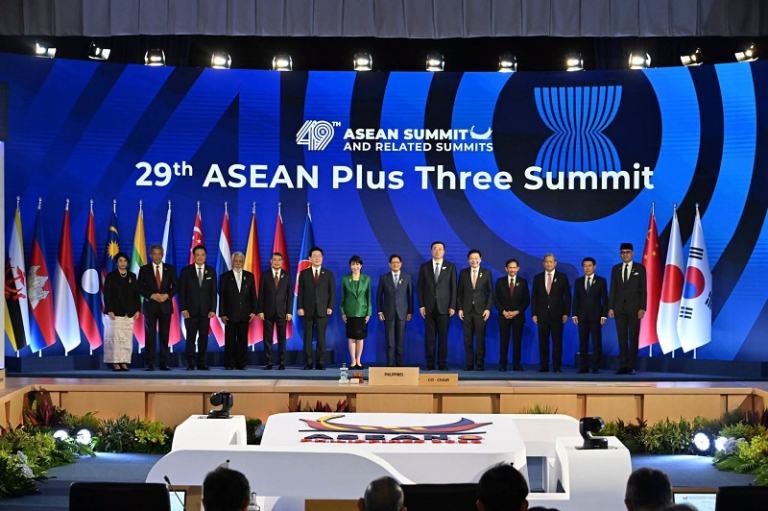
DÍLI, 17 November 2026 (TATOLI) – Leaders of the Association of Southeast Asian Nations (ASEAN), together with China, Japan and South Korea, have reaffirmed their commitment to strengthening regional cooperation to address global economic challenges, safeguard food and energy security, and promote stability and prosperity across East and Southeast Asia.
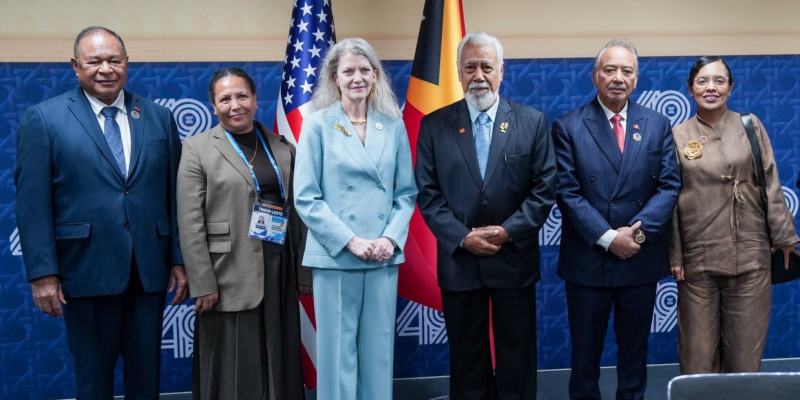
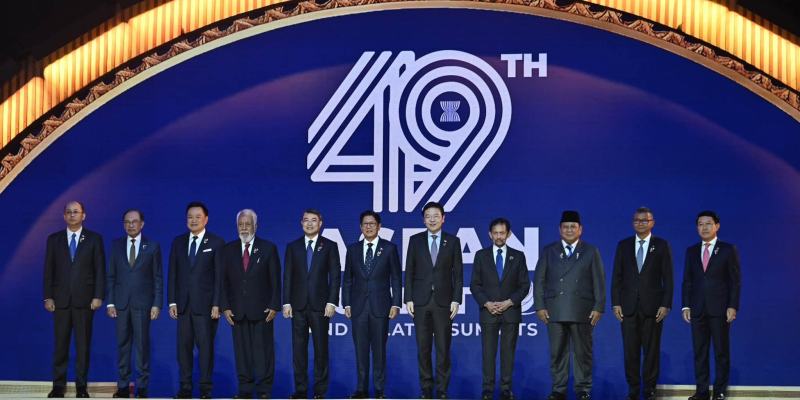
The commitment was underscored at the 29th ASEAN Plus Three (APT) Summit, held in Manila, the Philippines, on Tuesday. Timor-Leste Prime Minister Kay Rala Xanana Gusmão joined other ASEAN leaders and representatives of the three partner countries at the meeting.
Opening the summit, Philippine President Ferdinand “Bongbong” Marcos Jr., who currently chairs ASEAN, warned that disruptions in the global economy were having a direct impact on people’s livelihoods, particularly through rising food and energy prices and declining household incomes.
He stressed that regional cooperation must deliver tangible benefits to ordinary citizens, noting that international economic crises are increasingly affecting the daily lives of families across the region.
Established in 1997, the APT framework has played an important role in strengthening regional economic resilience through closer integration of markets, industries, technology and investment, Marcos said.
He highlighted the Chiang Mai Initiative Multilateralisation (CMIM) and the ASEAN Plus Three Emergency Rice Reserve (APTERR) as key mechanisms for maintaining financial stability and ensuring food supplies during times of crisis.
Against a backdrop of geopolitical conflicts, supply chain disruptions, financial uncertainty and natural disasters, Marcos called for stronger regional coordination to protect food and energy security, maintain economic continuity and shield households from external shocks.
“A disruption thousands of miles away can reach households across East and Southeast Asia through the price of rice, the cost of energy, or the loss of a day’s income,” said Marcos. “Our peoples feel the effects of the global economy in palpable and immediate ways. The benefits of regional cooperation, in turn, should be just as tangible and reach our peoples with the same urgency.”
Japanese Prime Minister Sanae Takaichi also emphasised the importance of the APT framework in strengthening countries’ collective capacity to respond to shared challenges while safeguarding each nation’s right to determine its own future.
She proposed updating the APT Cooperation Work Plan and reaffirmed Japan’s commitment to expanding cooperation with Indo-Pacific countries, particularly in finance, security, disaster response and pandemic preparedness.
Takaichi also reiterated Japan’s support for ASEAN centrality and unity, calling for closer cooperation among ASEAN, China, Japan and South Korea, including through the implementation of the ASEAN Outlook on the Indo-Pacific (AOIP).
South Korean President Lee Jae-myung recalled that the APT framework was established in 1997 in response to the Asian financial crisis and had since developed into an important platform for regional cooperation and resilience.
He highlighted the first APT Summit, held in Manila in 1999, as a milestone in institutionalising regional cooperation, including the development of the trilateral dialogue mechanism involving South Korea, China and Japan.
Lee said the APT experience demonstrated that countries with different historical backgrounds and levels of economic development could overcome common challenges through dialogue, mutual understanding and cooperation.
He noted that 2027 would mark the 30th anniversary of the APT framework, providing an opportunity for participating countries to assess its achievements and establish strategic priorities for the next three decades.
Representing China, Minister of Agriculture and Rural Affairs Sun Xu warned that the international environment was becoming increasingly uncertain due to geopolitical tensions, slowing economic growth and mounting global risks.
Despite East Asia’s economic progress, he acknowledged that the region continued to face significant challenges in ensuring food security and maintaining stable energy supplies.
Sun highlighted the Regional Comprehensive Economic Partnership (RCEP), the Chiang Mai Initiative Multilateralisation and the ASEAN Plus Three Emergency Rice Reserve as practical examples of how regional solidarity and cooperation could help countries manage shared challenges.
He called on participating countries to strengthen mutual trust, shared responsibility and regional coordination, cautioning against geopolitical calculations that could undermine regional stability.
Sun stressed that solidarity remained essential to managing common risks, deepening regional integration and expanding cooperation across different sectors.
TATOLI