


Indonesia’s Leadership Transition: Governance, Democracy and Regional Implications

By: Felisberto de Carvalho and D. Babo Soares*
The resignation of Indonesia’s Vice-President, Gibran Rakabuming Raka, represents one of the most significant political developments in the country’s recent democratic history. The event has attracted considerable attention, both domestically and across Southeast Asia, not only because of the controversies that preceded it but also because of its implications for governance, political stability, and the future direction of Indonesia’s leadership.
Fundamentally, this resignation reflects the reality that debates over political legitimacy, legal interpretation, and public confidence in state institutions frequently test modern democracies. In Indonesia, questions surrounding Gibran’s eligibility to stand for office evolved from a legal controversy into a broader political debate, involving judicial proceedings, parliamentary scrutiny and civil society participation. Despite the differing perspectives that have emerged, these developments show that constitutional mechanisms remain the principal means of addressing political disagreements.
For President Prabowo Subianto, the resignation marks the beginning of a challenging transitional period. The Vice-President’s office plays an important role in Indonesia’s constitutional system, both in supporting the President and in contributing to the balance of the country’s political architecture. Although the machinery of government will continue to function, the temporary vacancy in this position inevitably places additional political and administrative responsibilities on the President until the constitutional process for appointing a successor is complete.
This development is also significant because it concerns a political figure widely regarded as representing a new generation of Indonesian leadership. Before becoming Vice-President, Gibran established himself as an entrepreneur and regional leader before progressing to national politics. His emergence on the national political stage was perceived by some as a symbol of generational renewal, particularly against the backdrop of increasing participation by younger generations in Indonesia’s political life.
At the same time, his political career has generated broader discussions about political dynasties, meritocracy and the influence of family connections within democratic systems. Such debates are by no means unique to Indonesia. Many democracies face similar questions concerning the relationship between political popularity, family networks, governing experience and electoral legitimacy. In this context, the controversy surrounding Gibran reflects a much wider debate about the future of modern democracy.
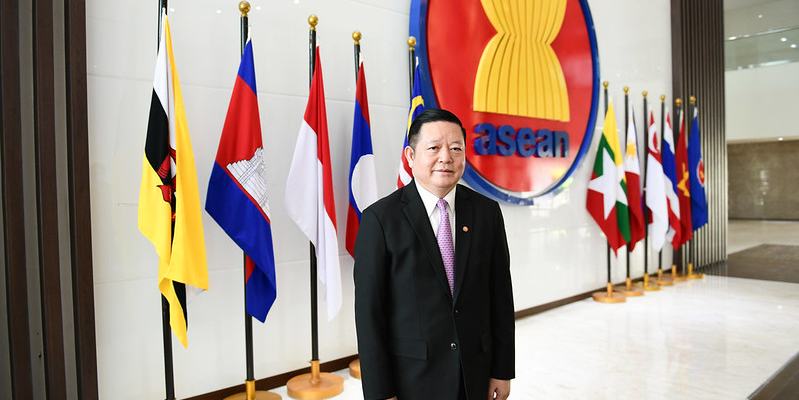
From a regional perspective, the most important aspect of this resignation is not the political fate of any single individual, but rather how Indonesia manages the transition. As Southeast Asia’s largest economy, a central member of ASEAN, and one of the world’s largest Muslim-majority democracies, Indonesia’s political stability has consequences that extend well beyond its national borders. International partners, investors and neighbouring countries all have a substantial interest in Indonesia’s continued stability and sustained development.
For Timor-Leste, these developments are particularly significant. Indonesia is its closest neighbour and one of its most important partners in economic relations, trade, connectivity and regional cooperation. Relations between the two countries have evolved positively and constructively over the past two decades, characterised by increasingly close dialogue and mutual respect. Political developments in Indonesia therefore naturally attract the attention of both the public and policymakers in Timor-Leste.
From this perspective, the central question is not whether a particular political figure succeeds in retaining or loses public office. What matters more is whether democratic institutions remain strong, credible and capable of maintaining public confidence. In this regard, the ongoing process suggests that Indonesia remains committed to addressing political challenges through legal and constitutional channels.
At the same time, it would be premature to draw definitive conclusions about Gibran Rakabuming Raka’s political future. In many democratic systems, political careers rarely follow a straightforward trajectory. History shows that political setbacks can create opportunities for reflection, learning, and even political resurgence. Given his relatively young age and the experience he has acquired at both local and national levels, the possibility of Gibran playing a role in Indonesia’s future political landscape cannot be ruled out.
More importantly, Indonesia’s immediate priority must be to ensure the continuity of its national development agenda. Economic growth, job creation, poverty reduction, stronger investment and improvements in public welfare will remain the principal measures of the government’s success. Compared with short-term political developments, these priorities have far greater consequences for the everyday lives of the Indonesian people.
For Timor-Leste, the hope is simple but sincere: that Indonesia will navigate this period of transition peacefully, strengthen public confidence in its democratic institutions and continue its journey towards greater progress and prosperity. A stable, democratic and prosperous Indonesia is important not only for the Indonesian people themselves but also as a strategic asset for peace, cooperation and development throughout Southeast Asia.
Ultimately, the historical significance of this development will not be determined by a single letter of resignation. Rather, it will be judged by Indonesia’s institutions’ ability to manage the transition wisely, while ensuring that democracy and national development continue to advance together towards a stronger, more inclusive future.
*This article expresses the personal opinions of the authors and does not constitute an official position, nor does it represent any institution. The authors are lecturers at the National University of Timor-Leste (UNTL). This opinion article draws upon various publicly available reports concerning the resignation of Indonesia’s Vice President, Gibran Rakabuming Raka, and the accompanying legal and political debates.