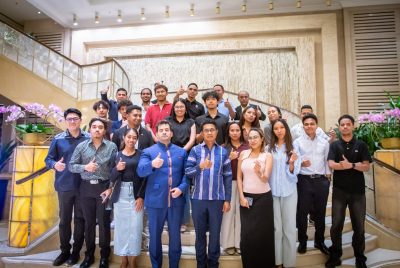



DILI, 18 may 2022 (TATOLI) – Women and girls deserve to live without violence in ‘safety, dignity, and freedom’ but, many Timorese women and girls are still struggling to be free from violence in Timor-Leste, revealed the participatory action research, jointly conducted by 22 NGOs, known as ‘The Learning Consortium’ in 21 Sucos, across 10 municipalities, in Timor-Leste.
Twenty years on from the restoration of independence, the promise of equality and freedom for Timorese women and girls hasn’t been addressed as many women and girls in Timor-Leste are still facing an epidemic of violence. While the levels of violence are among the highest in the world, this epidemic is largely silent and invisible.
The participatory action research conducted by ‘The Learning Consortium’, which is made up of 22 NGOs, was established in february 2021, with the aim of strengthening learning for behavioral change, creating policies, and transforming culture to end gender-based violence in Timor-Leste.
The survey identified 10 core key findings which are important to be considered in the policies and programs of the Government as well as in the programs of the NGOs, development partners, and humanitarian agencies to address all forms of violence against women and girls in the country.
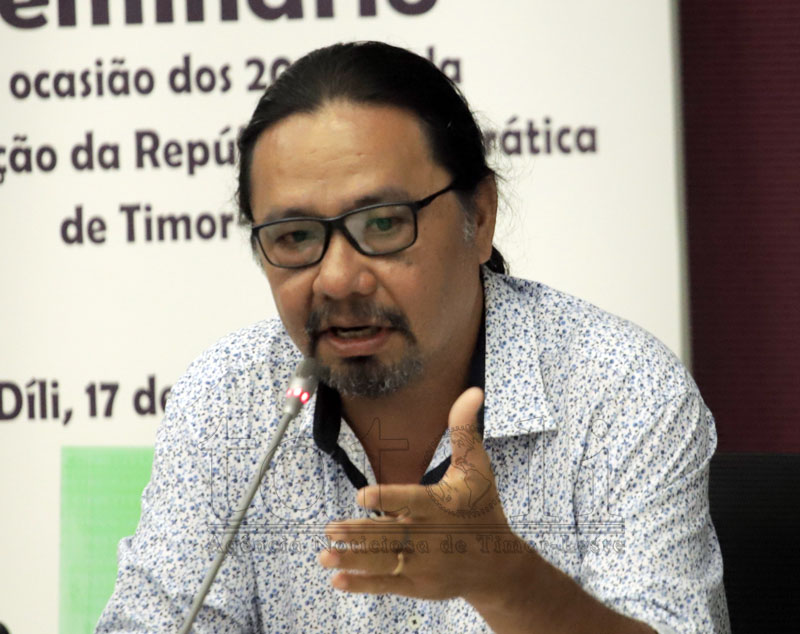
The Director of Asia Justice and Rights (AJAR), José Luís Oliveira said the findings were based on Suco workshops across 10 municipalities: “With 21 workshops, we heard from 754 people: 393 women and 361 men. This was supplemented by 51 interviews across the 21 Sucos, and 10 national-level interviews. Through this process, we were able to listen to the voices of women survivors of conflict-era and contemporary violence, Chefe Sucos, members of Suco Councils including Chefe Aldeias, Lia Na’in, and women activists, including youth. Looking at the overall snapshot of the situation of gender-based violence.
The 10 core key findings:
Finding 1: Continuing stigma and exclusion of victims of historic gender-based violence during the Indonesian occupation, heavily impacts the lives of survivors and their families until today.
Many women survivors and their children continue to struggle to restore their lives. The repeated patterns of not holding perpetrators to account contribute to a culture of impunity for violence against women and girls.
Suco discussions reflected on the harsh violence targeted at women and girls under each period of colonial rule and military occupation in Timorese history. Participants spoke of their own and community members’ experiences during the Indonesian military occupation, as well as village elders’ recounting experiences under Portuguese and Japanese occupation. Sexual violence, including sexual slavery, was a common thread across the eras. Agents of the state perpetrated sexual violence with complete impunity, and this impunity gave men more freedom to continue perpetrating sexual violence.
Finding 2: Entrenched impunity for historical and new cases of gender-based violence is a contributing factor to high levels of violence in different forms, taking place mainly in the family setting.
Across all Sucos, it was found that physical violence focused on husbands beating wives. Beating of children by both parents for routine disciplinary reasons was also reported. A number of Sucos spoke of homicide against women, though whether in situations of domestic or other violence was not always clear. At least one Suco identified a case of a husband killing his wife and child.
Sexual violence (harassment, assault, and rape) by non-family members was reported by many Sucos, commonly perpetrated by young men. In addition, most Suco discussions spoke of the stigma targeted at women who come forward about violence, especially sexual violence, and the effect this has on their mental health. More than one Suco workshop spoke of cases of young single mothers suiciding after giving birth, in part due to heavy social stigma against them. A number of Sucos also spoke of the toll on the mental health of being trapped living in constant fear of domestic violence, for example by husbands when they were drunk.
Finding 3: Root causes are deeply entrenched, especially in more remote rural communities isolated from information and services.
Workshop participants identified a range of root structural, economic, social, and cultural factors. Especially in more remote rural communities, participants highlighted the strong influence of these factors, as well as the absence of access to counter-factors, which would lead to change, such as access to information about the concept of gender equality and government laws, programs, and services.
Across all Sucos, participants identified inequality arising from a mix of factors, which they said give women and girls low status in the family, and in public life. They said that men dominating women is a key factor behind the violence. All Sucos discussed the strong mix of traditional conservative patriarchal values, along with lisan customary law and practices maintained by male leaders.
Participants identified a range of daily, practical restrictions on women and girls, which signified the lack of equality in village life, for example, barriers to women taking place in the family and public decision-making, riding motorbikes or driving cars, walking in public areas at night, being required to eat only after the men and boys had eaten, and standing for public offices like Chefe Suco or Aldeia.
Finding 4: Despite the strong social and economic impact of violence, reverberating in the community, the issue remains invisible to national decision-makers due to poor reporting.
Impacts, identified by Suco workshop participants:
Physical injuries to women and girls, even death. Mental health, living under constant threat and fear of physical violence; stigma and exclusion by family and community if a victim does come forward due to a culture of blaming women victims; as well as stigma against children of victims of sexual violence, or of single mothers. Workshop participants also mentioned a case of suicide by young women after severe victim-shaming and lack of support. Women who leave their violent husbands, or who are abandoned, are left economically extremely vulnerable, with the impact on their children, and vulnerable to future exploitation and violence. Loss of access to education and future opportunities for young women survivors, especially if they become pregnant from sexual assault.
Invisibility and silence:
Much of this violence does not appear in the data and reports routinely delivered to national decision-makers. These reports are typically based on data collected from police reports, which make up a small fraction of cases of violence against women and girls. From the Suco workshops, participants highlighted:
Most women and girls do not report violence to anyone, and those who tell someone, usually tell a family member. These cases are not recorded anywhere. In cases of incest against girls with intellectual disabilities, families often hide the violence out of a sense of shame. When a woman or girl does seek assistance outside the family, the first level of case management and support is usually by the Chefe Aldeia or Suco, often initially mediating between family members, perhaps with the assistance of the Lia Na’in. Chefes do Suco do not officially record cases managed in this way and, therefore, they are not included in municipal or national data.
Finding 5: Although there is progress in the response at the village level to cases of violence against women and girls, Suco-level structures are overwhelmed and under-resourced.
Suco workshops overwhelmingly stated that most women and girls who experience violence remain silent. There were multiple interconnected factors identified behind this, including:
Normalization of “light” violence, especially in a domestic setting. Fear of facing worse violence if they speak up. Pressure from families to keep matters in the family – “for the good of the family name” – or between families. Internalized shame and fear of stigma, especially relating to sexual violence, including taboos like incest. Economic dependency on the perpetrator and his family. Fear of her marriage breaking up, including needing to support her children.
Finding 6: Customary justice still plays a major role in cases of public crimes of violence against women and girls, especially in rural areas.
Every Suco workshop discussed the role of lisan and the customary justice process. Discussions highlighted the diversity in lisan according to different ethnic groups across the country, as well as differences between communities in terms of whether lisan had adapted or changed in modern times. There were two specific issues raised:
First, the lisan practice of barlake was discussed in many workshops, and largely identified as a root cause of exploitation and violence against women and girls by husbands and their families.
Second, workshops discussed the issue of how the customary justice system was used to adjudicate or mediate on matters of violence against women and girls. In general, workshop participants identified that customary processes are commonly used when cases are made public by women survivors. In many workshops, customary justice processes were discussed as a first step (after entirely internal family efforts), and if this process could not achieve a satisfactory result, then the matter was reported to the police. Sometimes, the customary process occurred in parallel with simultaneous reporting to the police.
Finding 7: Predominantly male gate-keepers are part of the substantial obstacles to preventing and addressing violence against women and girls in villages.
There are several obstacles that prevent the ending of violence against women and girls in villages. Many of the root causes of inequality and discrimination, which foster violence against women and girls, have a stronger foothold in rural communities than in urban areas where there is more access to modernizing influences, such as information and access to support services. Overall, workshop participants identified male dominance and low status of women and girls as the root cause, which is cemented in traditional patriarchal values in the home and public decision-making, as well as customary practices such as barlake, child marriage, and male[1]lineage inheritance.
Finding 8: Despite this bleak picture, there are positive initiatives being developed and implemented at the Suco-level.
Participants and interviewees spoke of positive changes in their communities in many instances, as well as the ongoing challenges. In general, the communities that highlighted positive initiatives were those with more access to information and services from government and civil society; remote rural communities spoke of their isolation from these potential drivers of change.
Villages identified positive initiatives which addressed the root causes of gender inequality and violence, including social attitudes, values, and customs. For example, some villages highlighted that in their communities they had achieved a shift away from harmful traditional practices, including barlake and male-lineage inheritance. Better access to education for girls was cited by a number of Sucos, including parents changing their attitudes about girls’ education. A number of Sucos highlighted the important changes starting to be seen with women members of the Suco Council playing a role in public decision-making including supporting work on violence against women and girls.
Finding 9: There need to be special innovative efforts to combat cultural and legal impunity on violence against women at grassroots and societal-levels.
Through the Suco workshops and interviews, two forms of impunity for violence against women and girls became apparent: impunity through the lack of official justice and impunity through a range of cultural beliefs and practices which shield male perpetrators of violence from being held to account. The factors making up cultural impunity often contributed to a lack of action to seek justice through the legal system.
Finding 10: There is an important potential for empowering survivors, modeling non-violent behavior, reporting and referrals at the Suco-level. Many Suco Councils are not clear on their mandate and competency to be involved in social program work like promotion of gender equality, prevention of domestic violence, and support for survivors 37 of domestic violence. Innovative programming and long-term resources must be enabled to bring services and prevention down to the Suco-Level.
In many workshops, Council members demonstrated confusion as to the functions of the Council in terms of competencies beyond implementing projects under the National Suco Development Program (PNDS), managed by the Ministry of State Administration, which focus on small-scale physical infrastructure projects. This confusion seems, at least in some places, to be shared by municipal administrations and NGO workers. A common recommendation from the Suco workshops was that PNDS should fund non-infrastructure projects so that Suco Councils could support social development programs related to gender equality and reducing violence against women and girls. But this may or may not be the most effective way Suco Councils can work to support gender equality and prevent and address violence against women and girls.
Recommendations to address gender-based violence in the coming years
Based on these core fundings, ‘The Learning Consortium’ recommended a number of important points to be considered for addressing violence against women and girls in Timor-Leste.
To the Government:
Prioritize resources to support members of Rede Referral at the municipal level, allocating more resources to services, such as Uma Mahon, that work to protect survivors in villages, and innovative work to transform men’s attitudes toward gender relations.
Advocate for a comprehensive nationwide training program for Chefe Suco, Chefe Aldeia, members of Suco Councils, and lia na’in, on addressing gender-based violence, working with civil society to develop innovative responses.
Increase resources (officers, transport, communications equipment, and facilities) to OPS and VPU in rural and remote areas.
Protect the rights of women and girls victims of violence at the village level when they bring matters to local authorities.
Pass legislation to introduce a comprehensive definition of discrimination against women, that includes direct and indirect discrimination, as well as discrimination in the public and private spheres, by State and non-State actors.
To the National Parliament:
Require more detailed and gender-segregated data on gender-based violence gathered by PNTL, all key line ministries, agencies, and civil society organizations. Engage actively in the socialization of the new NAP GBV in rural and remote areas. Ensure that any laws related to harmonizing customary laws with the formal legal system are in full compliance with constitutional and international legal obligations to protect the equal rights of women and girls.
To the Catholic Church:
Utilize the outreach of the Church to rural and urban communities to communicate a sustained public stance against violence against women and girls, especially violence in the family setting. Accept and communicate a rights-based approach to sexual and reproductive health and education.
To Timor-Leste’s NGOs and civil society organizations:
Introduce a nationwide paralegal support system with para-legal officers, to increase women survivors’ access to the formal legal system in municipal towns and rural communities. Focus programs related to gender-based violence to provide support to municipal and rural communities where services are most scarce.
To Timorese media, including social media companies:
Support and collaborate in national campaigns related to promoting gender equality, and ending violence against women and girls. Promote the leadership of women in all aspects of media work, including public-facing roles, and management.
To international civil society organizations, United Nations agencies, and donors and development partners:
Continue supporting government and national civil society in implementing plans and strategies to end violence against women and girls. Advocate and provide technical assistance to the government to address data gaps in relation to marginalized groups, such as LGBTQI+ people, and people with disabilities. Provide more technical assistance to address weaknesses in monitoring and evaluating strategies and plans. Assist the government to address the major issue of poor data collection in relation to gender-based violence.
The result of this research was said to be published within the month of may, as a reflection of the 20th anniversary of the restoration of Independence Day.
Learning Consortium Members include Asia Justice and Rights (AJAR), Asistensia Legal ba Feto no Labarik (ALFeLa), Asosiasaun Chega! Ba Ita (ACBIt), Asosiasaun Unidade Feto ba Dezenvolvimentu (AUFD), Centro Comunidade Covalima (CCC), Coalition on Diversity and Action (CODIVA), Forum Komunikasaun Ba Feto Timor Lorosa’e (FOKUPERS), Fundasaun Moris Foun (FMF), Hametin Asaun Dezenvolvimentu no Ekonomia Rural (HADEER), Hametin Demokrasia no Igualidade (HDI), Institutu Mata-Dalan Integradu (IMI), Knua Haberan Comunidade (KHC), Mane Ho Visaun Foun (MHVF), Movimento Feto Foinsae Timor-Leste (MOFFE), NGO Forum Timor- Leste (FONGTiL), Organizasaun Haburas Moris (OHM), Psychosocial Recovery and Development in East Timor (PRADET), Raes Hadomi Timor Oan (RHTO), Rede Feto, Rural Youth Action (RYA) & Seloi Horticultura Produsaun.
Journalist: Filomeno Martins
Editor: Nelia Borges Rosario