


DILI, 28 july 2022 (TATOLI) – World Health Organization (WHO) in Timor-Leste pledged to continue to work closely with the Ministry of Health to combat and eradicate hepatitis in Timor-Leste.
WHO Representative to Timor-Leste, Arvind Mathur said WHO has been working closely with the Ministry of Health on developing Timor-Leste’s Integrated Strategic Plan for HIV, Hepatitis, and Sexually Transmitted Infection (STI), establishing a Technical Advisory Group of HIV, Hepatitis and STI, carrying out testing and screening of Hepatitis B and hepatitis C, strengthening hepatitis B vaccination program, providing capacity building and training for health workers, offering treatment of hepatitis B, carrying out the procurement of testing kits for hepatitis B and C, and raising awareness amongst young people.
Hepatitis B in Timor-Leste ranges from 3% to 15% of the population, which requires greater investment in prevention, treatment, and management.
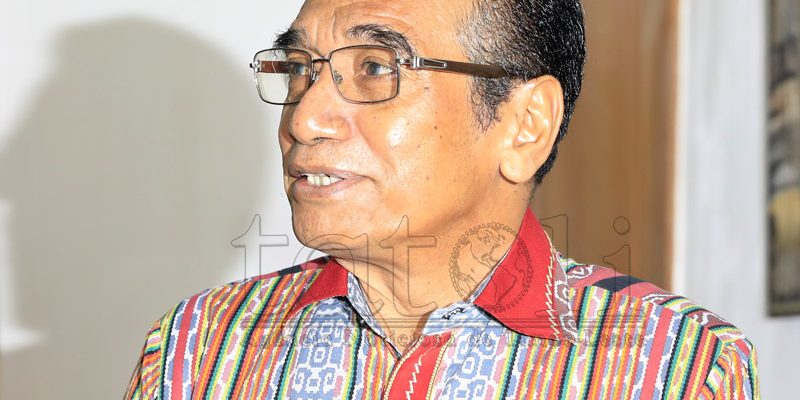
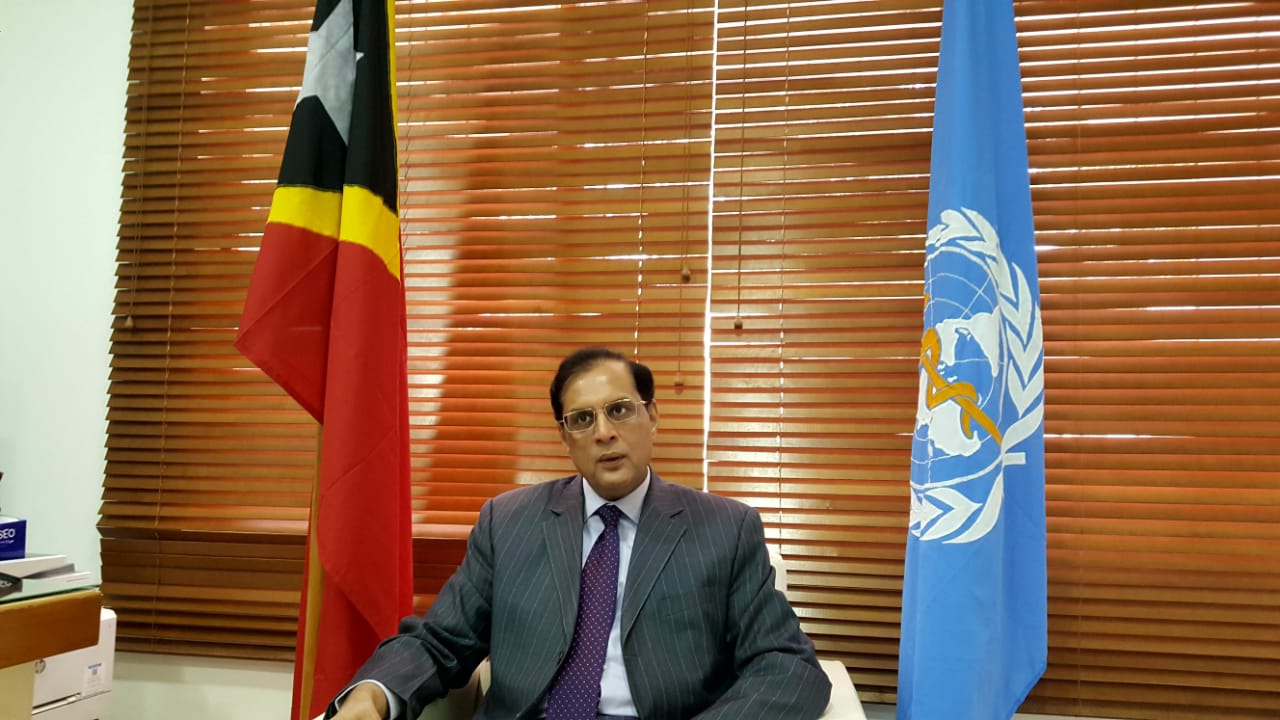
“We as WHO, the technical partner to the Ministry of Health, support the Government, the Ministry of Health, and the people of Timor-Leste to combat and eradicate hepatitis B in this country,” Mathur said at his office, in Dili.
He said as the key technical partner to MoH, WHO supported MoH in developing Timor-Leste’s Integrated Strategic Plan for HIV/AIDS, Hepatitis, and STI, including a Costed Operational Plan for 2022 to 2026.
“This National Strategic Plan is coasted. So, we need to know how much it would cost, what money would it take, and what investment would it take to control and combat this disease in TL. So, we will take this integrated approach forward and put this implementation, not only at the national level but also at the municipality level,” Mathur said.
He said the Integrated Strategic Plan for Hepatitis, HIV, and STI is being developed and will be launched soon.
WHO also supported Timor-Leste with the establishment of the Technical Advisory Group on HIV, Hepatitis, and STI.
“With the advice from WHO, Honorable Minister of Health, Odete Maria Freitas Belo has decided to establish a Technical Advisory Group on HIV, hepatitis, and STI. So, there is a Technical Advisory Group for these three diseases,” Mathur said.
In addition, one of the most important works implemented collaboratively by WHO and MoH was carrying out the testing and screening of Hepatitis B and hepatitis C in the country.
“We are also supporting MOH for testing and screening of Hepatitis B and hepatitis C, particularly amongst the key populations. Testing and screening are equally important so that we know what the burden of this disease is in the country. Thus, it’s extremely important for us to understand the importance of screening and testing,” he said.
Through WHO’s technical assistance, MoH has expanded screening, and testing of hepatitis in the country, including screening during blood donation, pregnancy, and screening at the time when the patients are in the hospital.
Furthermore, WHO has also been working closely with the Ministry of Health in carrying out Hepatitis B Vaccination Program.
Mathur emphasized that strengthening the hepatitis B vaccination program, both in childhood and also amongst the key population is extremely important to combat the disease in the country: “The vaccination of children, infants, and the key population that is affected with HIV and hepatitis is needed.”
“We do have the triple vaccine that has all triple dose that we provide for the hepatitis B vaccination, and at the same time, we do have vaccination introduced for hepatitis B separately as well. So far, we have achieved a very high vaccination coverage amongst the 2202 key populations in the country who are at higher risk,” Mathur stressed.
MoH and WHO had also been working collectively with a focus on capacity building and training.
He said it’s important for Timor-Leste’s health workers and health providers to be fully aware of preventable, treatable, and curable diseases like hepatitis, including building the capacity of the National Health Laboratory (NHL).
Mathur explained that the availability of the treatment for hepatitis B and hepatitis C is a reality in Timor-Leste: “We are now working with MoH to expand the treatment for hepatitis B and C in the country. Fortunately, hepatitis C is not that common in TL. What we generally see is hepatitis B. The treatment for hepatitis B is available both at the national level at the national hospital, but soon it would be available at the regional and the municipality level as well.”
“Not only this, but we have also been strengthening MoH with the procurement of testing kits for hepatitis B and C,” he said.
Mathur added since it’s also a sexually transmitted infection, increasing awareness amongst young people is very important for them to follow preventive measures.
“So, there is a lot of effort that had been put to control, combat, and particularly manage and prevent the hepatitis B in the country. We do not want to end up in a situation where chronic infection of Hepatitis B and hepatitis C result in cancer of the liver,” he concluded.
In his message on World Hepatitis Day, Mathur said hepatitis cannot wait: “On this World Hepatitis Day, I think we would want to highlight that it’s extremely important to bring hepatitis care closest to the people. Hepatitis care and services must be available, affordable, accessible, and closest to the people in Timor-Leste.”
“We are looking forward to acting together with the communities, the civil societies, and with every stakeholder in Timor-Leste so that we can make sure that anyone who is supposed to encounter hepatitis is provided treatment promptly,” he said.
Journalist: Filomeno Martins
Editor: Nelia Borges