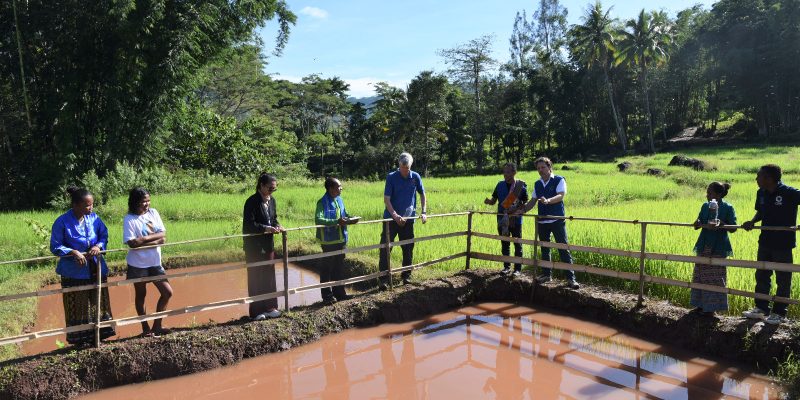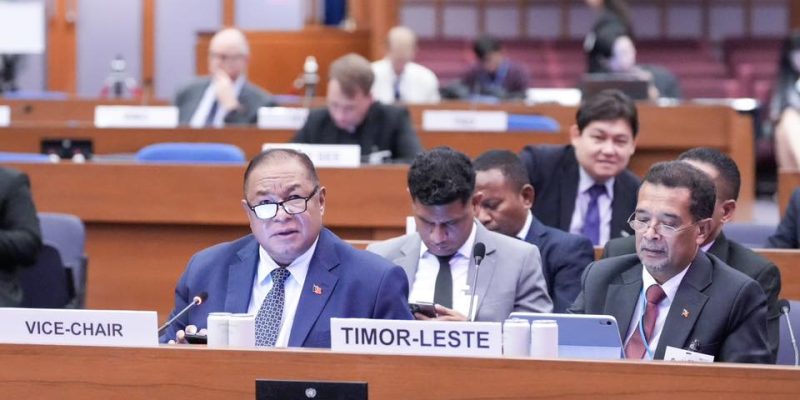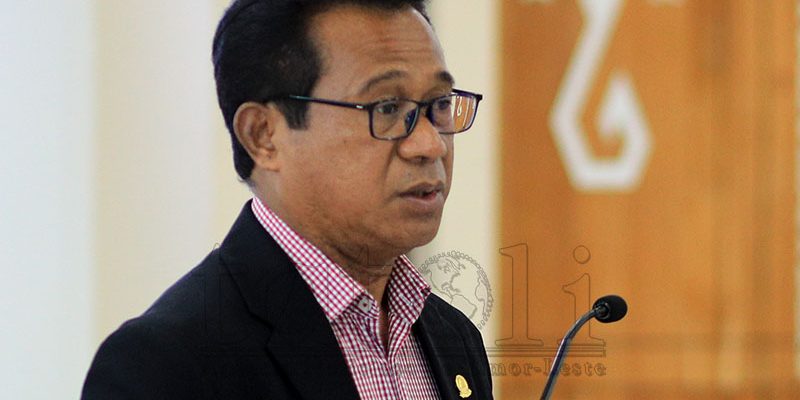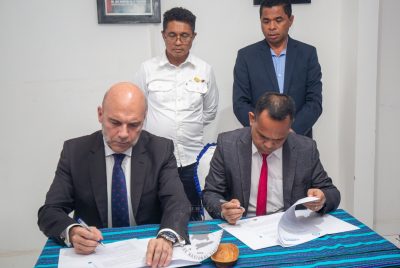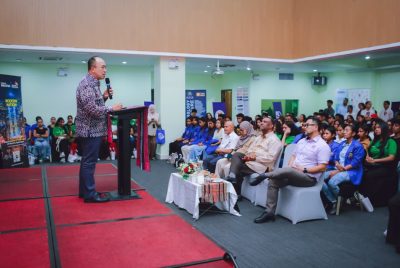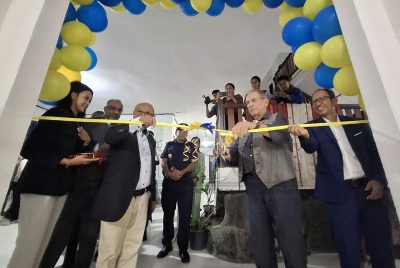




DILI, 23 november 2023 (TATOLI) – The Ministry of Health (MoH), the Ministry of Education (MoE), World Health Organization (WHO), World Food Program (WFP), and the Korea International Cooperation Agency (KOICA) convened for a year-end project steering committee meeting to assess the progress of the “Say No to 5S” project.
The reviewed the project outcomes including the distribution of deworming tablets, provision of fortified rice, status updates on the implementation of the primary health package in schools, and enhancements made to school kitchen facilities, among other related matters.
WFP), in a joint project with the WHO, in partnership with the Government of Timor-Leste, and with a financial contribution of US$7.8 million from the KOICA, is implementing the 5S project to provide healthy and nutritious school meals to children in 400 schools in the municipalities of Bobonaro, Manufahi, and Baucau, with the aim of mitigating the risks of childhood diseases and malnutrition.
The project, to be implemented until 2025, has the motto “Say no to 5S (Starvation, Soil-Transmitted Helminthiasis, Skin disease, Smoking and Sugary/alcoholic drink)”, and aims to provide healthy and nutritious school meals, fortified rice, and improve the conditions and equipment of school meals cooking environment and kitchen. Ten model kitchens will be built in, and equipment will be provided to 400 schools in the three municipalities.
Earlier, Cecilia Garzon, head of WFP in Timor-Leste, expressed “pride in supporting the Ministry of Education, Youth, and Sports in implementing the School Meal Program and improving the health of school-going children in Timor-Leste.”
She also stated that “WFP, with KOICA’s support, provided kitchen equipment for 400 schools across the country, contributing to better nutrition with fortified rice and improving health through Social Behavior Change Communication (SBCC).”
Garzon highlighted that “This Program is a big leap in combatting the twin challenge of food insecurity and malnutrition amongst school aged children in Timor-Leste. We hope this partnership will continue supporting school-age children for good nutrition and food security to reach their full potential.”
In addition to the infrastructural augmentation, through this program, WFP will also support system strengthening to enhance supply chain management, improve monitoring and evaluation systems, introduce fortified rice in school meals, and increase knowledge on healthy diets through social behavior change communication for school-going children.
The Vice-Minister for Institutional Strengthening in Health, José dos Reis Magno, said that the government would continue to work together with development partners to continue implementing the project in 2024.
The Minister of Education, Dulce de Jesus Soares, thanked the development partners for their commitment to keep supporting Timor-Leste, saying that the project is crucial to improving the health of Timorese children.
During the meeting, Arvind Mathur, the WHO Representative also presented the report of the baseline survey to the partners.
This baseline survey was undertaken on behalf of the World Health Organization Timor-Leste country office, which is part of the collaboration supported by the Korea International Cooperation Agency (KOICA) that is planning and implementing a child health and nutritional intervention titled “SAY NO TO in Schools in Timor-Leste.”
The objective of the baseline study was to provide a baseline for impact and outcome/output indicators to serve as a point of comparison for a final evaluation and to inform the Say No to 5S (SN5S) program targeting and design.
The nationally representative baseline survey covering a representative sample of 65 schools, 217 class teachers, and 1966 students was carried out in july 2022
Results of the baseline survey show that the current health-related activities in the schools were largely restricted to immunization and school meal programs. Limited interaction was reported between schools and their surrounding health system, as only a negligible share of schools were reportedly having a health worker available for at least one day a week (3 percent) or having a monthly interaction with community health centers and health posts (6 percent). Less than 20 percent of the schools were in partnership with NGOs and community-based organizations for health promotion in the school.
Journalist: Camilio de Sousa
Editor: Filomeno Martins