


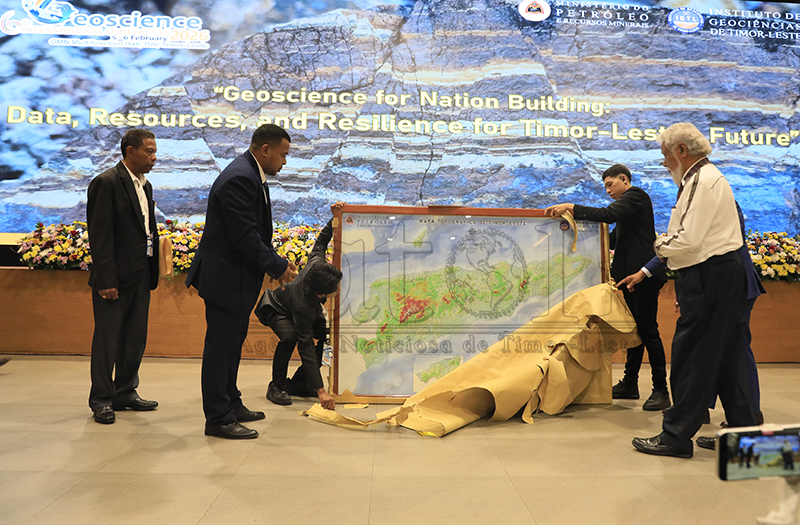
DILI, 05 february 2026 (TATOLI) – Timor-Leste holds the Sixth International Geosciences Conference, bringing together experts from across the globe to examine how earth sciences can support national development and sustainable resource management.
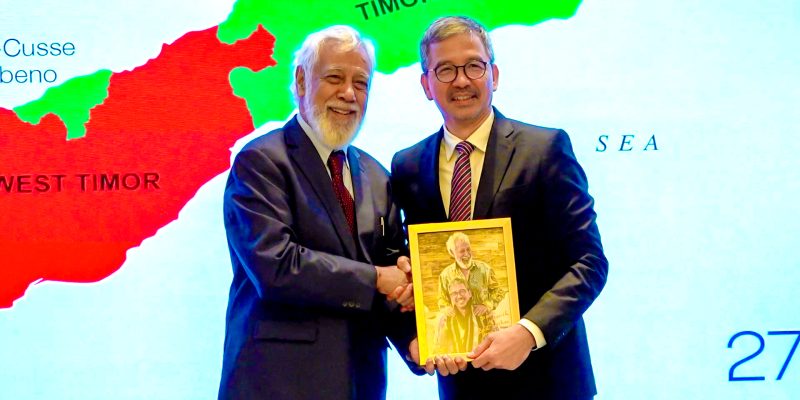
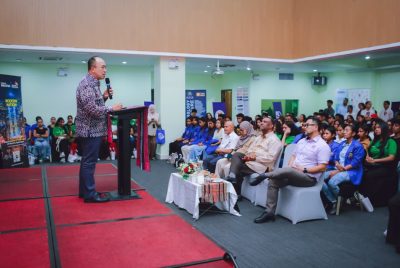
The two-day conference, organised by the Geosciences Institute of Timor-Leste (IGTL), is being held between5–6 February under the theme “Geoscience for National Building: Data, Resources and Resilience for Timor-Leste’s Future”. The event is taking place at the GMN TV Multi-purpose Hall in Dili.
Geoscientists, academics, industry representatives and policymakers from Portuguese-speaking nations and across the Asia-Pacific region attended the event.
Discussions focus on the role of geoscience in national planning, responsible resource management and disaster risk reduction.
IGTL President Job Brites dos Santos described the conference as a significant milestone for both the institute and the country.
“We are united by the same objective, to strengthen the role of science and geoscientific knowledge in building a more resilient, sovereign and sustainable nation,” Brites said in his opening remarks.
Topics include the role of national geological surveys in development, the contribution of geoscience to the economy, governance of mineral and energy resources, energy transition, disaster risk reduction and the transformation of scientific knowledge into public value.
“Science, particularly geoscience, plays a decisive role in territorial planning, protecting communities, responsible investment and evidence-based public policy,” he said.
The Minister of Petroleum and Mineral Resources, Francisco da Costa Monteiro, said the conference was more than an academic gathering.
“It is a strategic space to examine the vital role of geoscience in national development, broaden understanding of the latest trends in data acquisition and use, and discuss best practices in developing and managing natural resources,” he said.
He said that Timor-Leste’s history has been shaped by its geology, particularly its hydrocarbon reserves, which influenced the country’s path from struggle to sovereignty.
“Today, this conference demonstrates our commitment to transforming our geological heritage into a foundation for sustainable development and the well-being of our people,” the minister said.
The first day of the conference featured plenary sessions with Teresa Ponce de Leão (LNEG Portugal) on the role of geological surveys in national development, Américo da Mata Lourenço Victorino (IGEO Angola) on lessons from Angola’s geological survey, and Ma Yongzheng (CCOP) on regional cooperation in geoscience.
A panel discussion included representatives from LNEG, IGEO, SGB, IGTL and the University of Western Australia.
Technical presentations in the afternoon covered topics ranging from geoscience data for oil and gas development and urban hydrogeology to disaster risk mitigation, sustainable groundwater management, geophysics, geological engineering, data governance and real-time seismic monitoring.
The second day is set to open with a keynote by Francisco Valdir Silveira (SGB Brazil) on the role of public geoscience institutions in sustainable development. Other sessions will address land-use planning, mineral resource governance, geothermal potential, metallogenic provinces and responsible mining.
Energy discussions will include oil prospects, reservoir modelling and the contribution of minerals and energy to economic growth.
Journalist: Cidalia Fátima
Editor: Armandina Moniz
Translation: Camilio de Sousa