


DILI, 12 June 2026 (TATOLI) — The government on Friday announced that economic diversification and job creation will form the cornerstone of the 2027 State General Budget, as it seeks to strengthen economic resilience, stimulate sustainable growth, and reduce the country’s long-standing reliance on petroleum revenues.
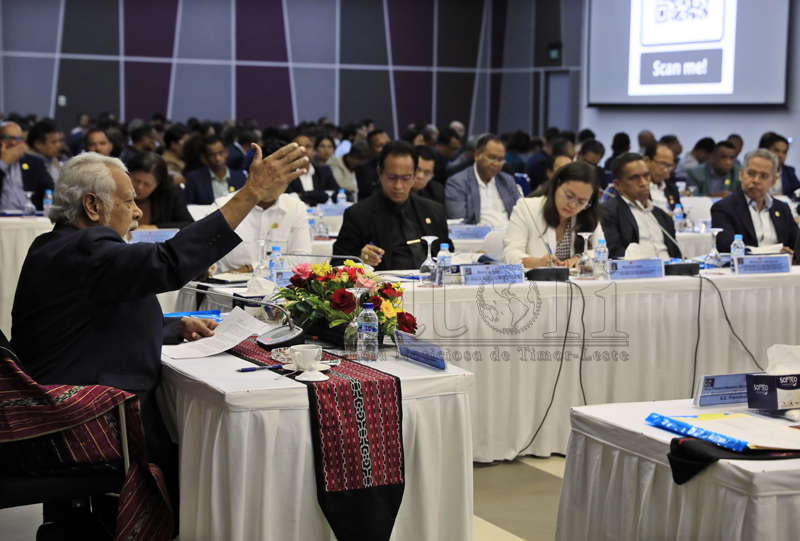
The priorities were presented during budget planning sessions for the 2027 fiscal year, held under the theme “Strengthening Resilience Through Transformation: Diversifying the Economy to Secure a Sustainable Future.” The budget will support investments in key productive sectors, infrastructure development, connectivity, access to basic services, and human capital development.
Prime Minister Kay Rala Xanana Gusmão said the 2027 budget will be the first to be prepared under the 2027–2030 Medium-Term Planning Framework, which will guide government spending and development policies over the next four years.
“The 2027 State Budget will play a critical role in our efforts to diversify the economy beyond oil and gas and foster more inclusive and sustainable growth, in line with the Blue Economy Policy 2025–2035 and Timor-Leste’s full integration into ASEAN,” Gusmão said at the Ministry of Finance in Dili.
He said the government must begin with a realistic assessment of the country’s development progress, noting that monitoring of the Strategic Development Plan showed mixed results. Of the 199 targets established under the plan, many have recorded only partial progress, while others have yet to show significant advancement.
Gusmão warned that maintaining traditional budgeting practices could undermine the country’s long-term development ambitions. “If we continue to rely on conventional budgeting approaches, we risk exhausting the Petroleum Fund without achieving the structural transformation that our people expect and deserve,” he said.
To address those challenges, the government has identified a series of strategic priorities that will serve as a reference for ministries and public institutions in preparing their 2027 budget proposals.
The priorities include accelerating economic diversification through the sustainable development of agriculture, fisheries, tourism, trade, services, the mining industry, and the strategic petroleum sector.
The government also plans to expand investments in rural infrastructure, transportation, and digital connectivity, education, healthcare, vocational training, youth employment, and women’s economic empowerment.
Additional priorities include improving the quality and efficiency of public investment, strengthening food and energy security, enhancing climate resilience, advancing digital transformation, promoting private sector development and reinforcing judicial and institutional reforms.
Finance Minister Santina Cardoso said the government is introducing a new planning and budgeting methodology that places development outcomes at the center of the budget process rather than focusing primarily on expenditure allocations.
According to Cardoso, creating a business-friendly environment requires coordinated action across government institutions and cannot be achieved by a single ministry alone.
“Boosting national production is not solely the responsibility of the Ministry of Agriculture, Livestock, Fisheries and Forestry. It requires coordinated efforts among multiple institutions, technical services and extension programs to ensure sustainable increases in productivity,” she said.
Cardoso added that the new approach requires each institution to clearly define its development priorities, strengthen inter-agency coordination, and identify the financial and human resources needed to achieve its objectives.
Through the 2027 State General Budget, the government aims to improve public service delivery, expand business and employment opportunities, and strengthen the country’s capacity to withstand economic shocks, natural disasters, and the growing impacts of climate change.
Journalist: Arminda Fonseca
Editor: Maria Auxiliadora
Translator: Filomeno Martins