


DILI, 12 April 2026 (TATOLI) – The United States delegation led by Vice President JD Vance and Iranian officials left Islamabad, the capital of Pakistan, after peace talks ended without a deal.
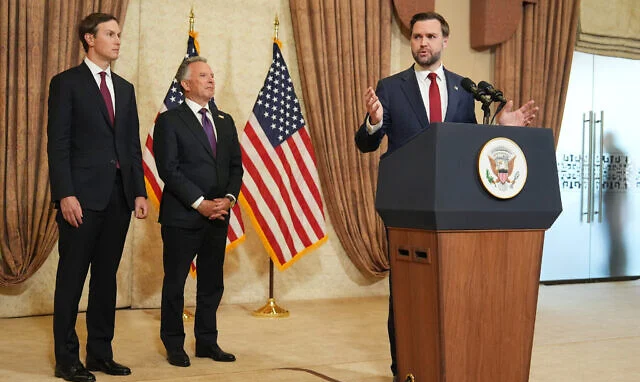
Speaking shortly after his departure, Vice President JD Vance said the talks lasted nearly 21 hours but ended without a decisive agreement.
“We have had a number of substantive discussions with the Iranians, that’s the good news. The bad news is that we have not reached an agreement. I think that’s bad news for Iran much more than it’s bad news for the United States of America,” JD Vance told reporters shortly before he left Islamabad.
He said that during the meeting, his delegation clearly outlined U.S. red lines, including what it was willing and unwilling to accept, but the Iranian delegation chose not to accept the U.S. terms.
He explained that the core demand from the United States was a firm, long-term commitment from Iran that it would not pursue nuclear weapons.
“The United States has not come to an agreement. We have made very clear what our red lines are, what things we are willing to accommodate them on, and what things we are not willing to accommodate them on. We’ve made that as clear as we possibly could, and they have chosen not to accept our terms,” said the Vice President.
He said the key issue is that Iran would commit to not developing nuclear weapons in the future, saying this commitment was not secured during the talks.
“We need to see an affirmative commitment that they will not seek a nuclear weapon and they will not seek the tools that would enable them to quickly achieve a nuclear weapon,” Vance stressed.
Meanwhile, Iran’s Foreign Ministry told Tehran’s state media that both sides failed to reach an agreement on two or three key issues, which ultimately prevented a deal.
Esmail Baghaei, spokesperson for Iran’s Foreign Ministry, described the negotiations as extensive and detailed, saying the intensive talks included the exchange of numerous messages and texts between the two sides, covering several major issues, including the Strait of Hormuz, nuclear issue, war reparations, lifting of sanctions, and complete end to the war against Iran and in the region.
“The success of this diplomatic process depends on the seriousness and good faith of the opposing side, refraining from excessive demands and unlawful requests, and the acceptance of Iran’s legitimate rights and interests,” he said.
Both the United States and Iran acknowledged Pakistan’s role as a mediator, with JD Vance praising Pakistani Prime Minister Shehbaz Sharif and the country’s leadership.
He said Pakistan had been an incredible host and had made genuine efforts to bridge differences between the two sides.
Baghaei also expressed his appreciation for Pakistan’s efforts in facilitating the negotiations.
After the conclusion of the negotiations, Pakistan’s Foreign Minister Ishaq Dar said Islamabad “has been and will continue to play” its role as a mediator.
TATOLI