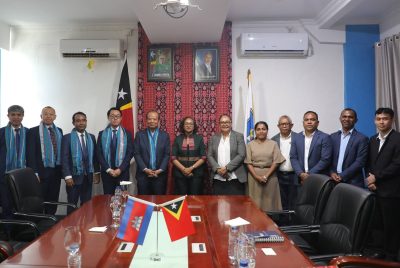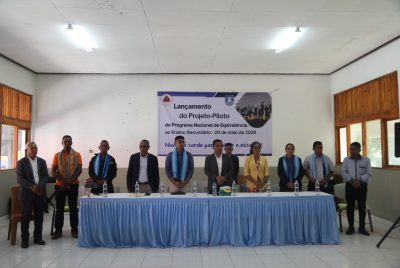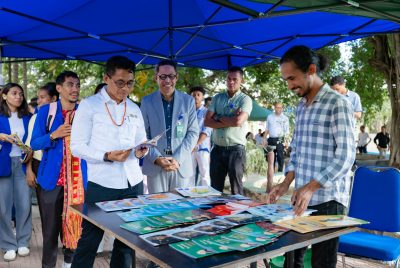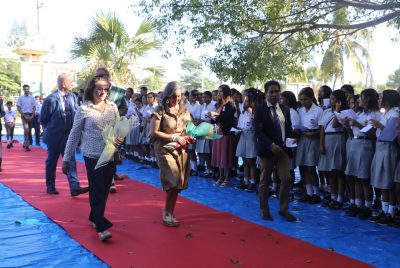




DILI, 08 september 2022 (TATOLI) – The Korean National Commission for UNESCO has provided US$1 million to support the government of Timor-Leste in combating illiteracy and recovering lost learning in the country.
The US$1 million was mainly allocated to the implementation of three main programs, namely literacy, equivalent qualification, and life skills programs.
The Executive Secretary of the Timor-Leste National Commission for UNESCO (KNTLU), Francisco Barreto said that the 5-year project (2020-2024) aims to combat illiteracy and recover lost learning in Timor-Leste.
He said that to execute the three programs efficiently, the KNTLU and the Timor-Leste Recurrent Education had already inaugurated four Community Learning Centers in the country.
“So far, we have inaugurated four Learning Centres, including two in Bobonaro municipality, one in Covalima, and one in Metinaru, Dili. Next month, we will inaugurate three more Community Learning Centres, including one in Ermera, one in Ainaro, and one in Viqueque municipality. While, the construction of the other three Community Learning Centers in Manufahi, Baucau, and RAEOA is underway and would be completed within 2022,” Barreto TATOLI at his office in Dili on thursday.
He said that next year three more Community Learning Centres would be set up, including one in Lautém, one in Manatuto, and one in Liquiçá municipality.
So far, the three programs have benefited more than 500 participants across the country.
Barreto said the Equivalent Education Program was designed to make it easier for those who dropped out of school during a difficult situation to obtain the equivalent certificates to pursue their secondary education and university degrees.
Meanwhile, the Literacy Program aimed to facilitate illiterate Timorese with basic literacy and numeracy skills.
The Life Skills Program focuses on English and Portuguese language teaching, computer literacy, sewing skills, and cooking skills.
Barreto calls on communities to visit the Community Learning Centers to learn basic literacy and numeracy skills, computer literacy skills, English and Portuguese skills, and sewing and cooking skills.
Journalist: Filomeno Martins
Editor: Nelia Borges