


DILI, 08 june 2023 (TATOLI) – The Rector of the National University of Timor-Lorosa’e (UNTL), João Soares Martins, said that Timor-Leste is an island country surrounded by water with abundant natural resources that are fundamental for the nation’s economic growth.
Martins said that to ensure the sustainable use of Timor-Leste’s marine resources: “The country needs collective action involving government agencies, local and international NGOs, environmentalists, local communities and individuals.”
“To talk about a blue economy is, of course, to ensure the sustainable use of our underwater resources, including fish, lobster, etc. Being an island country, our marine resources would give us solutions not to be heavily relayed on petroleum fund in the future,” he said.
In order to protect Timor-Leste’s underwater resources, the outgoing government had previously approved the National Ocean Policy (NOP) intending to provide a clear strategic direction for all relevant organizations in this domain, to contribute in an integrated approach to addressing ocean-related issues and planning and managing the future uses of the oceans for the benefit of current and future generations, contributing to the sustainable development and growth of the blue economy and the Sustainable Development Goals. Sustainable Development Goal (SDG) 14 is about conserving and sustainably using the oceans, seas, and marine resources.
“We must take collective action to prevent any leakage of oil or petrol into our sea. It is our responsibility to clean our oceans to make sure it is clean and healthy,” Martins appealed.,” Martins appealed.
He emphasized that Timor-Leste’s coral reef is the most biodiverse in the world, saying that therefore, protection of the reef from degradation is necessary to conserve and preserve the country’s coral reef fish.
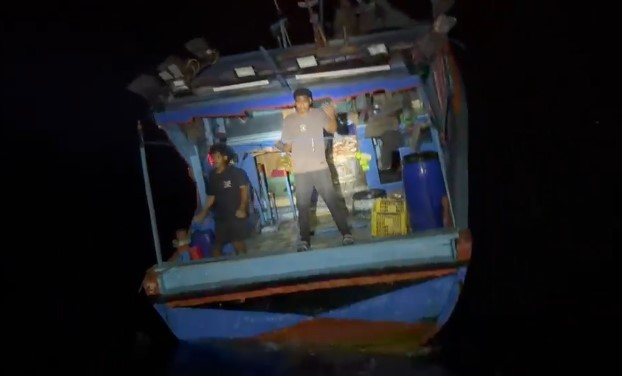
Martins expressed his concern with the illegal fishing that continues to take place in Timor-Leste’s waters, which makes the country lose its fishing resources from year to year.
According to the Ministry of Agriculture and Fisheries (MoAF), in 2018, approximately 107 illegal fishing vessels were detected in the Timor Sea. During that period, an estimated 239,460 tons of fish were taken from the sea, which is estimated to have an economic value of more than US$1 billion.
Meanwhile, in 2019, MoAF reported a total of 69 illegal fishing vessels operating in Timor-Leste waters. Over 147,975 tons of fish were lost, which is equivalent to US$838,350,000. In addition, in 2020, MoAF registered 48 illegal fishing vessels. These vessels stole about 1,563 tons of fish, which is equivalent to US$9,694,000.
Martins requested the upcoming government to take the issue of protecting Timor-Leste’s marine resources seriously: “Not only the government, but all of us play our part in ensuring that our ocean is protected. I call on all citizens to act responsibly, as good citizens, to protect our ocean.”
Also, Abílio da Fonseca, professor of fisheries and aquaculture at UNTL, said that UNTL has been conducting research, involving students from the Fisheries and Marine Sciences Department, to identify Timor-Leste’s endangered marine species.
Every year, UNTL celebrates World Oceans Day (WOD) to remind all citizens of the importance of oceans to human life, including producing half of the oxygen on Earth.
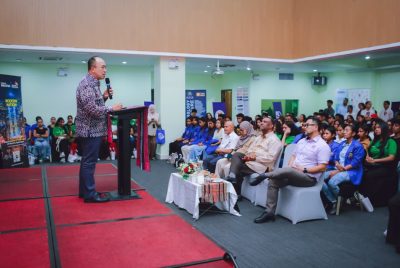
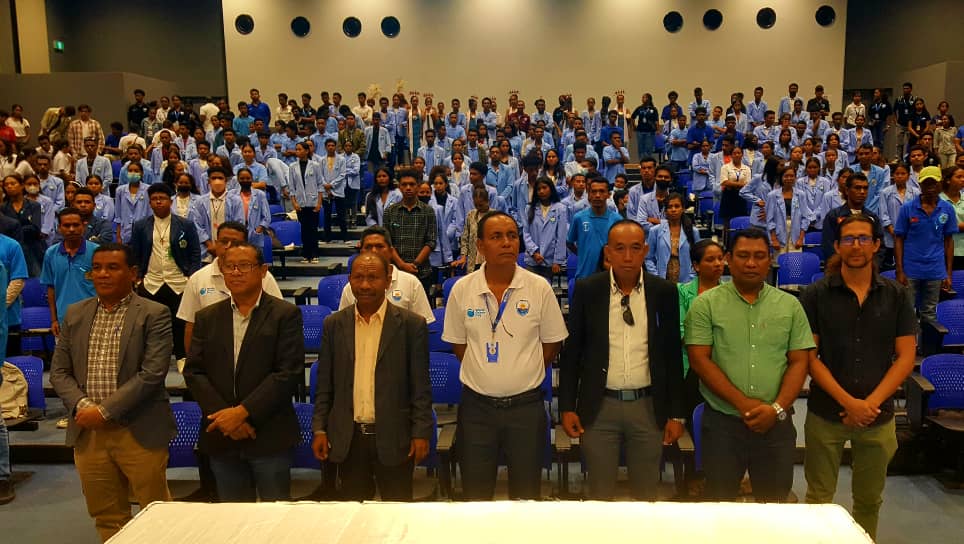
This year, UNTL organized a national workshop to celebrate World Oceans Day (WOD) with the theme: “Collective Action to Develop Blue Economy for Timor-Leste.”
Journalist: Filomeno Martins
Editor: Nelia Borges