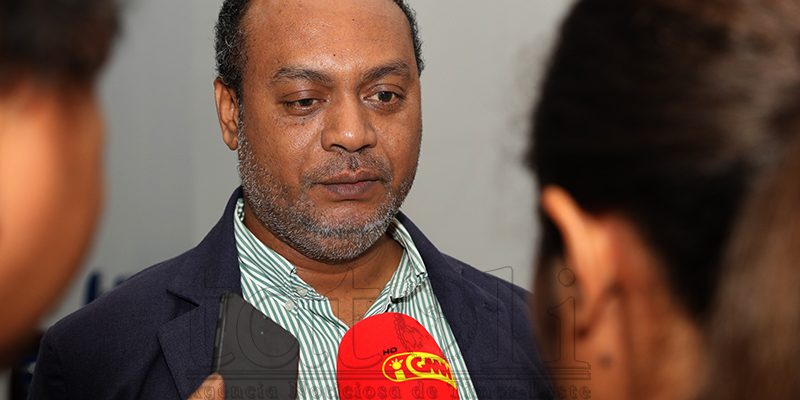




DILI, 28 June 2025 (TATOLI) – During a historic session of the 4th Asian Portuguese Community Conference (APCC), Sarayut Supsook – an architect, university professor, and member of the Portuguese-descendant community in Kudichin, Thailand – shared a powerful narrative about the enduring Portuguese presence in Siam, now Thailand.
In his presentation titled “The Portuguese Presence in Siam,” Sarayut traced Portuguese influence back over 350 years to the Ayutthaya Kingdom. He described how the early Portuguese Catholic community settled outside the city walls of Ayutthaya and played a significant role in Thailand’s military and social history.
“Initially, they came seeking spices like pepper and cloves. But what they left behind was far more valuable – cultural, architectural, and spiritual legacies,” Sarayut said at the Dili Convention Center (CCD) on Saturday.
He recounted how, after the fall of Ayutthaya, the Portuguese community fled with King Thaksin and were granted land along the Chao Phraya River in what is now known as Kudichin. It was there that the Santa Cruz Church was built, which remains the heart of the community to this day.
Sarayut explained that although the community has lived there for generations, they do not hold legal ownership of the land.
“We live here, but the land belongs to the Archdiocese of Bangkok. We pay monthly rent, but more importantly, we preserve the heritage,” he emphasized.
Through conservation projects like the Baan Kudichin Museum, Sarayut and his family are working to safeguard the historical narrative of their community. The museum, housed in his restored family home, now serves as a center for documenting the culture, cuisine, and architecture of the Luso-Thai community.
“It’s not just a historical site – it’s a space for education, research, and strengthening the identity of future generations. We want our children to know where they come from. If we don’t preserve our history and culture, they’ll forget this place ever existed,” he said with emotion.
Thailand’s intangible cultural heritage is also kept alive through traditions like kanom farang, a Portuguese-Kudichin sponge cake made with local ingredients such as rice flour and eggs. Religious customs like Good Friday Mass and the procession of Christ’s descent from the cross are still observed annually.
The community’s story has drawn attention from the Thai government, international researchers, and foreign tourists. Kudichin is now recognized not only as one of Bangkok’s oldest neighborhoods but also as a symbol of tolerance and cultural convergence among Portuguese, Thai, Chinese, and Muslim traditions.
“Heritage isn’t just buildings. It’s a living legacy –music, food, faith, and stories passed down to our children,” Sarayut concluded.
Journalist: Arminda Fonseca
Editor: Florencio Miranda
Translation: Rafael Ximenes de A. Belo