


ADB provides US$3 million to boost Timor-Leste’s workforce skills development
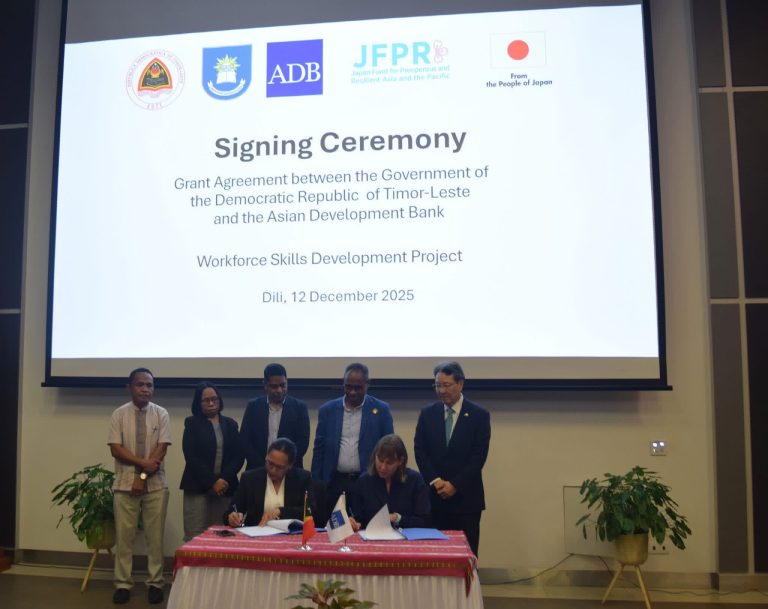
DILI, 12 december 2025 (TATOLI) — The Asian Development Bank (ADB) and the Government of Timor-Leste today signed a $3 million grant agreement to advance the Workforce Skills Development Project, a national initiative aimed at strengthening technical and vocational education and training (TVET) and improving its alignment with labor market demands.
The grant is financed by the Japan Fund for Prosperous and Resilient Asia and the Pacific, supported by the Government of Japan through ADB.
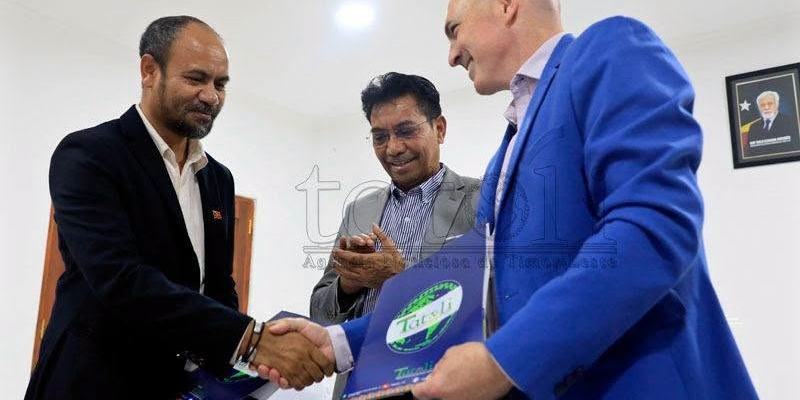
Minister of Finance Santina Viegas Cardoso and ADB Country Director for Timor-Leste Stefania Dina signed the agreement in Dili. The ceremony was attended by Japan’s Ambassador to Timor-Leste Kimura Tetsuya and senior representatives from the Ministry of Education and the National Institute for Workforce Development (INDMO).
According to ADB, the project will modernize teaching environments and equipment in selected TVET institutions that offer priority programs in construction, automotive technology, and mechanics. It will also harmonize curricula and certification standards across secondary and post-secondary TVET programs to ensure full alignment with industry requirements.
The initiative will further introduce demand-driven short courses for out-of-school youth and adults, expanding opportunities for income generation. ADB emphasized that the project will strongly promote gender equality and social inclusion, guaranteeing equitable access for women and marginalized groups to industry-relevant training.
“This project reflects what we can achieve when we work together,” said Stefania Dina. “By modernizing TVET institutions, harmonizing curricula with industry standards, and creating flexible learning pathways, we are opening doors to meaningful employment for all. This initiative will help build a skilled, resilient, and competitive workforce; improve access to quality education and training; and reduce poverty and inequality.”
ADB noted that the latest grant builds on its broader mission to support inclusive, resilient and sustainable development across Asia and the Pacific. Established in 1966 and owned by 69 member countries, ADB works with governments and partners to strengthen infrastructure, expand opportunities, and promote economic growth.
Journalist: Camilio de Sousa
Editor: Filomeno Martins