


Sri Lankan and Malaysian communities continue preserving Portuguese cultural heritage
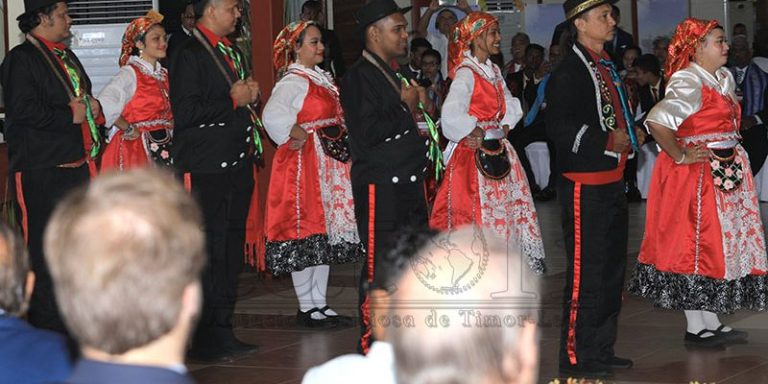
DILI, 28 June 2025 (TATOLI) – As part of the 4th edition of the Asian Portuguese Community Conference (APCC), representatives from Portuguese-Asian communities in Sri Lanka and Malaysia reaffirmed their commitment to preserving their Portuguese language, culture, and identity.
According to Earl Brathelot, a representative from the Sri Lankan community, Portuguese was introduced in the 16th century when their ancestors engaged in trade, bringing local products to sell in Portugal. Over time, these traders married Portuguese women, creating a new cultural identity that blended European and Asian influences.
The delegation explained that Portuguese is still widely spoken in Sri Lanka, though it has been adapted to local contexts and no longer follows original grammar or spelling. Key Portuguese words are mixed with Sinhalese and Tamil, resulting in a creole now referred to as “free Portuguese.”
“Portuguese is a legacy from our grandparents. We learned it at home – there were no books, and it’s not used in schools –but we speak it daily in our communities. Around 7,000 people still speak it, though we live far apart and mostly use it during family or religious events,” said Earl Brathelot at the Dili Convention Center.
He also compared their use of Portuguese with that of Timor-Leste, noting that while in Sri Lanka it’s spoken only at home, in Timor-Leste it is formally taught in schools and serves as an official national language.
“But events like this show the world that we still exist – and that we can come together to better understand one another, especially through our shared culture and history,” he added.
Marina Danker, a representative from Malaysia, shared that while English and Malay are used in schools, Portuguese is still spoken at home as a heritage language.
She emphasized that their cultural legacy includes traditional dances like the Cafrinja and Lancers, and recipes with Portuguese names such as char bola, massa, goiaba, and jengibre. Even greetings like bom dia have evolved phonetically across generations, becoming a marker of identity.
Participation in the APCC, organized by the Asian Portuguese Cultural Communities Association, was described as a proud moment to share knowledge about each community’s culture and history.
“It’s important to show the world that we’re still here. Our history lives on through our language, music, and food,” she said.
She emphasized that events like this must continue to preserve what their ancestors left behind- even if the Portuguese spoken today has a different accent or vocabulary –because what matters most is keeping their identity alive.
Journalist: Arminda Fonseca
Editor: Florencio Miranda
Translation: Rafael Ximenes de A. Belo