


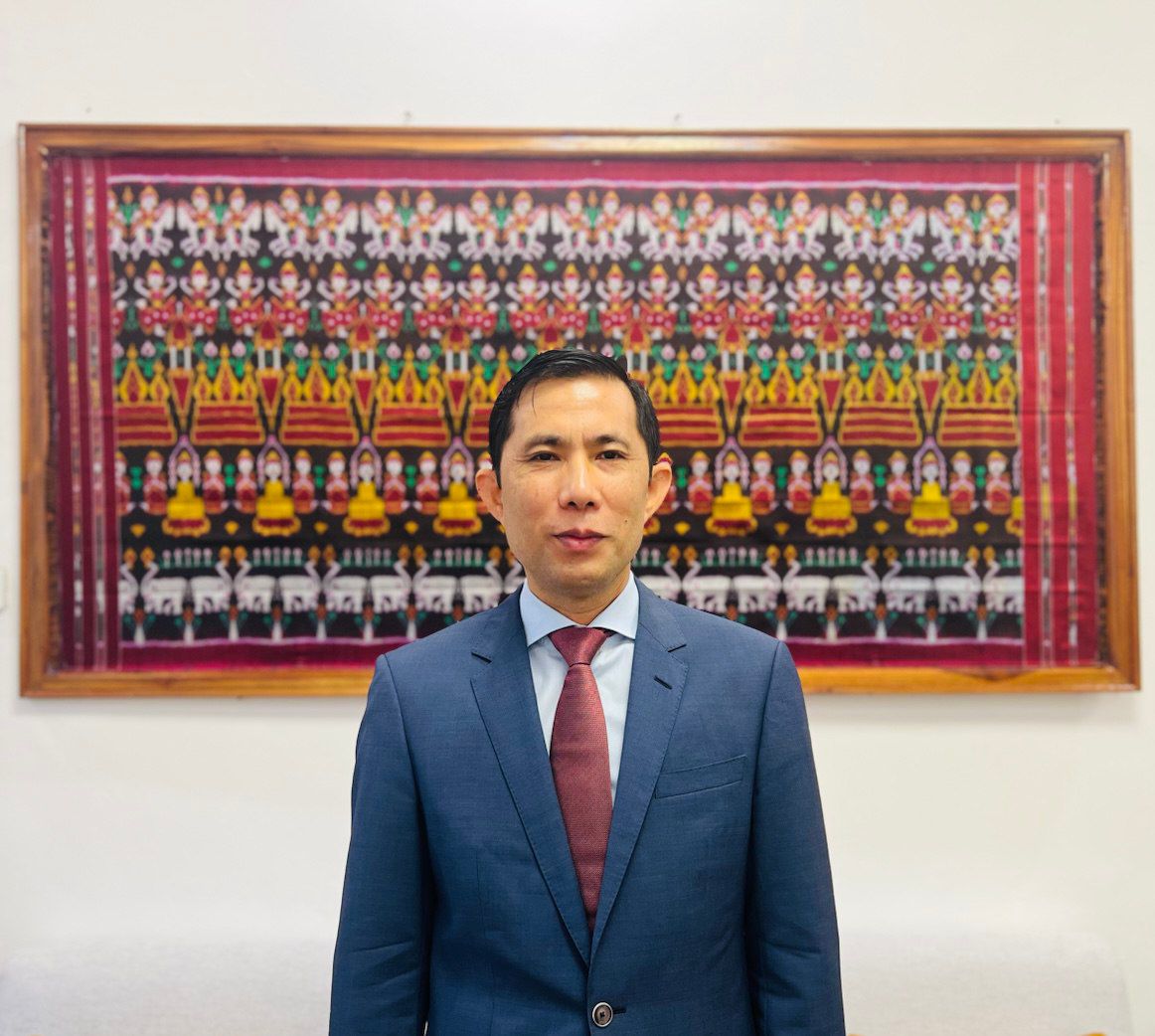
By H.E. CHUN Sovannarith
Resident Ambassador of the Kingdom of Cambodia
to the Democratic Republic of Timor-Leste
On 20 January 2026, the Lowy Institute published a commentary by Mr. João Boavida, Founder and Executive Director of CEPAD in Dili, and Ms. Milena Pires, former Ambassador and Permanent Representative of the Democratic Republic of Timor-Leste to the United Nations and currently Chief Executive Officer of the East Timor Trading Group in Dili. In her article, she cautioned against what she described as “arguments that democracy is ‘too advanced,’” portraying such claims as precursors to power concentration, and cited Cambodia’s institutional arrangements as a cautionary example.
While I welcome open and constructive policy debate, I must respectfully but firmly correct this mischaracterization of Cambodia’s democratic system, constitutional development, and governance framework.
A Misguided Comparison
The comparison presented portrays Cambodia’s constitutional amendments and legal restructuring as instruments for entrenching elite dominance. This depiction is misleading and does not reflect the reality of Cambodia’s governance system or democratic practice.
The Royal Government of Cambodia is a democratically elected government formed through regular, free, and orderly elections, recognized by the international community. To suggest otherwise disregards the significant progress Cambodia has made in overcoming decades of conflict, rebuilding national institutions, reducing poverty, and contributing positively to regional stability and growth.
Policy reforms, including constitutional and legal adjustments, are not evidence of democratic regression. On the contrary, they form part of Cambodia’s long-term strategy to strengthen institutional integrity, improve accountability, and ensure effective governance suited to national circumstances. Governance reform is a continuous process, not a static condition, and every country adapts its institutions over time in response to evolving realities.
Governance, Accountability, and Separation of Powers
Cambodia’s Constitution enshrines the separation of powers among the executive, legislative, and judicial branches. These institutions function independently and collectively to uphold accountability. The National Assembly and the Senate exercise legislative oversight, while the judiciary operates as an independent pillar of justice. In addition, Cambodia has established an independent Anti-Corruption Unit to ensure transparency and hold public officials accountable. No one is above the law.
To label Cambodia’s governance model as a “failure” while disregarding these institutional safeguards is both unfair and inaccurate. Cambodia’s governance framework has underpinned stability, resilience, and sustained economic growth for more than two decades.
A Vibrant Multiparty Democracy
Cambodia practices a pluralistic, multiparty democratic system as guaranteed by its Constitution. Currently, 29 political parties are legally registered, reflecting political diversity and participation. Members of the National Assembly—125 in total—are elected by the people every five years through general elections.
The seventh general election in 2023 was conducted in a calm, orderly, and non-violent environment. Voter turnout reached 84.58 percent, with more than 8.2 million citizens participating. The election was observed by 89,562 national observers from 134 civil society organizations and 604 international observers from 61 institutions. These facts reflect public confidence in the electoral process.
Cambodia also conducts commune and sangkat council elections every five years, a cornerstone of its decentralization and de-concentration policy. Since 2002, commune elections have been held five times. The most recent election in June 2022 recorded an 80.32 percent voter turnout, with nine political parties winning seats across 1,652 communes and sangkats nationwide. This local democratic process empowers citizens to choose their leadership directly at the grassroots level.
An Open and Participatory Society
Cambodia is an open society with a vibrant civil sector. There are 6,649 officially registered associations and non-governmental organizations, including NGOs, professional associations, and indigenous community organizations. These institutions actively contribute to social, economic, and community development and are an essential part of Cambodia’s democratic landscape.
Development Outcomes That Matter
Cambodia’s democratic governance has delivered tangible results for its people. Life expectancy, which stood at only 11.5 years during the Khmer Rouge period, has risen to approximately 71 years today. Poverty has declined dramatically—from over 50 percent in the 1990s to around 10 percent in 2019—before temporarily increasing due to the COVID-19 pandemic and subsequently declining again to approximately 18 percent in 2024.
Guided by successive national development strategies—the Triangular Strategy, the Rectangular Strategy, and now the Pentagonal Strategy—Cambodia achieved average annual GDP growth of around 7 percent for more than two decades prior to the pandemic. According to the International Monetary Fund, Cambodia’s nominal GDP reached approximately USD 48.8 billion in 2025, with GDP per capita rising steadily.
Cambodia is on track to graduate from Least Developed Country status by December 2029 and aspires to become a high-income country by 2050. These achievements are the product of political stability, effective governance, an open-market economy, and institutional resilience.
Governance, Investment, and the Rule of Law
Foreign direct investment, a key driver of Cambodia’s growth, is governed by transparent and structured processes. All investment projects are reviewed and approved by the Council for the Development of Cambodia, ensuring regulatory oversight, protection of national interests, and investor confidence.
To describe Cambodia’s system as one that prioritizes “political predictability at the cost of accountability” or fosters “institutional fragility and power concentration” ignores both empirical evidence and the lived experience of the Cambodian people.
Conclusion
Cambodia’s democracy may differ in form from that of other countries, but difference does not equate to deficiency. Democratic systems are shaped by national history, social context, and development needs. Cambodia’s experience demonstrates that stability, accountability, and inclusive growth can—and do—advance together.
Constructive dialogue among ASEAN members and partners is essential. However, such dialogue must be grounded in facts, mutual respect, and an appreciation of each country’s sovereign right to chart its own development path. Cambodia remains committed to democratic governance, institutional integrity, and regional cooperation for shared prosperity.