


When the Sea Rises, Nations Must Not Disappear: An Appeal to the World’s Conscience

By Dionísio Babo Soares
In September 2026, the world’s leaders will once again gather at the United Nations to discuss a reality that can no longer be treated as a distant problem: rising sea levels. It is expected that this meeting will produce a Political Declaration. To some, it may seem like just another diplomatic document. However, for many people — particularly those living in coastal and island nations — it represents something far more profound: the very continuity of their land and their history.
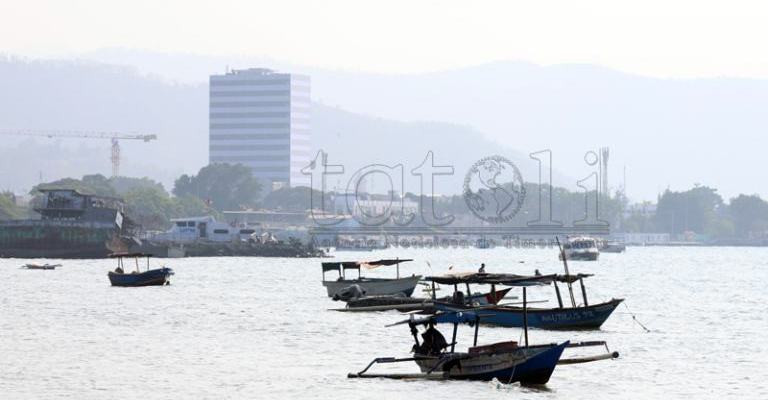
For Timor-Leste, climate change is not a prediction from scientific reports. It is already felt in the daily lives of our communities. Along the coast, erosion advances, saltwater seeps into freshwater sources, and entire villages are beginning to realise that the land where their ancestors lived is slowly changing.
This confronts us with a question the world has never truly had to face: what happens to a nation when its territory begins to disappear?
For a long time, international law has assumed that states exist upon stable territories. However, today we know that the planet is changing faster than our laws and institutions were prepared to recognise. As the sea advances, some lands become uninhabitable, communities are forced to move, and entire countries face an existential challenge.
What is at stake is not merely land. It is the identity of a people, the dignity of a nation, and the right of every country to continue to exist.
The world must clearly affirm a fundamental principle: climate change must not erase nations from the map.
The Risk of a Double Injustice.
For the most vulnerable countries, the risk is not limited to the loss of territory. There is also the danger of losing rights over the oceans that form part of their sovereignty.
Under the United Nations Convention on the Law of the Sea, countries define their maritime zones based on their coastlines. These zones — including the Exclusive Economic Zone — guarantee access to marine resources essential to feeding populations, supporting economic development, and securing the future of new generations.
However, if the sea advances and alters coastlines, what will happen to those rights?
Without a clear position from the international community, the most vulnerable countries may face a double injustice. First, losing territory due to a crisis they did not cause, and then seeing their maritime rights recognised under international law weakened.
For that reason, the future United Nations declaration must affirm a simple and fair principle: maritime zones established under international law should remain stable, even when coastlines change.
Climate justice requires such clarity.
A Young Nation Facing a New Challenge.
For Timor-Leste, this is not an abstract discussion.
We are a young nation that restored its independence in 2002 after decades of struggle and sacrifice. We understand well the value of sovereignty and the profound meaning of having land we can call our own.
Today we face a new challenge — silent, yet real — brought by climate change.
Like many developing countries, Timor-Leste seeks to build a stronger economy and invest in education, infrastructure and opportunities for its people. Energy resources in the Timor Sea, including the Greater Sunrise gas field, represent an important opportunity to support that development path.
Some argue that there is a contradiction between energy development and climate action. However, this view overlooks a historical reality: many of the world’s wealthiest economies grew for decades on the intensive use of fossil fuels.
To ask developing countries to renounce their opportunities now, without guaranteeing adequate financial and technological support, is not climate justice. It is simply an inequality.
True climate justice requires recognising historical responsibilities and ensuring that the transition towards a sustainable future is fair for all.
A Moment of Decision for the International Community
The Political Declaration on Sea-Level Rise represents an important opportunity to adapt international law to the challenges the planet faces.
To fulfil this purpose, the declaration should affirm several essential principles.
First, it must guarantee that climate change does not legally extinguish states whose land is affected by rising sea levels.
Second, it must ensure the stability of maritime zones, protecting the rights of coastal states even when coastlines shift.
Third, the international community must invest far more in adaptation and the protection of coastal areas — through mangrove protection, coral reef restoration, and strengthened coastal infrastructure that safeguards communities.
Finally, international climate finance must increase significantly. The most vulnerable countries require concrete resources — not merely promises — to protect their populations and prepare for the future.
A Test of the World’s Conscience.
Rising sea levels are not only an environmental issue. They are also questions of justice, solidarity, and shared responsibility.
They are a test of the international community’s capacity to act with vision and courage.
No nation should disappear because the world took too long to act.
The oceans may alter the lines of our geography. However, we must never allow them to erase the identity of a people or the right of a nation to exist.
The choice is still in our hands.
Moreover, the time to act is now.