



Stealing the Timor Sea: The Secret Industrial War Against Our Sovereignty
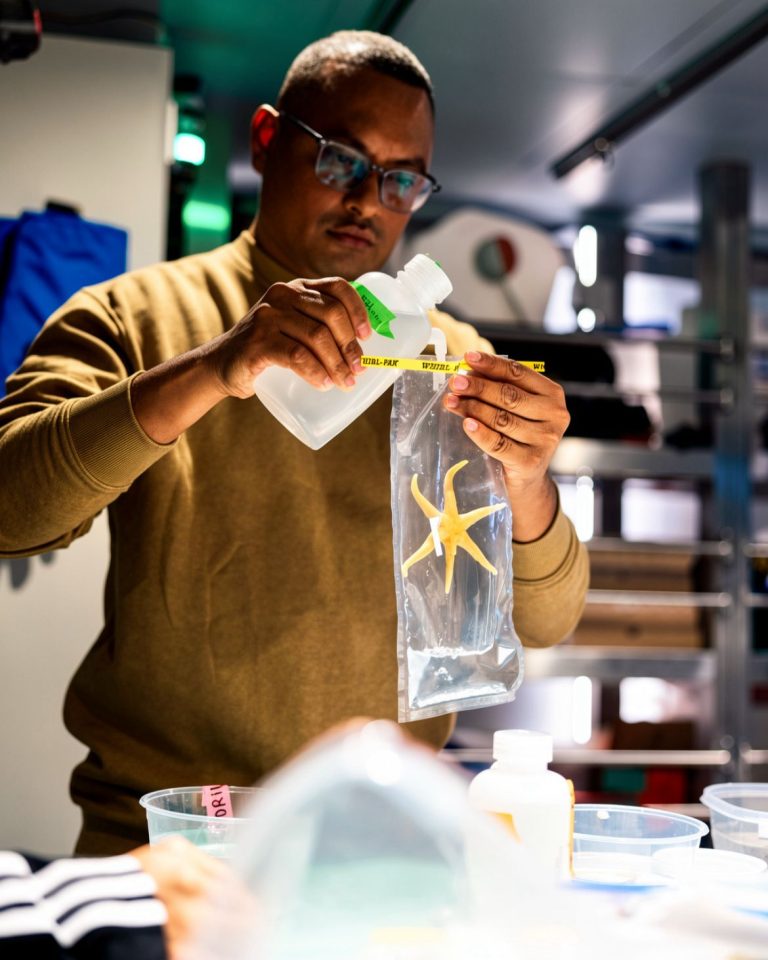
By Joctan Lopes
Marine and Fisheries Ecologist & PhD Candidate, Muséum National d’Histoire Naturelle (MNHN) – Alliance Sorbonne Université, Paris
Iliomar–Uatucarbau, Timor-Leste — On April 16, 2026, the Unidade Polisia Maritima (UPM) intercepted the Indonesian vessel KM Makmur Rejeki Mulya just seven nautical miles (~13 km) off the coast. The seizure of nine tons of Skipjack (Katsuwonus pelamis) and Tongkol (Euthynnus affinis) was celebrated as a victory, yet the penalties must be severe to show the government is finally taking maritime theft seriously. For me as a marine ecologist tracking this data, the arrest exposes a sophisticated, multi-vessel “dark fleet” that exploits the very gaps in monitoring the state has yet to close.
The area is a prime target because it sits within the Timor Passage, a major exit for the Indonesian Throughflow (ITF). This ocean corridor carries deep, nutrient-rich water to the surface, creating a vital “underwater highway” for migrating tuna, sharks and whales. By connecting the Pacific and Indian Oceans, this passage serves as a critical feeding ground that sustains the region’s entire marine life.
Reports from fishers in Com and Iliomar guided authorities to a vessel that had likely disabled its Automatic Identification System (AIS) and Vessel Monitoring System (VMS). I identify this as a standard tactic for illegal fishing, allowing boats of unknown status to effectively evade detection and raid our waters without being seen on satellite during the calm monsoon transition.
The evidence suggests that KM Makmur Rejeki Mulya was not working alone. The presence of 32 crew members, far more than a normal fishing boat requires, and the use of massive Purse Seine and Pocket Seine nets around pre-installed Fish Aggregating Devices(FADs) reveal a massive, industrial-scale poaching operation. I argue that this vessel likely acted as a shuttle for a larger, refrigerated “mothership” stationed just outside the 12-nautical-mile (~22 km) limit. This is the “detection gap” in action: for every ton caught by authorities, models suggest seven to nine tons are moved in the shadows.
This is where national strategy falls short. While recent reports mention an economic loss of $48.5 million USD during 2024 to 2026, I must point out that these numbers often lack the clear evidence needed for big investment decisions. To offer a full picture of foreign IUU (Illegal, Unreported, Unregulated), I developed a four-method convergence analysis based on regional FAO and CSIRO benchmarks.
By grounding estimates in precise FAO/WCPFC corrected species prices and a regional standard 3x economic multiplier, I provide a much different view. This multiplier is critical as it captures the total economic impact: the direct catch value, the loss of downstream processing, the disappearance of local employment, and the depletion of government revenue. My model estimates total foreign IUU at roughly 7,500 tons per year, translating to a corrected total annual economic impact of approximately $47.6 million USD.
I firmly believe that when our data is unstandardized, we are essentially guessing the value of our own sovereignty. I offer this analysis to help sharpen our national estimates and strengthen the evidence base for sustainable management. As a co-developer of Peskas (open-source digital platform for small-scale fisheries), I view data as a national asset.
If Timor-Leste is to attract serious investment in a “Blue Economy,” our state must move beyond reactive arrests and provide data backed by science. For me, the Iliomar-Uatucarbau seizure is a warning: we must know exactly what is being stolen to know exactly what we must protect.