


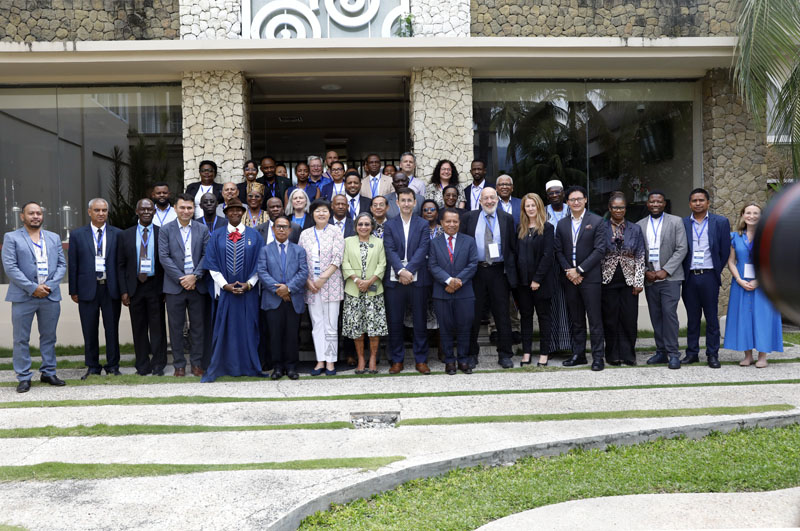
DILI, 28 April 2026 (TATOLI) – Timor-Leste has reaffirmed its growing role in global climate diplomacy by hosting the Strategy Meeting of the Least Developed Countries Group from 28 to 30 April in Dili. The meeting aims to consolidate priorities among vulnerable nations and advance the implementation of climate commitments ahead of major negotiations later this year.
Held at Novo Turismo Resort, the meeting gathers LDC thematic coordinators, elders and technical experts to review outcomes of COP30 in Belém and prepare common positions for the 64th session of the Subsidiary Bodies (SB64) in Bonn, Germany, and COP31 in Antalya, Türkiye, later this year.
As Chair of the LDC Group for 2026–2027, Timor-Leste is using the forum to push for stronger coordination among countries that, despite contributing the least to global emissions, bear some of the harshest impacts of climate change.
Opening the meeting, LDC Chair and Timor-Leste’s Special Envoy and Ambassador for Climate Change, Adão Soares Barbosa, stressed that the gathering is expected to produce actionable recommendations, strengthen coordination for implementation across LDCs and shape a unified set of priorities for upcoming negotiations.
Barbosa noted that as both a Least Developed Country and Small Island Developing State, Timor-Leste faces increasing climate risks, including prolonged droughts, flooding, rising temperatures and coastal erosion, all of which threaten food security, livelihoods and infrastructure.
Despite those vulnerabilities, he said Timor-Leste has continued to demonstrate leadership through the development of key policy frameworks, including its draft Nationally Determined Contribution (NDC 3.0), National Adaptation Plan and sectoral climate strategies.
Vice-Minister of Foreign Affairs and Cooperation Jesuina Maria Ferreira Gomes told delegates that the meeting comes at a critical time, as the international community shifts from climate negotiations to implementation.
She reiterated the LDC Group’s longstanding call within the United Nations Framework Convention on Climate Change for urgent action to keep the 1.5°C target alive under the Paris Agreement, backed by predictable climate finance, stronger support for loss and damage, technology transfer and sustained capacity-building.
“We must strengthen our collective voice, sharpen our priorities, and move decisively from commitment to implementation. The LDC Group must not only respond to global processes, we must shape them,” Jesuina said.
She said the Belém Political Package adopted at COP30, including commitments to triple adaptation finance and accelerate implementation through the Global Implementation Accelerator, provides an important foundation for coordinated action.
Deputy Resident Representative of the United Nations Development Programme in Timor-Leste, Adeline Carrier, described Timor-Leste’s chairmanship as a reflection of growing confidence in the country’s ability to help steer a shared vision for climate-vulnerable nations.
Carrier highlighted four areas where UNDP is supporting climate priorities in Timor-Leste and across LDCs: climate finance and diplomacy, green and blue economic transition, climate resilience and digital transformation.
She said UNDP continues supporting Timor-Leste’s third NDC process and initiatives to strengthen climate-resilient infrastructure and sustainable livelihoods, with delegates also scheduled to visit project sites during the meeting.
“Timor-Leste has proven that transformation is possible,” Carrier said. “May that same spirit of resilience guide your discussions in the coming days.”
Carrier also pointed to Timor-Leste’s dual role as LDC Chair and a country progressing toward full integration into ASEAN as a unique opportunity to bridge regional and global priorities on climate and development financing.
Supported by UNDP through the Progressive Platform Project and Global Promise Initiative, funded by the European Union and the Government of Norway, the meeting is expected to help strengthen a common LDC position ahead of COP31.
Through the three-day forum, Timor-Leste is reinforcing its diplomatic role not only as a climate-vulnerable nation, but as an active advocate for concrete climate action and stronger representation for developing countries in global negotiations.
TATOLI