


Minister Pereira highlights institutional strengthening and Timor-Leste’s preparation for ASEAN in meeting with development partners

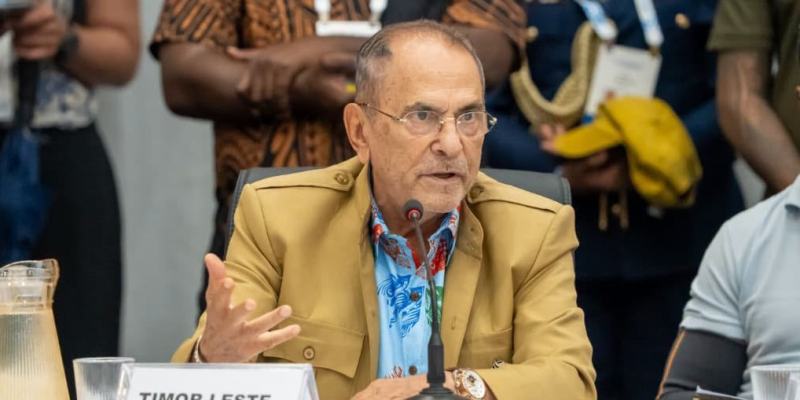
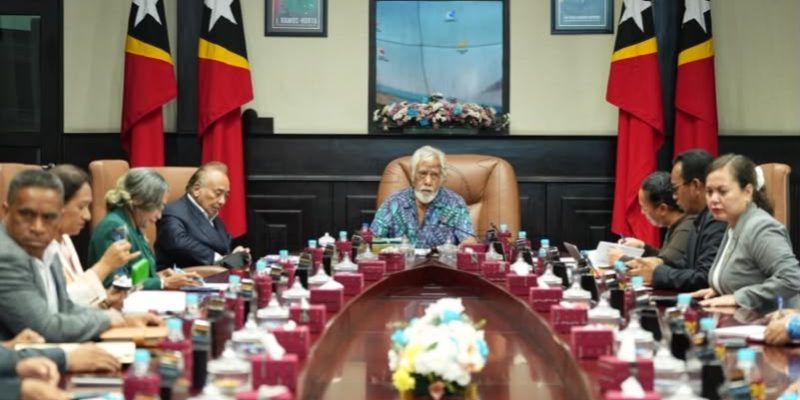
DILI, 25 May 2026 (TATOLI) — Agio Pereira on Monday underscored the importance of strengthening public institutions, modernising the state and advancing Timor-Leste’s regional integration during the Timor-Leste and Development Partners Meeting (TLDPM) in Dili.
Speaking during the session on Institutional Development under the theme “Charting a Resilient Horizon: Blue Economy, ASEAN Integration and Coordinated Action,” Pereira said effective institutions remain central to the country’s long-term development and governance agenda.
Pereira said strong institutions are the foundation of national development, arguing that a predictable and reliable state builds trust among citizens as well as partners and investors whose engagement can help drive growth.
Pereira said institutional development remains one of the main priorities of the IX Constitutional Government, aligned with Timor-Leste’s Strategic Development Plan 2011–2030, the Sustainable Development Goals and the country’s commitments within Association of Southeast Asian Nations.
He also highlighted Timor-Leste’s full accession to ASEAN in October 2025, describing it as the beginning of a new national chapter.
“We are not spectators in ASEAN integration. We are builders of it,” he said, noting that Timor-Leste is scheduled to assume the ASEAN chairmanship in 2029.
During his address, Pereira also pointed to broader economic and institutional development challenges, stressing the importance of investing in human capital, digital transformation, the blue economy and social inclusion.
“Human capital is not a secondary priority. It is the engine of everything else,” he said.
He added that bringing public services closer to communities must remain part of the country’s modernization efforts, particularly through administrative reform and digital governance.
“The digital State is not simply an exercise in modernization, but an act of inclusion,” Pereira said.
The technical presentation for the Institutional Development Sector was delivered by Natália Sarmento, coordinator of the Office for the Development of Strategic Public Policy at the Presidency of the Council of Ministers. The presentation outlined key achievements and priorities under Government Resolution No. 43/2024, which established the Interministerial Sectoral Development Coordination Commissions.
Within that framework, Pereira chairs the commission responsible for the Institutional Development Sector.
National progress and strategic priorities were highlighted across government coordination, justice, security, defence, foreign affairs and cooperation, state administration, decentralisation, local governance, border management and migration, civil protection, digital transformation, public administration, territorial planning, and regional integration.
The presentation also emphasized the need to strengthen interministerial coordination, modernise state institutions, reinforce democratic governance and institutional capacity, improve public service delivery and prepare Timor-Leste for the opportunities and challenges arising from ASEAN integration and broader regional and international engagement.
Closing his remarks, Pereira said the institutions being built today are intended to serve future generations.
“The institutions we are building today are not for us. They are for those who come after us,” he said, adding that Timor-Leste must prepare younger generations to take their place at the table of nations.
The Timor-Leste and Development Partners Meeting is being held on May 25–26 at the Ministry of Finance of Timor-Leste in Dili, bringing together government representatives, international partners and national institutions to discuss development priorities, public policy coordination and strategic cooperation across multiple sectors.
The annual meeting brings together government officials, development partners, civil society representatives and the private sector to review national strategic priorities, development challenges and institutional coordination mechanisms.
TATOLI