


ILO-EU Agroforestry Skills Program convenes key ministries to strengthen Timor-Leste’s agroforestry value chains
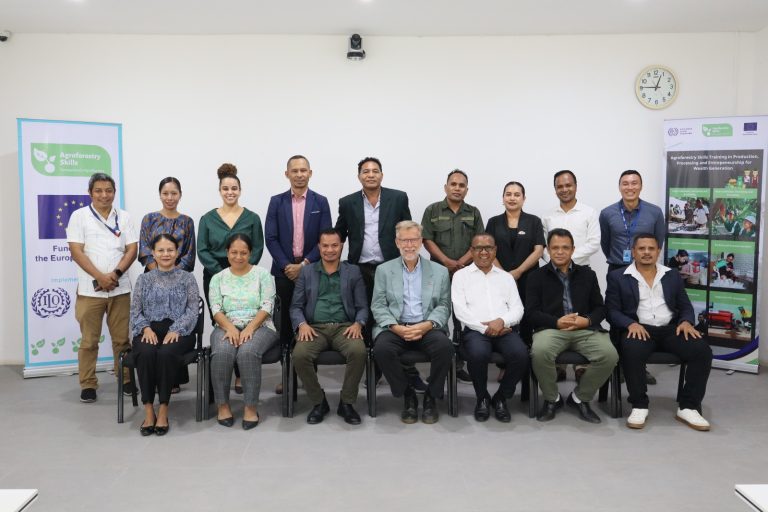
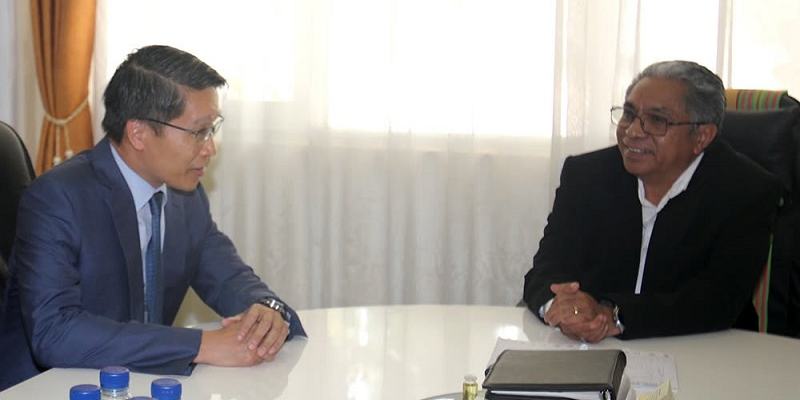
DíLI, 30 June 2026 (TATOLI) — Eight government ministries and state institutions came together today at the UN Compound in Dili for a Round-Table Discussion on ‘Strengthening Collaboration in Agroforestry Value Chains’ convened by the Agroforestry Skills for Employment and Resilience in Timor-Leste program, implemented by the International Labour Organization and funded by the European Union.
The high-level gathering, held in partnership with the Directorate for Industry of the Ministry of Commerce and Industry (MCI), brought together senior representatives from the Ministry of Education – Technical and Vocational Education; the Ministry of Agriculture, Livestock, Fisheries and Forestry; the Coordinating Ministry for Economic Affairs (MCAE); the Ministry of Rural Housing Development; the Secretariat of State for Cooperatives; the Secretariat of State for Vocational Training and Employment; and the Institute for Business Development Support.
Approaching its fourth year, the program has built strong partnerships with government institutions, non-governmental organizations, training providers, and educational institutions to strengthen skills development and enterprise support across agroforestry value chains. Today’s round-table represented a pivotal transition to government-led coordination of future interventions.
“After three years of building relationships and capacity on the ground, this round-table is an opportunity to ensure that the gains we have achieved together are embedded in a framework for institutional coordinated ,” said Richard Hanson, ILO Program Manager. “Timor-Leste’s agroforestry sector has enormous potential, and unlocking it requires all key actors to be pulling in the same direction.”
Jorge Pereira, Director General of the Ministry of Industry and Commerce, echoed the call for unity: “Let us come together to share ideas, connect, and work as one. When we collaborate, we can develop strong strategic plans and align our efforts across sectors. By building links between our ministries and agencies and the communities we serve, we ensure that the people who benefit from our work are united behind a shared purpose.”
Participants reaffirmed their commitment to regular coordination between ministries, development partners, and training institutions. Together, they developed a joint action plan identifying further priority agroforestry commodities for enhancement, defining how ministries will collaborate across sectors to support value chain development, and assigning clear responsibilities to each line ministry. All agreed that stronger links between institutions and communities are essential to achieving sustainable agroforestry value chains in Timor-Leste. The government agencies represented recognize the opportunity to combine their resources to leverage the benefits of the EU’s long-term support to the sector.
The Agroforestry Skills for Employment and Resilience in Timor-Leste Program contributes to the promotion of green and sustainable economic diversification through strengthened Technical and Vocational Education and Training (TVET), private sector engagement, and youth integration into the labor market.
TATOLI