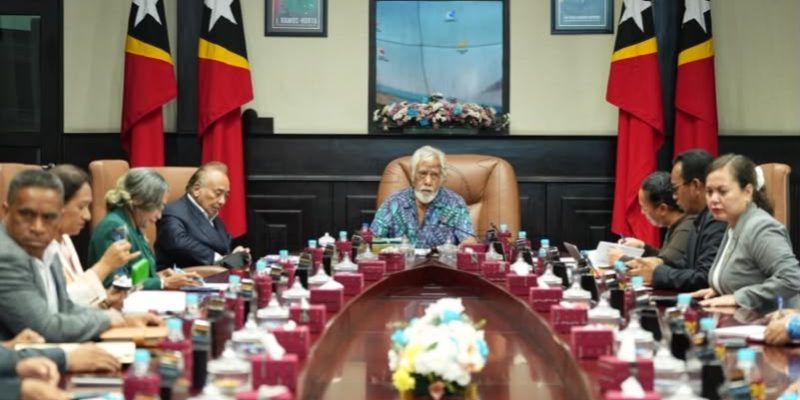



Progress and opportunities for Timor-Leste in implementing the Pact for the future: A Perspective in the context of the 2030 Agenda

The informal meeting of the United Nations General Assembly on Taking Stock of the Pact for the Future, held on 14 July 2026, provides a timely opportunity to strengthen the link between global commitments and national development priorities. For Timor-Leste, a Least Developed Country (LDC) with a trajectory shaped by reconstruction, institutional consolidation, and remarkable resilience, the Pact for the Future offers an important framework to accelerate inclusive and sustainable progress.
The Pact’s emphasis on accountability, policy coherence, and translating commitments into tangible results aligns closely with the national aspirations set out in Timor-Leste’s Strategic Development Plan 2011–2030 and its SDG Roadmap. These instruments continue to guide public investment and partnerships in social services, infrastructure, governance, and institutional capacity-building.
This reflection focuses on Sustainable Development Goals (SDGs) 6, 7, 9, 11, and 17, which are particularly relevant to the international discussion on implementing the 2030 Agenda. While acknowledging both the progress achieved and the opportunities that remain, the analysis draws upon Timor-Leste’s Second Voluntary National Review (VNR), presented in 2023, as well as United Nations assessments and recent technical studies on economic transformation, energy, urbanization, and sanitation.
The Second Voluntary National Review documented significant progress between 2019 and 2023, notably in poverty reduction, increased school attendance, improved maternal and child health indicators, and expanded access to electricity. These achievements reflect the commitment of the Timorese authorities to people-centred development and to the principle of leaving no one behind.
Although challenges remain due to geographic dispersion, limited resources, and vulnerability to extreme climate events, Timor-Leste has established a solid foundation upon which to build. Its experience in community mobilisation, the gradual strengthening of public institutions, and the continued support of international partners provide favourable conditions for a more integrated implementation of the SDGs through 2030.
Concerning SDG 6, Timor-Leste has continued to expand access to safe drinking water and sanitation, particularly in rural areas. The 2023 Voluntary National Review highlights progress in extending water supply systems and sanitation facilities to communities, schools, and health posts, supported by community-based management models and partnerships with development agencies.
Water supply systems established across municipalities demonstrate the positive impact of solutions tailored to local conditions. By bringing water services closer to communities, these interventions reduce the daily burden on households, improve hygiene, and strengthen public health and human dignity.
Urban sanitation remains a priority area for investment and innovation. A technical study published in 2024 on greywater management in Timor-Leste identified the need to develop more appropriate wastewater treatment infrastructure, noting that a significant proportion of urban wastewater is still discharged into open drainage channels. This reality underscores the importance of pursuing gradual, financially sustainable solutions that are adapted to local management capacities.
Expanding drainage systems, wastewater treatment, and water reuse could generate simultaneous benefits for public health, environmental protection, and urban resilience. With sound planning, stronger regulatory frameworks, and active community participation, Timor-Leste can transform this challenge into an opportunity to establish a safer, more inclusive, and climate-resilient sanitation system.
Progress under SDG 7 represents one of the clearest examples of Timor-Leste’s development transformation. The expansion of the national electricity grid, together with the adoption of off-grid clean energy solutions, is expected to significantly broaden access to electricity, creating new opportunities for education, economic activity, public service delivery, and the daily lives of families.
The United Nations Common Country Analysis for Timor-Leste, published in 2025, together with the United Nations Sustainable Development Cooperation Framework 2026–2030 derived from it, identifies expanding access to affordable, reliable, and clean energy as one of the country’s key priorities. This includes strengthening policies and infrastructure while promoting renewable energy, with particular attention to remote and off-grid communities. Combined with long-term investment, technology transfer, and ongoing technical training—including capacity-building programmes on hybrid renewable energy systems and internships for Timorese professionals in clean energy infrastructure planning—this agenda offers a practical pathway to increase the share of renewable energy, reduce costs, and create skilled employment opportunities, particularly for Timor-Leste’s young population.
Regarding SDG 9, Timor-Leste has made notable progress in improving both its physical and digital infrastructure. Investments in rehabilitating the national road network have enhanced mobility, facilitated access to markets, and strengthened the connection between communities and essential services. On the digital front, mobile network coverage now extends to most municipalities. At the same time, the country’s first submarine fibre-optic cable—currently undergoing testing—is expected to reduce costs and improve connectivity quality, creating new opportunities for digital public services, education, and entrepreneurship.
The next set of challenges includes consolidating road maintenance systems, strengthening infrastructure resilience to extreme climate events, and reducing disparities in access to digital technologies. In this regard, promoting the digital inclusion of women in rural areas is particularly important for advancing economic empowerment, civic participation, and access to essential services.
By combining infrastructure investment with technical training, preventive maintenance, and inclusive policies, Timor-Leste can ensure that improved connectivity translates into tangible and widely shared opportunities. Such an approach will also strengthen territorial integration and enhance the country’s economic competitiveness.
Timor-Leste is at an early but dynamic stage of its urbanisation process. Under SDG 11, urban planning efforts in Dili—including zoning reforms and improvements to drainage systems—demonstrate a growing commitment to reducing flood risks and improving living conditions for urban populations.
Pilot initiatives in waste management point to the potential of participatory approaches and circular economy solutions. Although these initiatives remain in their early stages and can be progressively expanded, they are already helping to foster greater environmental awareness and reduce pressure on landfill sites.
The findings of the 2024 study on urban wastewater reaffirm the importance of integrating sanitation, drainage, and waste management within a coherent vision of urban development. Such integration will improve environmental quality, protect public health, and help build cities that are better prepared to respond to climate-related risks.
At the same time, several municipalities have begun incorporating disaster risk reduction and climate adaptation into their local development plans. Strengthening the capacity of municipalities to plan, mobilise resources, and deliver public services will accelerate the development of safer, more inclusive, and more sustainable communities.
Timor-Leste’s contribution to SDG 17 and to the broader discussion on a more effective multilateralism capable of addressing today’s global challenges is particularly significant. Its historical experience demonstrates the value of international solidarity, cooperation among States, and constructive engagement in multilateral institutions.
Timor-Leste has consistently advocated for a more equitable system of international cooperation, tailored to the needs of Least Developed Countries (LDCs) and Small Island Developing States (SIDS). Its active participation in United Nations bodies and peacebuilding discussions reflects a strong commitment to people-centred multilateralism focused on conflict prevention and reducing global inequalities.
The analysis on structural transformation and economic diversification prepared by Hélder Lopes for the United Nations Economic and Social Commission for Asia and the Pacific (ESCAP) (CSS Working Paper No. 23-6, November 2023) recognises Timor-Leste’s progress in gross national income per capita and the Human Assets Index during the 2018 and 2021 triennial reviews.
The study nevertheless emphasises that sustaining these gains will require a deeper structural transformation. It identifies economic diversification—through the development of agriculture, tourism, and manufacturing—the strengthening of the productive base, and the reduction of dependence on petroleum revenues as strategic conditions for sustainable graduation from LDC status. These priorities create opportunities for international cooperation that is more closely focused on productive investment, skills development, innovation, the energy transition, and the expansion of sectors capable of generating sustainable employment.
Within this context, the Pact for the Future can serve as both a political catalyst and a practical framework for cooperation. Predictable financing, access to appropriate technologies, and strengthened national capacities should continue to be recognised as essential pillars of an effective and mutually beneficial international partnership.
Timor-Leste has genuine opportunities to accelerate the implementation of the SDGs in the coming years. Strengthening infrastructure, investing in renewable energy, expanding water and sanitation services, advancing digital transformation, and enhancing municipal capacities can generate mutually reinforcing benefits for inclusive growth, social and territorial cohesion, and climate resilience.
The 2025 United Nations Common Country Analysis reminds us that achieving the full ambitions of the 2030 Agenda will require accelerating current efforts. This should be understood not as an insurmountable constraint but as a call for coordinated action. The combination of national leadership, coherent public policies, community participation, and well-targeted international partnerships creates favourable conditions to build on the progress already achieved.
Strengthening human capital will be central to this process. Investment in education, technical and vocational training, public administration, municipal governance, and the participation of women and young people will ensure that physical investments translate into lasting, sustainable benefits for society as a whole.
Timor-Leste’s experience demonstrates that national resilience, when supported by international partnerships aligned with national priorities, can drive meaningful transformation. The next phase should prioritise integrated solutions adapted to local realities and aimed at progressively strengthening the autonomy of institutions and communities.
Timor-Leste has demonstrated a clear commitment to implementing the 2030 Agenda and upholding the principles of the Pact for the Future. Progress in access to water, electricity, infrastructure, digital connectivity, and urban planning reflects consistent policy choices, sustained public investment, and effective international cooperation.
The remaining challenges should be viewed as priorities for transformation and as opportunities to deepen reforms, strengthen capacities, and mobilise new partnerships. The country possesses a strong institutional and social foundation from which to continue building a more inclusive, resilient, and sustainable future.
The reflection encouraged by the meeting of 14 July 2026 therefore provides an important opportunity to reaffirm the collective commitment to translating the principles of the Pact for the Future into concrete results. Timor-Leste’s experience confirms that the 2030 Agenda will be stronger when it is grounded in international solidarity, national ownership, and long-term investment in people, institutions, and the country’s future.
*This article reflects the author’s personal views and is intended solely for academic purposes. It does not represent the views of the institution with which the author is affiliated.