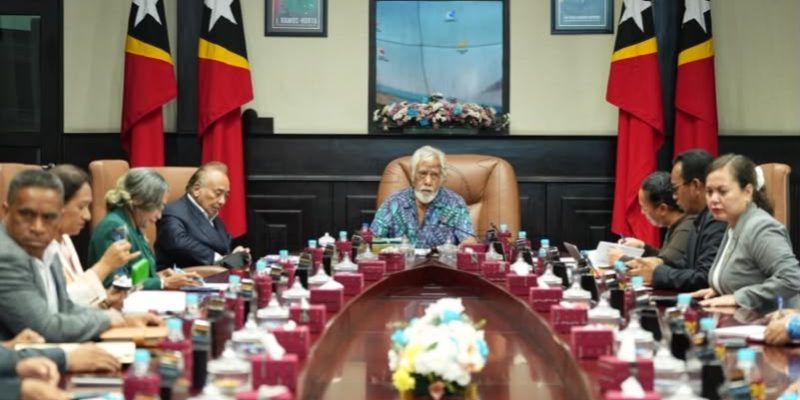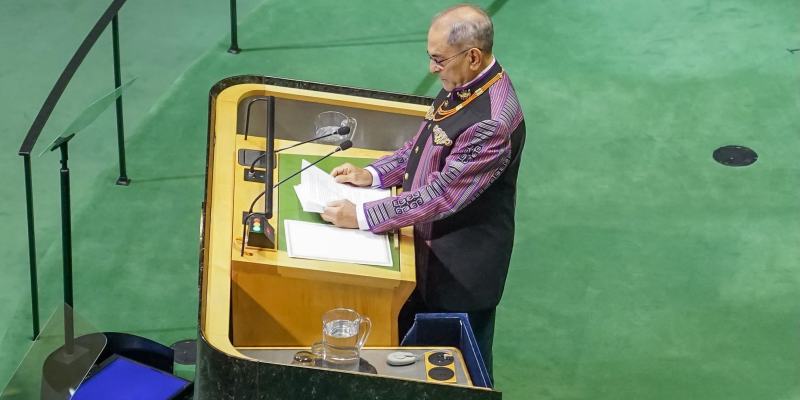



Remarks by President Ramos-Horta at the 81st Session of the United Nations General Assembly
United Nations General Assembly
81st Session
Remarks
by
The President of the Democratic Republic of Timor-Leste,
H. E. J. Ramos-Horta
Nobel Peace Laureate (1996)
Delivered in Portuguese and English
New York, 23rd September 2026
Senhor Presidente,
Estimado Secretário-Geral António Guterres,
Numa manhã de inverno, a 1 de janeiro de 2017, chegou ao seu gabinete, no 38.º andar do Edifício do Secretariado, plenamente preparado para a missão mais exigente da sua longa e distinta carreira.
Ao longo de todo este percurso, manteve-se fiel a si próprio: um líder compassivo e esclarecido, incansável, humilde e acessível, que não se deixou deslumbrar pela visibilidade do cargo nem intimidar pelo enorme peso de uma agenda permanente, vinte e quatro horas por dia, sete dias por semana. Não trouxe para o cargo um ego que exigisse massagens frequentes, nem uma vaidade que tivesse de ser diariamente maquilhada.
Manteve-se humilde, honesto e fiel aos seus princípios, cuidando dos milhões de mulheres e crianças rejeitadas e esquecidas, apanhadas no turbilhão de guerras desencadeadas por senhores da guerra. À medida que as guerras se prolongam e se tornam demasiado dispendiosas, os bombeiros são responsabilizados por não conseguirem apagar os fogos que os próprios incendiários atearam.
Quando sair deste edifício, a 31 de dezembro de 2026, juntar-se-á ao panteão dos grandes Secretários-Gerais, cujos legados continuarão a inspirar jovens de todo o mundo a seguir o seu exemplo de serviço às pessoas necessitadas.
Excellency President Dr. Khalilur Rahman,
I congratulate you on your election to preside over the 81st session of the General Assembly.
You bring to this house the wisdom of 5 billion people (60% of the world’s population), representing some of the world’s oldest and most sophisticated civilisations.
Excellencies,
At one time in history, waking up from the horrors of World War II, we were intoxicated with the dreams of a United Nations promising a new dawn for humanity.
After the unimaginable WWII, started by Christian civilised Europe, we could not had hoped for anything less. But it seems that human beings can never really have enough wars, and never really learn lessons of history, never really cared.
After the Holocaust came the glorious birth of the State of Israel. But then we read about the Palestinian Nakba (1948). Over the following years, we read about wars of partition and famines in South Asia, the Korean War (1950-1953), the onslaught in Cambodia, Laos, Vietnam, the infamous Khmer Rouge genocide, later the Bosnian genocide, the Rwandan genocide, and many, too many other wars in Asia, Africa, Latin America, Europe.
Then came the end of the Cold War, bringing us euphoria, celebrations, new promises of peace. The Berlin Wall collapsed, Apartheid ended. But the seeds of future wars were sown just as NATO and Mikhail Gorbachev inked the post-Cold War arrangements, the ink had not even dried, and NATO began its fast eastbound expansion.
As expected, for more than 4 years we have had this devastating war in Ukraine, a war that now has backfired into Russia.
We are gathering in this Hall of Nations, countries large and small, some insanely rich, too many shockingly poor. But all enjoying equal voting rights. Yet we know equality is an illusion.
Some possess non-threatening antiquated guns while few others have perfected their nuclear arsenals, now 100 times more destructive than the ones dropped on Hiroshima and Nagasaki in 1945. As primitive as they were then, these experimental bombs incinerated two cities and almost all living beings in them. Those unfortunate ones who survived the blast died long, painful deaths.
Russia, US, China, France and the UK, all members of the Nuclear Non-proliferation Treaty (NPT) were joined by four countries not members of the NPT — Israel, India, Pakistan.
The Democratic People’s Republic of Korea has a nuclear arsenal estimated to be around 100 warheads and North Korean leaders seem to have learned lessons from Libya, Ukraine and the ongoing Iran/Israel/US war.
Dismantle your nuclear capabilities and lose the only deterrence you have against a nuclear power deciding to bomb you into submission. So, let’s get used to this reality, a regime like no other in the world, with nuclear weapons.
On June 30th, 2019, President Trump travelled to the DMZ in the Korean peninsula. The mysterious Swiss-educated leader of North Korea, half the age of the American President, walked halfway and the two leaders engaged in an embrace that promised peace.
This is what leaders do to advance peace. They showed courage, audacity. President Trump did the right thing.
Friends are friends. We cherish and embrace our friends, never ignoring them or excluding them from the table. But we talk to adversaries so that we don’t become enemies. We talk to enemies to prevent wars, and perhaps we become partners in peace.
Those countries amassing nuclear weapons keep us all living near imminent catastrophe. On any day, by accident, miscalculation, computer error, madness, or foolish strategic design, we could become the last human generation.
All the while, the brandishing of these weapons reinforces adversity and fear, which create a very high barrier to achieving the rational cooperation necessary to fulfil our responsibility to future generations, the imperative to protect the natural world upon which we all depend, and the moral imperative to eliminate the suffering of poverty. Is this the best we can do?
Trillions of dollars are invested in perfecting forms of death instead of investing a fraction of these trillions in clean water, food, schools and clinics for fellow human beings.
No thought was given to the tens of millions of fellow humans pushed back to extreme deprivation by the COVID-19 pandemic, the Ukraine/Russia war, and as if the innocent bystanders on the periphery had not suffered enough, we are presented with another catastrophe: the Iran war and disruption of vital waterways for trade.
We know the madness of the Iranian leaders seeking regional supremacy, pouring fuel into the fire of religious extremism in neighbouring countries to destabilise wealthy, stable, monarchies. Iranian leaders launched unwarranted attacks against neighbours, destroying civilian industries and infrastructure.
Iran’s rationale for these attacks is that these countries host American bases. So is Iran going to launch waves of drones and missiles against US bases across Europe?
Can we change course? Can we stop from sleepwalking into wider wars?
President Trump: be audacious, unpredictable, visionary, invite all nuclear powers and all major conventional military powers and industries, without exception, to a Summit in some town in Portugal, to talk on No First Strike, enhanced regular communication between leaders of the nuclear powers, and commitment on reduction of nuclear weapons towards total deactivation and destruction of nuclear arsenals over a decade.
Be you, President Trump, the audacious, the unpredictable one. Do the unthinkable, and you will gain worldwide gratitude and respect.
The humanitarian situation in Cuba is heartbreaking. We understand that the US has provided $100 million in emergency humanitarian assistance to the Cuba people through Caritas. In keeping with US humanitarian tradition, and towards creating an environment conducive to normal, long-term Cuba-US relations, trade relations between Cuba and the US and the rest of the world could be improved.
Regarding the situation in Israeli-occupied territories, Gaza and West Bank, Timor-Leste joins with the vast majority of UN Member States to reaffirm our belief that the Two State Solution is the only viable solution: for Israelis to live in peace with themselves and with the Palestinians, and for the Palestinians to live in peace with themselves and with the Israelis.
The risks are too high to continue an unstable status quo, the opportunity to do better sits before us, and the choice is an international order falling to pieces or rising to peace.
Regarding Western Sahara, we welcome the Moroccan proposal and the recent Security Council resolution as an opportunity for dialogue. As with any situation of this nature, the people most directly interested must be consulted on their future status. We hope that a just and comprehensive settlement is reached between Moroccan authorities and the Polisario front.
Excellencies,
Please take some time to look at the situation in Sudan, the worst humanitarian crisis in the world today; look at the situations in South Sudan, the Democratic Republic of Congo, Afghanistan, Myanmar, Yemen.
These are not abstracts. They are people, they are women and children, youth in their best years, they are parents, grandparents.
And they are a grand jury of humanity indicting us all, leaders and businesses of death, for you are celebrating the tens of billions of dollars in profits from the wars and deaths that you are accomplices to.
How is it that we can scroll past the end of the world before finishing our coffee?
How is it that a child pulling pieces of his family from the rubble has become a headline we quickly skip, a notification we silence, a Tuesday?
Behind each of the dead is not a statistic — it is a mother who will spend the rest of her life searching for a face in a crowd that will never appear. It is a boy hiding in silence, learning before he can read that the world outside his door wants him dead. It is a girl, pregnant by the men who came to destroy her home, carrying inside her both the violence done to her and a life she never chose.
We tell ourselves we would never look away if we truly saw it. And yet we saw Rwanda and Bosnia happen right under UN watch. We see it every day, live, in our pockets, in vivid colour — and still, somehow, life goes on normally. We finish our meetings. We plan our weekends. We grow inured to the killing of Palestinians.
This is not a lack of information. We are drowning in information. We can live stream it all as it happens. This is a lack of feeling — a numbness we have allowed to settle over us like dust.
All this happens before our eyes, but from the powers that can make the difference between life and death, there is no response. And worse. We witness diplomatic acrobatics to brush off the bombing of a school or a hospital, saying that it does not really violate international law because terrorists may be hiding in the basement of the building.
I am worried. Worried that we have started treating a catastrophe as something we can simply coexist with.
Worried that the killing of civilians is casually being justified. Worried that total force now sounds more viable than diplomacy.
This very institution was founded on a promise. All through the archives here, resolutions say a ceasefire must hold, a border must not be crossed, a civilian must not be a target. Many of those promises have remained unmet, raising concern that the phrase “never again” has lost all meaning.
I do not have a plan that will end a war by nightfall. But I know this: numbness is not neutral. Silence is not safety.
Every time we let the suffering of people become background noise, we let ourselves forget how small the distance really is — how little separates your daughter, granddaughter, niece, from the girl in the refugee camp you saw on the news last night. How many children, right now, are learning that a world at war is normality.
The more we linger in this fog, the harder it becomes for that hiding child to believe the world is not his enemy.
These tragedies are not somebody else’s tragedy. They are what we allowed, what we still allow, and what we will all answer for.
There’s a painful cry for a better global order as we witness the weakening into irrelevance of multilateral institutions. No country, regardless of size or power, can address today’s interconnected challenges alone.
Excellencies,
Leadership is not merely discovering the angriest instinct of the electorate and amplifying it. Leadership is sometimes telling our own supporters that they are wrong. It is explaining complexity when a slogan would be easier. It is asking people to consider tomorrow when they are angry about today. It is persuading citizens that the humanity of others who may worship differently, speak another language or vote for another party does not diminish their own freedoms.
Statesmanship requires patience, persuasion, courage to compromise. And above all it requires an understanding that power brings responsibility, not exemption.
The Charter of the United Nations was not written to make the strong weak. It was written to prevent the strong from making the world unlivable.
Excellencies,
Soon we will elect a new Secretary-General. The regional rotation precedent must be preserved.
Africa had an unprecedented continuous 3 terms (Boutros Boutros-Ghali 1992-1996, Kofi Annan 1997-2006). Now the Security Council will elect a Latin American as our new Secretary-General for 2027-2032.
And after more than 80 years of men at the helm of our organization, needless to say we ought to have enough wisdom and elect a woman with unquestionable integrity, an unblemished record in defence of human rights, strong advocacy of gender equality and inclusion, rule of law, democracy, solid experience in senior management in national and multilateral institutions.
Mr. President,
For developing countries, particularly Small Island Developing States and Least Developed Countries, efficiency must translate into stronger delivery on the ground, not reduced essential support.
Timor-Leste urges comprehensive reform, expansion in both the permanent and non-permanent categories, so that developing countries and historically underrepresented regions have a stronger voice in decisions concerning international peace and security.
The veto is inconsistent with the sovereign equality of Member States.
Attention is due to the Charter as it stands. For example, Article 27, paragraph 3, requires a party to a dispute to abstain from voting on decisions under Chapter VI and in the circumstances specified under Article 52.
Mr. President,
Timor-Leste reaffirms the principles of climate justice and Common but Differentiated Responsibilities and Respective Capabilities, in the light of different national circumstances.
Greater climate ambition must be accompanied by accessible and predictable finance, adaptation support, technology transfer and capacity-building.
For SIDS and LDCs, vulnerability cannot be measured by income alone. Geography, climate exposure, narrow productive capacity, external shocks and limited access to affordable finance profoundly influence development prospects.
As artificial intelligence and other emerging technologies reshape our societies, developing countries must actively participate in their governance and development—not merely receive technologies designed elsewhere.
The Science for Development Summit 2026, held in Dili in August 2026 under the theme “Science in Service of Life”, reflected this conviction by bringing together scientists, Nobel laureates and other leading thinkers to explore how science, technology and innovation can be placed at the service of humanity and sustainable development.
This same spirit of using knowledge, education and human potential in the service of peace will also guide the Chess for Peace tournament, planned for Dili in January 2027.
Jointly sponsored by my office and Mr. Kirsan Ilyumzhinov, former President of FIDE (International Chess Federation), it will bring together young people with 100 Chess Masters from around the globe, using chess as a tool to promote education, dialogue, friendship and peace among young generations.
Mr. President,
Our accession to ASEAN on 26 October 2025 was a historic moment for our country, marking the culmination of a fourteen-year process that began when Timor-Leste formally applied for membership in March 2011.
Throughout the accession process, fellow ASEAN leaders provided technical assistance, capacity-building and practical guidance.
This requires stronger institutions, capable public servants and effective implementation of ASEAN commitments across the Political-Security, Economic and Socio-Cultural Communities.
Our National ASEAN Economic Community Implementation Roadmap 2026–2030 links regional commitments with national priorities in trade, investment, agriculture, tourism, transport, digital development, human capital and support for micro, small and medium-sized enterprises.
Our foreign policy seeks friendship with all and hostility towards none. We aim to maintain balanced and constructive relations with our neighbours, major powers and development partners.
We do not seek to take sides in major-power competition. We seek to protect our national interests while supporting international law, peaceful cooperation and mutual respect.
Timor-Leste also brings the energy and aspirations of a young population. Our young people are increasingly connected to the region and eager to learn, work and contribute. Their education, skills and regional experience will be central to our success as an ASEAN Member State.
As ASEAN works towards its Community Vision 2045, Timor-Leste will support a united, people-centred and resilient ASEAN. We will also support ASEAN centrality and constructive relations with all external partners.
We are a small island developing State, a Least Developed Country and a nation whose history demonstrates both the necessity and the possibilities of multilateralism.
Last but not least, in parting, I want to share selected messages from children and youth who responded to my invitation to write a few words expressing their worries and dreams:
I selected some. Here it goes:
“𝐹𝑟𝑜𝑚 𝑎 𝑐𝑜𝑢𝑛𝑡𝑟𝑦 𝑡ℎ𝑎𝑡 ℎ𝑎𝑠 𝑙𝑒𝑎𝑟𝑛𝑒𝑑 𝑓𝑟𝑜𝑚 𝑤𝑎𝑟, 𝑇𝑖𝑚𝑜𝑟–𝐿𝑒𝑠𝑡𝑒 𝑠𝑒𝑛𝑑𝑠 𝑎 𝑚𝑒𝑠𝑠𝑎𝑔𝑒 𝑡𝑜 𝑡ℎ𝑒 𝑤𝑜𝑟𝑙𝑑. 𝑇ℎ𝑎𝑡 𝑖𝑠: 𝑝𝑒𝑎𝑐𝑒 𝑖𝑠 𝑛𝑜𝑡 𝑗𝑢𝑠𝑡 𝑎 𝑑𝑟𝑒𝑎𝑚, 𝑏𝑢𝑡 𝑎 𝑑𝑒𝑐𝑖𝑠𝑖𝑜𝑛 𝑡ℎ𝑎𝑡 𝑤𝑒 𝑎𝑙𝑙 ℎ𝑎𝑣𝑒 𝑡𝑜 𝑐ℎ𝑜𝑜𝑠𝑒”
𝐵𝑦 𝑂𝑙𝑔𝑖𝑡𝑎, 16
“𝑊𝑒 𝑚𝑎𝑦 𝑙𝑜𝑜𝑘 𝑑𝑖𝑓𝑓𝑒𝑟𝑒𝑛𝑡, 𝑠𝑝𝑒𝑎𝑘 𝑑𝑖𝑓𝑓𝑒𝑟𝑒𝑛𝑡 𝑙𝑎𝑛𝑔𝑢𝑎𝑔𝑒𝑠, 𝑎𝑛𝑑 𝑐𝑜𝑚𝑒 𝑓𝑟𝑜𝑚 𝑑𝑖𝑓𝑓𝑒𝑟𝑒𝑛𝑡 𝑝𝑙𝑎𝑐𝑒𝑠, 𝑏𝑢𝑡 𝑤𝑒 𝑎𝑙𝑙 𝑏𝑙𝑒𝑒𝑑 𝑡ℎ𝑒 𝑠𝑎𝑚𝑒 𝑐𝑜𝑙𝑜𝑟. 𝑆𝑜 𝑤ℎ𝑦 𝑠ℎ𝑜𝑢𝑙𝑑 𝑜𝑢𝑟 𝑑𝑖𝑓𝑓𝑒𝑟𝑒𝑛𝑐𝑒𝑠 𝑑𝑖𝑣𝑖𝑑𝑒 𝑢𝑠?”
𝐵𝑦 𝐸𝑙𝑖𝑠𝑎𝑏𝑒𝑡ℎ, 16
“𝑀𝑎𝑦 𝑤𝑒 𝑏𝑢𝑖𝑙𝑑 𝑎 𝑤𝑜𝑟𝑙𝑑 𝑤ℎ𝑒𝑟𝑒 𝑛𝑜 𝑐ℎ𝑖𝑙𝑑 𝑙𝑒𝑎𝑟𝑛𝑠 𝑡ℎ𝑒 𝑠𝑜𝑢𝑛𝑑 𝑜𝑓 𝑤𝑎𝑟 𝑏𝑒𝑓𝑜𝑟𝑒 𝑡ℎ𝑒 𝑠𝑜𝑢𝑛𝑑 𝑜𝑓 𝑙𝑎𝑢𝑔ℎ𝑡𝑒𝑟, 𝑎𝑛𝑑 𝑤ℎ𝑒𝑟𝑒 𝑛𝑜 𝑑𝑟𝑒𝑎𝑚 𝑖𝑠 𝑏𝑢𝑟𝑖𝑒𝑑 𝑏𝑒𝑐𝑎𝑢𝑠𝑒 𝑜𝑓 𝑠𝑜𝑚𝑒𝑜𝑛𝑒 𝑒𝑙𝑠𝑒’𝑠 ℎ𝑎𝑡𝑟𝑒𝑑”
𝐵𝑦 𝐸𝑚𝑖𝑙𝑙𝑦, 16
“𝑊ℎ𝑦 𝑤𝑜𝑢𝑙𝑑 𝑤𝑒 𝑐ℎ𝑜𝑜𝑠𝑒 ℎ𝑎𝑡𝑒 𝑎𝑛𝑑 𝑤𝑎𝑟 𝑤ℎ𝑒𝑛 𝑙𝑜𝑣𝑒 𝑖𝑠 𝑎 𝑐ℎ𝑜𝑖𝑐𝑒?”
𝐵𝑦 𝐼𝑟𝑎𝑏𝑒𝑙𝑎, 12
“𝑀𝑦 𝑣𝑜𝑖𝑐𝑒 𝑚𝑎𝑦 𝑏𝑒 𝑠𝑚𝑎𝑙𝑙, 𝑏𝑢𝑡 𝑚𝑦 𝑟𝑒𝑞𝑢𝑒𝑠𝑡 𝑖𝑠 𝑠𝑖𝑚𝑝𝑙𝑒: 𝐿𝑒𝑡 𝑐ℎ𝑖𝑙𝑑𝑟𝑒𝑛 𝑔𝑟𝑜𝑤 𝑢𝑝 𝑘𝑛𝑜𝑤𝑖𝑛𝑔 𝑡ℎ𝑒 𝑠𝑜𝑢𝑛𝑑 𝑜𝑓 𝑝𝑒𝑎𝑐𝑒, 𝑛𝑜𝑡 𝑡ℎ𝑒 𝑠𝑜𝑢𝑛𝑑 𝑜𝑓 𝑤𝑎𝑟. 𝐿𝑒𝑡 𝑡ℎ𝑒𝑚 𝑖𝑛ℎ𝑒𝑟𝑖𝑡 𝑠𝑐ℎ𝑜𝑜𝑙𝑠, ℎ𝑜𝑚𝑒𝑠 𝑎𝑛𝑑 𝑜𝑝𝑝𝑜𝑟𝑡𝑢𝑛𝑖𝑡𝑖𝑒𝑠—𝑛𝑜𝑡 𝑓𝑒𝑎𝑟, 𝑑𝑒𝑠𝑡𝑟𝑢𝑐𝑡𝑖𝑜𝑛 𝑎𝑛𝑑 ℎ𝑎𝑡𝑟𝑒𝑑. 𝐿𝑒𝑡 𝑡ℎ𝑒 𝑙𝑒𝑎𝑑𝑒𝑟𝑠 𝑜𝑓 𝑡𝑜𝑑𝑎𝑦 𝑔𝑖𝑣𝑒 𝑡ℎ𝑒 𝑐ℎ𝑖𝑙𝑑𝑟𝑒𝑛 𝑜𝑓 𝑡𝑜𝑚𝑜𝑟𝑟𝑜𝑤 𝑎 𝑟𝑒𝑎𝑠𝑜𝑛 𝑡𝑜 𝑏𝑒𝑙𝑖𝑒𝑣𝑒 𝑖𝑛 𝑝𝑒𝑎𝑐𝑒.”
𝐵𝑦 𝑉𝑖𝑐𝑡𝑜́𝑟𝑦𝑎, 12
“𝐿𝑒𝑡 𝑜𝑢𝑟 𝑑𝑖𝑓𝑓𝑒𝑟𝑒𝑛𝑐𝑒𝑠 𝑏𝑒 𝑏𝑟𝑖𝑑𝑔𝑒𝑠 𝑏𝑒𝑡𝑤𝑒𝑒𝑛 ℎ𝑒𝑎𝑟𝑡𝑠, 𝑛𝑜𝑡 𝑤𝑎𝑙𝑙𝑠 𝑏𝑒𝑡𝑤𝑒𝑒𝑛 𝑛𝑎𝑡𝑖𝑜𝑛𝑠, 𝑠𝑜 𝑡ℎ𝑎𝑡 𝑒𝑣𝑒𝑟𝑦 𝑐ℎ𝑖𝑙𝑑 𝑐𝑎𝑛 𝑔𝑟𝑜𝑤 𝑢𝑝 𝑘𝑛𝑜𝑤𝑖𝑛𝑔 𝑡ℎ𝑒 𝑠𝑜𝑢𝑛𝑑 𝑜𝑓 𝑙𝑎𝑢𝑔ℎ𝑡𝑒𝑟 𝑖𝑛𝑠𝑡𝑒𝑎𝑑 𝑜𝑓 𝑡ℎ𝑒 𝑠𝑜𝑢𝑛𝑑 𝑜𝑓 𝑤𝑎𝑟.”
𝐵𝑦 𝑁𝑎𝑡𝑎𝑙𝑖𝑎, 17
“𝐿𝑒𝑡 𝑒𝑣𝑒𝑟𝑦 𝑤𝑒𝑎𝑝𝑜𝑛 𝑓𝑎𝑙𝑙 𝑠𝑖𝑙𝑒𝑛𝑡, 𝑠𝑜 𝑒𝑣𝑒𝑟𝑦 𝑐ℎ𝑖𝑙𝑑 𝑐𝑎𝑛 𝑔𝑟𝑜𝑤 𝑢𝑝 𝑘𝑛𝑜𝑤𝑖𝑛𝑔 𝑡ℎ𝑒 𝑠𝑜𝑢𝑛𝑑 𝑜𝑓 𝑝𝑒𝑎𝑐𝑒.”
𝐵𝑦 𝐶𝑟𝑖𝑠𝑡𝑖𝑎𝑛, 16
“𝐼 𝑎𝑙𝑤𝑎𝑦𝑠 𝑡ℎ𝑖𝑛𝑘 𝑡ℎ𝑎𝑡 𝑝𝑒𝑎𝑐𝑒 𝑖𝑛 𝑡ℎ𝑒 𝑤𝑜𝑟𝑙𝑑 𝑏𝑒𝑔𝑖𝑛𝑠 𝑤𝑖𝑡ℎ𝑖𝑛 𝑢𝑠. 𝑊ℎ𝑒𝑛 𝑤𝑒 𝑙𝑒𝑎𝑟𝑛 𝑡𝑜 𝑙𝑜𝑣𝑒 𝑒𝑎𝑐ℎ 𝑜𝑡ℎ𝑒𝑟 𝑢𝑛𝑐𝑜𝑛𝑑𝑖𝑡𝑖𝑜𝑛𝑎𝑙𝑙𝑦, 𝑓𝑜𝑟𝑔𝑖𝑣𝑒 𝑠𝑖𝑛𝑐𝑒𝑟𝑒𝑙𝑦, 𝑎𝑛𝑑 𝑟𝑒𝑠𝑝𝑒𝑐𝑡 𝑒𝑎𝑐ℎ 𝑜𝑡ℎ𝑒𝑟 𝑑𝑒𝑠𝑝𝑖𝑡𝑒 𝑜𝑢𝑟 𝑑𝑖𝑓𝑓𝑒𝑟𝑒𝑛𝑐𝑒𝑠, 𝑡ℎ𝑒 𝑤𝑜𝑟𝑙𝑑 𝑤𝑖𝑙𝑙 𝑏𝑒𝑐𝑜𝑚𝑒 𝑎 𝑝𝑙𝑎𝑐𝑒 𝑓𝑢𝑙𝑙 𝑜𝑓 𝑝𝑒𝑎𝑐𝑒, ℎ𝑜𝑝𝑒 𝑎𝑛𝑑 𝑙𝑜𝑣𝑒.”
𝐵𝑦 𝑀𝑒𝑙𝑘𝑦𝑣𝑖𝑑𝑜, 12
“𝑃𝑒𝑎𝑐𝑒 𝑖𝑠 𝑛𝑜𝑡 𝑚𝑒𝑟𝑒𝑙𝑦 𝑡ℎ𝑒 𝑠𝑖𝑙𝑒𝑛𝑐𝑒 𝑎𝑓𝑡𝑒𝑟 𝑎 𝑐𝑜𝑛𝑓𝑙𝑖𝑐𝑡; 𝑟𝑎𝑡ℎ𝑒𝑟, 𝑖𝑡 𝑚𝑒𝑎𝑛𝑠 𝑤𝑒 𝑜𝑣𝑒𝑟𝑐𝑜𝑚𝑒 𝑒𝑣𝑒𝑟𝑦𝑡ℎ𝑖𝑛𝑔 𝑝𝑒𝑎𝑐𝑒𝑓𝑢𝑙𝑙𝑦. 𝐿𝑒𝑡 𝑝𝑒𝑎𝑐𝑒 𝑏𝑒 𝑡ℎ𝑒 𝑣𝑖𝑐𝑡𝑜𝑟𝑦 𝑡ℎ𝑎𝑡 𝑤𝑒 𝑠𝑒𝑒𝑘. 𝐴𝑛𝑑 𝑐𝑟𝑒𝑎𝑡𝑒 𝑎 𝑢𝑛𝑖𝑡𝑦 𝑓𝑜𝑟 ℎ𝑢𝑚𝑎𝑛𝑖𝑡𝑦.”
𝐵𝑦 𝐶𝑎𝑟𝑖𝑠𝑎, 14
𝑃𝑒𝑎𝑐𝑒 𝑛𝑒𝑣𝑒𝑟 𝑒𝑥𝑖𝑠𝑡𝑠 𝑜𝑛 𝑖𝑡𝑠 𝑜𝑤𝑛, 𝑏𝑢𝑡 𝑏𝑒𝑔𝑖𝑛𝑠 𝑤𝑖𝑡ℎ 𝑦𝑜𝑢.
𝐵𝑦 𝑀𝑒𝑦𝑐ℎ𝑖𝑎, 14.
“𝐹𝑜𝑟 𝑎𝑙𝑙 𝑡ℎ𝑒 𝑝𝑒𝑜𝑝𝑙𝑒𝑠 𝑤ℎ𝑜 𝑟𝑢𝑙𝑒 𝑜𝑢𝑟 𝑤𝑜𝑟𝑙𝑑: 𝐶ℎ𝑖𝑙𝑑𝑟𝑒𝑛 𝑠ℎ𝑜𝑢𝑙𝑑 𝑛𝑜𝑡 ℎ𝑎𝑣𝑒 𝑡𝑜 𝑙𝑒𝑎𝑟𝑛 𝑎𝑏𝑜𝑢𝑡 𝑎𝑙𝑙 𝑡ℎ𝑒 𝑤𝑎𝑟𝑠 𝑖𝑛 𝑜𝑢𝑟 ℎ𝑖𝑠𝑡𝑜𝑟𝑦 𝑐𝑙𝑎𝑠𝑠; 𝑤𝑒 𝑠ℎ𝑜𝑢𝑙𝑑 𝑙𝑒𝑎𝑟𝑛 𝑎𝑏𝑜𝑢𝑡 𝑡ℎ𝑒 𝑛𝑎𝑚𝑒𝑠 𝑜𝑓 𝑡ℎ𝑒 𝑠𝑡𝑎𝑟𝑠, 𝑡ℎ𝑒 𝑛𝑎𝑚𝑒𝑠 𝑜𝑓 𝑝𝑒𝑎𝑐𝑒𝑚𝑎𝑘𝑒𝑟𝑠 𝑎𝑛𝑑 ℎ𝑜𝑤 𝑡𝑜 𝑟𝑒𝑎𝑐ℎ 𝑝𝑙𝑎𝑛𝑒𝑡 𝑀𝑎𝑟𝑠. 𝑊𝑖𝑡ℎ 𝑑𝑒𝑒𝑝𝑒𝑠𝑡 𝑟𝑒𝑠𝑝𝑒𝑐𝑡𝑠.”
𝑆𝑜𝑙𝑜𝑚𝑜𝑛, 12.
Excelências,
No ano passado, à margem da AGNU, muitos de nós, incluindo Chefes de Estado e laureados com o Prémio Nobel da Paz, reunimo-nos para lançar a Declaração Global de Compaixão. O Primeiro-Ministro do Butão e eu estivemos entre os primeiros signatários da Declaração, que apela à partilha da responsabilidade moral e a uma maior responsabilização na governação mundial.
Como afirma o meu amigo e também laureado com o Prémio Nobel da Paz, Kailash Satyarthi, globalizámos os mercados e a tecnologia. Chegou agora o momento de globalizarmos a compaixão. Não como uma emoção passiva, mas como uma força poderosa para alcançar justiça e paz para todos.
END//
TATOLI