


Western Sahara After the Security Council Vote on 30-10-2026: A View From Timor-Leste.

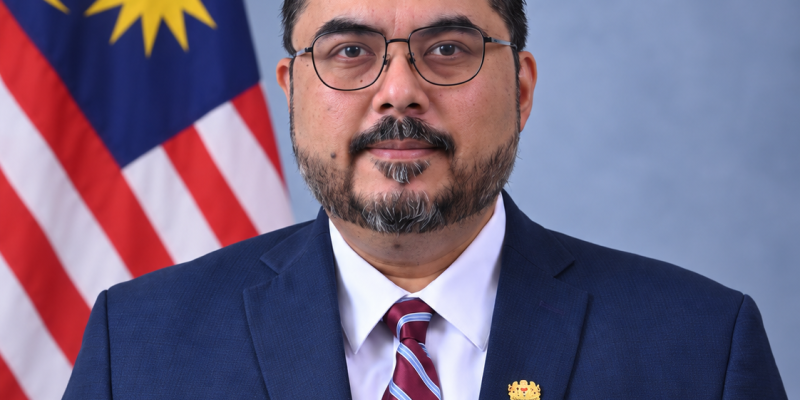
By: Dionísio Babo Soares*
The United Nations Security Council’s failure to adopt a resolution on Western Sahara on 30 October 2026 has renewed uncertainty over one of the world’s longest unresolved questions of decolonisation. Russia’s veto of a United States-drafted resolution, followed by the failure of a competing Russian proposal, has left the future of the United Nations Mission for the Referendum in Western Sahara (MINURSO) uncertain.
The immediate question is no longer why the Security Council failed to agree. It is what should happen next, and how the international community can move beyond political deadlock without compromising the Sahrawi people’s right to self-determination.
The American draft sought to restructure MINURSO, remove the reference to a referendum from its name and establish Morocco’s autonomy proposal under Moroccan sovereignty as the exclusive framework for negotiations. It received eleven votes in favour, three abstentions and Russia’s veto. A subsequent Russian proposal to extend MINURSO’s existing mandate received only three affirmative votes, insufficient for adoption.
These developments reveal a fundamental disagreement. The United States argues that decades of unsuccessful efforts to organise a referendum require a more pragmatic political approach. Russia maintains that negotiations should not predetermine sovereignty or undermine the Sahrawi people’s right to choose their future.
In my view, the issue should not become a contest between Washington and Moscow. The central question is whether the United Nations can find a credible political settlement that respects international law and the freely expressed will of the people concerned.
Western Sahara remains on the United Nations list of Non-Self-Governing Territories, where it has appeared since 1963. Its decolonisation has never been formally completed. Article 1(2) of the UN Charter, General Assembly Resolutions 1514 (XV) and 2625 (XXV), and the International Court of Justice’s Advisory Opinion of 1975 establish the continuing importance of self-determination.
The Court concluded that the historical legal ties examined did not establish territorial sovereignty capable of displacing the application of self-determination. The political future of Western Sahara therefore remains inseparable from the free and genuine expression of its people’s will.
The inability to implement self-determination cannot justify abandoning it.
Nevertheless, international law must be translated into practical diplomacy. Repeating established principles without addressing the obstacles to their implementation risks prolonging the suffering of the people concerned.
The priority should be to prevent an institutional and security vacuum. MINURSO has performed important monitoring and stabilisation functions, particularly since hostilities resumed in 2020. Its abrupt disappearance without credible replacement arrangements could increase insecurity.
The Security Council should urgently explore a temporary, legally authorised arrangement preserving essential monitoring and communication functions while allowing further negotiations. The Secretary-General’s strategic review offers opportunities to modernise the mission through mobile verification teams, satellite monitoring, and improved analytical capabilities.
The second priority should be to establish a more focused negotiating framework. The Secretary-General and his Personal Envoy, Staffan de Mistura, should facilitate substantive engagement between Morocco and the Polisario Front, with Algeria and Mauritania contributing constructively.
Negotiations could proceed gradually, beginning with confidence-building measures, humanitarian access and security guarantees before addressing institutional arrangements and political status. Clear objectives and periodic assessments would help prevent dialogue from becoming another indefinite diplomatic exercise.
The third priority, and perhaps the most important, should be to develop a credible mechanism through which the Sahrawi people can exercise self-determination.
The referendum originally envisaged under Security Council Resolution 690 (1991) remains historically significant, but disputes over voter eligibility and political conditions have prevented its implementation. A renewed approach should distinguish between the continuing legal right to self-determination and the mechanism for exercising that right.
Negotiations may examine autonomy, independence, or another internationally lawful political arrangement. However, no outcome should be considered legitimate merely because powerful states regard it as convenient. The process must respect the free and genuine will of the Sahrawi people.
The United Nations could facilitate an independent examination of procedures for determining consent, including refugee participation, voter eligibility, international observation, and safeguards against coercion.
The fourth priority should be to place human dignity at the centre of diplomacy. Sahrawi refugees in camps near Tindouf, Algeria, have endured decades of displacement, humanitarian dependence and uncertain prospects. Generations of children have grown up without experiencing a definitive political settlement.
Humanitarian assistance remains essential, but food, education and healthcare cannot replace the right to a political future. Women, young people, refugees and communities living within Western Sahara should participate meaningfully in discussions affecting their lives. Questions concerning natural resources, economic opportunities and human rights must also be addressed.
Timor-Leste’s history offers a relevant lesson, although its circumstances differ from Western Sahara. Following the foreign military invasion of 1975, East Timor’s political future remained unresolved for more than two decades. However, the United Nations continued to recognise the East Timorese people’s right to self-determination.
The internationally supervised popular consultation of 30 August 1999 eventually allowed the people to express their will. A majority of 78.5 per cent rejected the proposed autonomy arrangement within Indonesia, opening the path towards the restoration of independence in May 2002.
The lesson is not that Western Sahara must achieve the same outcome. It is that political obstacles may delay self-determination, but they do not extinguish the right itself.
A further priority should involve stronger coordination between the Security Council, the General Assembly, its decolonisation mechanisms and relevant regional actors, including the African Union. The objective should be a coherent diplomatic process that combines international legality, regional stability and meaningful Sahrawi participation.
The events of 30 October also raise questions about the responsibility of permanent Security Council members. Russia’s veto prevented the adoption of a proposal it regarded as prejudicial to self-determination, but it did not resolve the dispute. Equally, the failure of Russia’s alternative demonstrated that preserving existing arrangements did not command sufficient Council support.
Neither outcome offers a lasting solution.
What Western Sahara now requires is political imagination supported by credible institutions, sustained diplomacy and a renewed commitment to international law. The Security Council should move beyond competing resolutions toward a process capable of producing legitimate peace.
For me, the experience of Timor-Leste reinforces an enduring principle: a people’s political future cannot be determined solely by the strategic interests of powerful countries. Lasting peace requires respect for human dignity and peoples’ right to choose.
The failed vote of 30 October should therefore become an opportunity to reconsider the international approach, rather than another justification for indefinite delay.
The true measure of progress will not be whether Russia or the United States prevailed in the Security Council, nor whether MINURSO retains its original name. It will be whether the Sahrawi people finally receive a credible, peaceful and internationally legitimate opportunity to determine their own political future.
Resolutions may be vetoed, mandates may expire, and diplomatic arrangements may change. However, the Sahrawi people’s right to self-determination cannot lawfully be extinguished.
Their future must not be decided without them.
*Timor-Leste is one of the states supporting the right of the Sahrawi people to self-determination in line with international Law and the United Nations Charter, a position held since it restored its independence in 2002.