


Timor-Leste launches commercial operations of submarine cable to boost digital connectivity
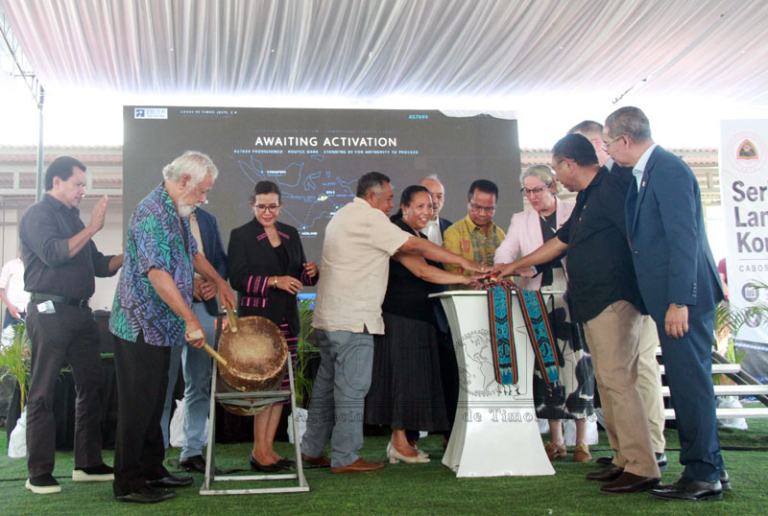
DILI, 28 July 2026 (TATOLI) — Timor-Leste on Tuesday launched the commercial operations of its first international submarine fibre-optic cable system, marking a major milestone in the country’s digital transformation and strengthening its connectivity with regional and global telecommunications networks.
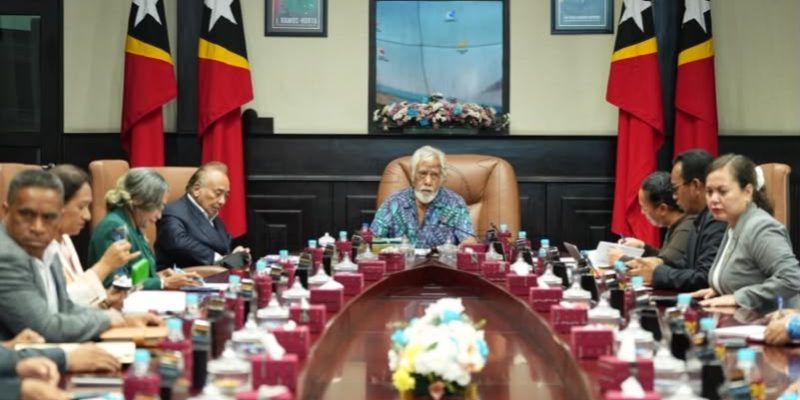
Prime Minister Kay Rala Xanana Gusmão presided over the commercial launch of Cabos de Timor-Leste (CTL), E.P., the state-owned company responsible for operating the Timor-Leste South Submarine Cable System (TLSSC), during a ceremony at the company’s headquarters in Bebonuk, Dili.
The infrastructure would provide faster, more reliable and more affordable international internet connectivity while reducing the country’s long-standing dependence on satellite internet.
“Today, we take another important step with the start of the commercial operation of this national asset by Cabos de Timor-Leste. This means our country will no longer depend so heavily on costly and less reliable satellite internet,” Gusmão said.
The Prime Minister recalled that the submarine fibre-optic cable reached Timor-Leste’s shores in June 2024. Since then, it has been installed, integrated into the national network and subjected to extensive technical testing before entering commercial service.
He said the project fulfils a key objective of Timor-Leste’s Strategic Development Plan 2011–2030, which identifies telecommunications infrastructure as a cornerstone for economic growth, improved public services and stronger integration into the regional and global digital economy.
According to Gusmão, the project’s success should ultimately be measured by its impact on people’s lives.
He said the new infrastructure would enable schools to access more digital educational resources, expand telemedicine services in health centres, improve the efficiency of public services and help businesses, farmers and cooperatives grow through better internet connectivity.
The Prime Minister also said the submarine cable would support efforts to diversify the economy beyond petroleum revenues by creating new employment opportunities in information technology, software development, telecommunications, cybersecurity and digital services.
“Our young people should not be merely consumers of technology. They must have the skills and opportunities to use technology to build businesses, provide services and solve the challenges facing our country,” he said.
Gusmão stressed that investment in digital infrastructure must be matched by investment in human capital, calling for stronger cooperation between the government, universities, technical training institutions and the private sector to develop engineers, technicians, software developers and digital specialists.
He added that Timor-Leste’s membership in the Association of Southeast Asian Nations (ASEAN) requires stronger regional digital connectivity.
After establishing its first international connection through Australia, the government plans to expand links with Indonesia and other regional networks to increase the capacity and resilience of the national telecommunications system, he said.
The Prime Minister also warned of growing cybersecurity risks associated with wider internet access, including cybercrime, online fraud and cyberattacks, saying the government would continue strengthening the country’s legal and institutional framework to protect citizens, businesses and state systems.
Transport and Communications Minister Miguel Manetelu, who also chairs CTL’s General Council, said the commercial launch fulfilled a vision first proposed by the Fifth Constitutional Government in 2014 to connect Timor-Leste directly to the global digital infrastructure through a submarine fibre-optic cable.
He said the project advanced through a partnership established with international telecommunications company Vocus in 2016.
The system comprises 607 kilometres of fibre-optic cable, seven optical repeaters and one branching unit, providing Timor-Leste with its first direct physical connection to the international communications network.
Before entering commercial service, the network underwent extensive technical testing involving government institutions and the country’s three telecommunications operators — Timor Telecom, Telkomcel and Telemor — and met all operational and performance requirements, Manetelu said.
He added that Vocus confirmed earlier this month that the system had satisfied all technical requirements for commercial operation.
“What we inaugurate today is not simply a submarine cable. We are opening a new chapter in Timor-Leste’s history,” he said.
The government began using the submarine cable in 2025 to provide internet connectivity to ministries and public institutions across the country. National telecommunications operators also started connecting to the infrastructure earlier this year.
Manetelu said the investment was designed not only to meet current demand but also to support Timor-Leste’s long-term development.
“This major investment is intended not only to meet today’s needs but also to benefit the Timorese people for generations to come. We must make the best use of this opportunity while continuing to strengthen our national capacity in cybersecurity and cybercrime prevention,” he said.
The submarine cable has a total capacity of 27 terabits per second (Tbps), of which 13.5 Tbps has been allocated to Timor-Leste. Current peak internet usage in the country is around 40 gigabits per second (Gbps), leaving substantial unused capacity to accommodate future growth.
Manetelu said pricing for telecommunications operators and internet service providers would depend on the amount of bandwidth purchased. During the system’s first year of operation, capacity will be offered at a promotional rate of US$17, reflecting a 50% discount.
Journalist: Afonso do Rosário
Editor: Isaura Lemos de Deus
Translation: Filomeno Martins