


Princess Sonam calls for science to serve people and protect future generations
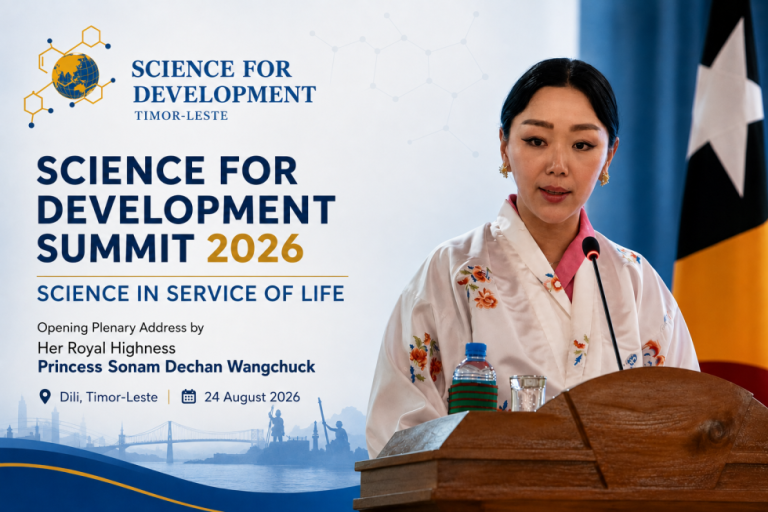
DILI, 24 August 2026 (TATOLI) — Science must advance alongside human responsibility, with researchers and policymakers ensuring that new technologies improve lives, protect the environment and do not leave vulnerable communities behind, Bhutanese Princess Sonam Dechan Wangchuck said Monday.
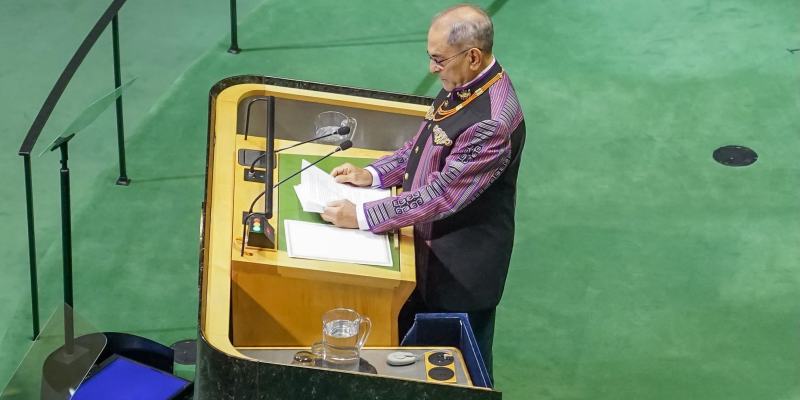
In her opening plenary address at the Science for Development Summit 2026 in Dili, Princess Sonam said the world was entering a period of rapid scientific and technological change, with artificial intelligence, biotechnology, climate science and new forms of energy expanding the boundaries of what is possible.
But she said the central question was no longer simply what science could achieve, but how societies would use those advances.
“Who will benefit? Who might be left behind? What will our choices ask of the Earth?” she asked.
She urged scientists, policymakers and communities to consider those questions from the beginning of the research and development process rather than after new technologies had been created.
The challenges facing the world — including climate change, technological disruption, inequality, food and energy security, public health and artificial intelligence — do not respect national borders, she said.
“Science will be central to how we meet them,” Princess Sonam said. “But science does not exist apart from society. Knowledge acquires meaning through what we choose to do with it.”
She called for technology to be designed to include rather than exclude, particularly ensuring that people with the fewest resources are not left behind as new systems and technologies reshape economies and societies.
Princess Sonam also urged a broader understanding of progress, saying traditional measures such as patents, productivity, economic scale and profit should be considered alongside improvements in health, the sharing of knowledge, environmental restoration, reduced inequality and the protection of human dignity.
“These are not softer measures of progress,” she said. “They tell us whether progress is serving its purpose.”
She said decisions made today would shape the lives of generations who had no role in making them.
“Somewhere, a child we will never meet will live with the consequences of the choices we make today,” she said, pointing to children who might grow up beside a snow-fed river in Bhutan or near the Timor Sea.
Their health, education, livelihoods and the environment they inherit could depend on decisions being made today, even if they never know the scientists or policymakers behind those choices, she said.
“Knowledge gives us possibility. Our values determine what we do with it,” Princess Sonam said.
“The measure of progress is not only what we create, but the quality of the lives that follow.”
She urged participants to take that message forward from Dili, saying scientific ambition and human responsibility should move together.
“And perhaps that is the question worthy of carrying forward from Dili: What kind of future is worthy of our children?” she said.
Princess Sonam also highlighted the relationship between Bhutan and Timor-Leste, saying the two countries were separated by mountains and seas and had different histories, but shared an understanding that the future should be shaped through courage, imagination and partnership.
She thanked President José Ramos-Horta and the people of Timor-Leste for their welcome and conveyed greetings from Bhutan’s King, Queen, the Fourth Druk Gyalpo and the Bhutanese people.
She also extended greetings to Prime Minister Xanana Gusmão, whose long service to Timor-Leste, she said, continued to contribute to the country’s development and prosperity.
TATOLI