


Yellow croaker farming blossoms into a billion-dollar industry in Ningde waters
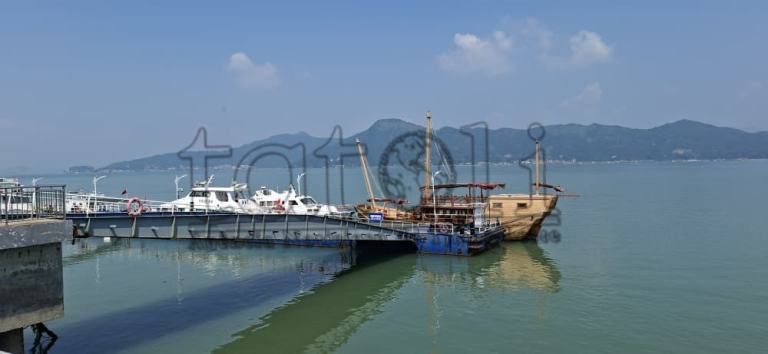
NINGDE, 20 September 2026 (TATOLI) – Vast stretches of aquaculture cages dotting the waters of Ningde provided a striking final view for a delegation of journalists from ASEAN countries as they prepared to depart the city. The visit concluded their leg of the ASEAN Media Workshop before heading onward to Dehua County in Quanzhou City, Fujian Province, China.
Following a tour of Contemporary Amperex Technology Co. Limited (CATL), the delegation traveled to the Large Yellow Croaker Industrial Base, one of China’s premier cultivation hubs for the large yellow croaker (Larimichthys crocea).
Embarking from the port by ferry, the journalists journeyed out to the offshore aquaculture zone, observing extensive marine farming operations cultivating a rich diversity of seafood commodities. Beyond the signature large yellow croaker, Ningde’s coastal waters support the production of fish, shrimp, crabs, shellfish, octopus, and other marine goods.
The field trip offered reporters a firsthand look at how marine resources, which once exclusively sustained traditional fishing villages have evolved into a high-tech aquaculture sector powered by advanced scientific research, modern processing systems, and expansive marketing networks.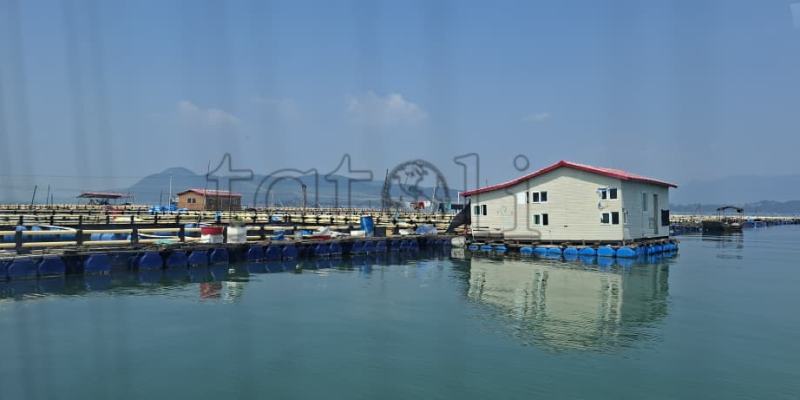
From a scarce catch to a major economic pillar
Ningde stands proudly as one of China’s primary productions epicenters for the large yellow croaker. In 2025, regional output reached approximately 222,440 tons, generating an industrial chain value exceeding 20 billion yuan (roughly US$2.92 billion). These premium fish products are currently exported to more than 60 countries and regions worldwide.
According to You Weide, Chairman of Ningde Guanjinyang Large Yellow Croaker Breeding Co., Ltd., Fujian Sandu’ao Foods Co., Ltd., and Fujian Sandu’ao Logistics Co., Ltd., the city’s unique geography is a driving force behind its success.

“This bay is a naturally sheltered harbor. The area is well protected from strong winds and typhoons, while the waters are deep and contain a large volume of seawater. These conditions make it one of the best areas in China for aquaculture,” You told the delegation.
Highlighting the region’s topography, he added, “We have mountains and we also have the sea. The seawater here is very good and clean, and the level of pollution is relatively low. These natural conditions are highly suitable for farming large yellow croaker.”
This booming industry, however, was decades in the making. You explained that roughly thirty years ago, wild populations of the fish had drastically plummeted, turning the species into a rare find. During the period when Xi Jinping worked in Ningde, pivotal attention was directed toward restoring the species through artificial breeding initiatives.
“About 30 years ago, large yellow croaker had almost disappeared from these waters. At that time, the local economy was also relatively weak. Despite financial constraints, resources were still allocated to research and development to find ways to artificially breed the fish,” You recalled.
Pioneering research spanning fry production, specialized feed formulation, and advanced rearing methods gradually revived the species, creating widespread economic opportunities.
“The idea is that one industry can drive the development of many other industries. When the fish industry develops, it creates opportunities for many people, from small households to larger companies,” You noted.
Today, Ningde features a fully integrated industrial chain encompassing breeding, cultivation, processing, cold storage, transportation, international logistics, and global marketing. You emphasized that large yellow croaker shares global recognition alongside Ningde’s other economic powerhouse: “Ningde is a relatively small city, but we have two products that are known around the world. One is large yellow croaker, and the other is the power battery industry.”
Technology transforms modern fish farming
Aquaculture practices have undergone a technological revolution. Where farmers once relied on small fish and traditional feed, operations now utilize scientifically formulated pellet feeds dispensed via automated machinery.
“Now we use formulated pellet feed, and feeding can be carried out using machines. Aquaculture is becoming increasingly scientific,” You observed.
Technology now dictates breeding, monitoring, and overall farm management. Supported by government subsidies for equipment upgrades, production capacities have skyrocketed. You illustrated this growth using his company’s large sea cages, which measure approximately 24 meters long and 12 meters deep.
“In the past, one cage could produce around 200,000 pounds of fish, but with improved technology and farming methods, production can now reach around 500,000 pounds,” he explained.
Ningde is also pioneering deep-sea aquaculture models utilizing storm-resistant cages and smart monitoring systems.
Why are yellow croakers harvested at night?
An intriguing detail shared with the media delegation involved the fish’s unique pigmentation. Although named the “large yellow croaker,” exposure to sunlight can cause its scales to appear relatively pale or white.
“The name of this fish is large yellow croaker, but during the daytime its color can appear relatively white. At night, however, its color changes to golden yellow,” You explained.
To preserve the vibrant golden hue that commands high market value—earning it the local moniker “golds from the sea”, harvesting operations are strictly conducted at night, away from direct sunlight.
Transforming coastal livelihoods and communities
The expansion of the fisheries sector has fundamentally reshaped employment patterns across Ningde. While many residents continue working in aquaculture, fishing, and seaweed or shellfish cultivation, younger, highly educated generations increasingly find opportunities in urban industrial zones and tech sectors.
Beyond commercial success, You has channeled corporate growth into community development, allocating approximately 38.76 million yuan toward building Hope Primary Schools, supporting low-income university students, and upgrading village roads, clean drinking water systems, and senior activity centers.
Concluding their busy Ningde itinerary on September 20, the ASEAN media delegation enjoyed lunch before boarding a bus for a 3.5-hour road journey to Dehua County, Quanzhou City, where they spent the night ahead of the next phase of their Fujian program.
Journalist: Cidalia Fátima
Editor: Rafael Ximenes de A. Belo