


Exploring Quanzhou’s heritage: From ceramics to religious diversity

QUANZHOU, 21 September 2026 (TATOLI) — From a ceramic tradition spanning more than 3,700 years in Dehua to the enduring traces of Buddhism, Islam, and Taoism in the heart of the city, a delegation of journalists from ASEAN countries recently explored the rich heritage of Quanzhou in Fujian Province, China, a city shaped by centuries of vibrant trade and cultural exchange.
The visit formed part of the third day of the ASEAN Media Workshop programme in Fujian on Monday, with the delegation beginning its journey in Dehua County before continuing to downtown Quanzhou.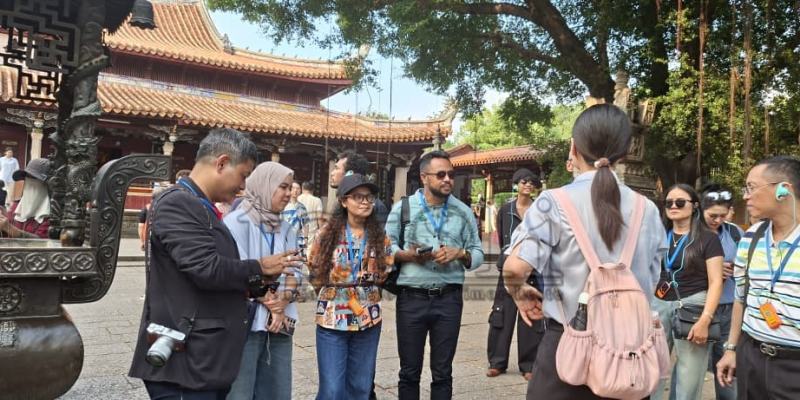
Dehua is globally renowned as one of China’s major ceramic production centers. The earliest traces of ceramic production in the area, including proto-celadon, date back more than 3,700 years. This traditional craft was passed down through generations, eventually giving rise to Dehua white porcelain, internationally recognized as “Blanc de Chine” or “China White.”
Today, this heritage is not only carefully preserved as history, but has also developed into a thriving modern industry. Dehua is home to more than 4,500 ceramic enterprises employing over 100,000 people, with its products successfully marketed in more than 190 countries and regions.
From January to July 2025, Dehua’s ceramic exports were valued at approximately 2.138 billion yuan (around $297.9 million), while the overall scale of its ceramic industrial cluster reached approximately 41.61 billion yuan (equivalent to $5.797 billion).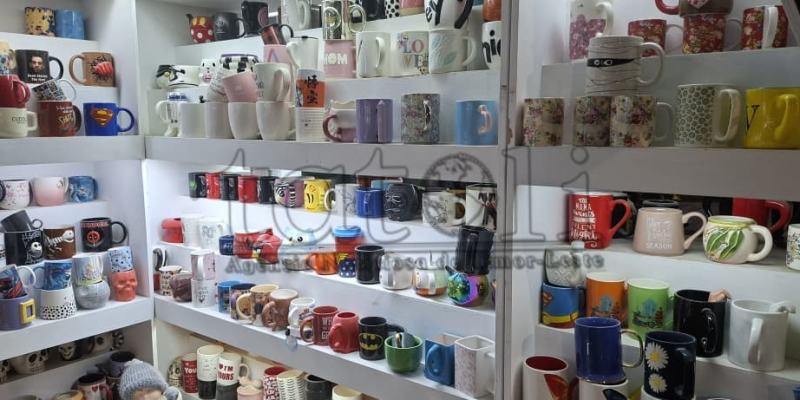
Tracing Dehua’s long ceramic history
The delegation began its tour at the Dehua Ceramics Museum, where journalists viewed extensive collections documenting the long history and development of ceramics in the region.
- Artifact Evolution: Different shapes, patterns, colors, and functions demonstrated how earlier generations transformed clay into everyday items before the craft evolved into highly valued works of art.
- Cultural Identity: The museum exhibits offered profound insights into shifting techniques and aesthetics, showcasing how pottery became central to Dehua’s identity.
Following the museum, the delegation visited the Qudougong Kiln Site, a vital archaeological location discovered in 1953 that helps historians understand ancient Dehua ceramic production. Excavations conducted on April 25 and 26, 1976, by the Fujian Museum, Xiamen University’s Department of Archaeology, and relevant government bodies, spanned approximately 1,015 square meters.
A significant discovery at the site was a multi-chambered dragon kiln built along a natural slope. Measuring roughly 57.1 meters long and 1.4 to 2.95 meters wide, the kiln features a head oriented at approximately 345 degrees and a floor gradient ranging from 12 to 22 degrees. Although the roof has collapsed, key structural elements remain visible, including the firing chamber, kiln chambers, doors, and walls.
For the ASEAN journalists, the visit highlighted how the modern success of Dehua’s ceramic industry is firmly rooted in ancient production techniques.
An ancient tradition becomes a global industry
Before lunch, the delegation visited Shunmei Ceramics Cultural World to observe how traditional craftsmanship has scaled to meet modern global market demands.
Unlike traditional museums, Shunmei displayed an array of contemporary products extending far beyond plates, bowls, and cups. Ceramics have been creatively transformed into cartoon characters, Christmas decorations, souvenirs, and religious statues, including figures of Jesus and Christian-themed goods.
“We now cooperate with more than 100 countries,” Young Zheng, Business Director and Supply Chain Manager at Fujian Quanzhou Shunmei Group, told journalists.

Zheng noted that the company ships approximately 200 containers of products every month. Shunmei actively drives innovation, holding at least 11 invention patents, 38 utility model patents, and eight design patents. In 2017, the company recorded exports worth roughly $18.48 million and has partnered with international entertainment giants such as Disney and Universal.
When asked by TATOLI whether Shunmei products had entered the Timor-Leste market, Zheng noted that while he has met people from Timor-Leste, he could not personally confirm specific transactions due to the scale of the company’s global sales network.
From Dehua to a historic maritime trading centre
After lunch, the delegation traveled for about an hour and a half to downtown Quanzhou, visiting the Quanzhou Maritime Museum, which preserves the history of ancient overseas exchanges and the Maritime Silk Road.
- Collection Highlights: Roughly 9,365 cultural relics and artifact sets, including an ancient Song Dynasty seagoing shipwreck, religious stone carvings from the Song and Yuan dynasties, and historical export porcelain.
- Cultural Diffusion: The museum illustrated how the sea connected Quanzhou globally, bringing not just commodities, but also new languages, beliefs, and ways of life from regions like Arabia and Persia.
Quanzhou boasts at least 945 protected cultural heritage sites. In 2021, “Quanzhou: Emporium of the World in Song-Yuan China” was officially inscribed on the UNESCO World Heritage List.
Religious diversity: Buddhism, Islam, and Taoism
Quanzhou’s deep religious diversity unfolded as the delegation toured several iconic landmarks: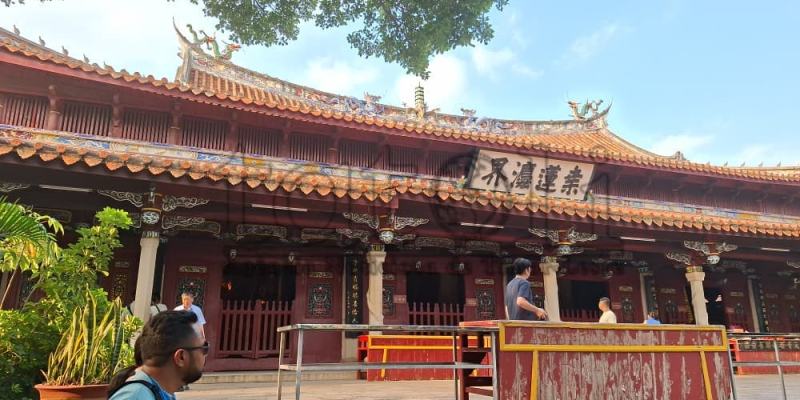
- Kaiyuan Temple: Established in 686 during the Tang Dynasty and originally named Lotus Flower Temple, this 80,000-square-meter complex is the largest Buddhist temple in Fujian Province and a core component of Quanzhou’s UNESCO World Heritage site.
- Qingjing Mosque: Originally built in 1009 during the Northern Song Dynasty as Masjid al-Ashab, it is regarded as the oldest Islamic mosque in Quanzhou. Restored in 1310 by Persian pilgrim Ahmad Bin Muhammad Quds, its surviving gate tower and prayer hall reflect rich Arab and Persian influences.
- Taoism in Old Quanzhou: Along the West Street Cultural Block—a historic district spanning over 1,300 years—the delegation visited a local Taoist temple where residents offered prayers for good fortune, prosperity, and life partners.
A living heritage
Monday’s journey underscored how production, trade, and cultural exchange seamlessly intertwined to shape Quanzhou over centuries. Dehua’s thriving industry, alongside Quanzhou’s maritime museum, Buddhist temples, mosques, and Taoist shrines, proves that historical heritage remains a vibrant part of contemporary life and economic progress.
After concluding their walk through the West Street Cultural Block, the delegation retired to the C&D Hotel (also known as Yuehua Hotel) in downtown Quanzhou. On Tuesday, 22 September, the ASEAN Media Workshop programme continues with a visit to Anta Group before heading to Xiamen City.
Journalist: Cidalia Fátima
Editor: Rafael Ximenes de A. Belo