


Known as the Piano island, Gulangyu preserves traces of China’s encounters with the world
XIAMEN, 22 September 2026 (TATOLI) – The sound of piano music welcomed a delegation of journalists from ASEAN countries as they visited Gulangyu, a small island off the coast of Xiamen in Fujian Province, China, on Monday afternoon. Behind its nickname, the “Piano Island,” Gulangyu preserves a long history of cultural encounters between China, Southeast Asia, and the West, traces of which can still be found in its musical heritage and hundreds of historic buildings.
The delegation arrived in Xiamen at around 4:00 p.m. local time after a roughly one-and-a-half-hour journey by road from Quanzhou as part of the ASEAN Media Workshop program in Fujian Province.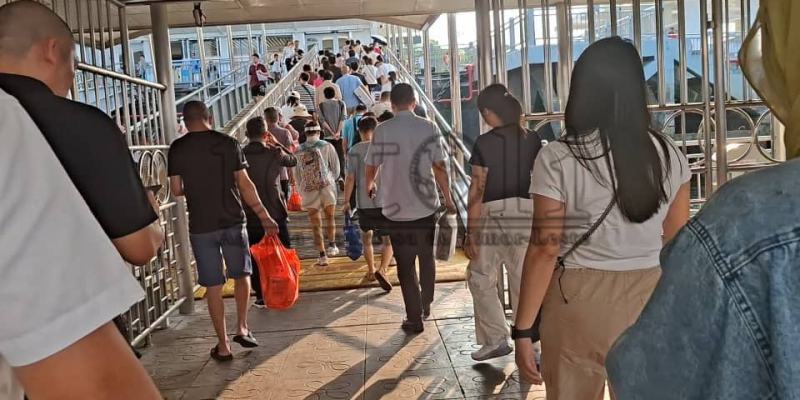
Upon arriving in Xiamen, the group headed directly to the ferry terminal serving tourists traveling to Gulangyu. Before entering the departure area, foreign visitors were required to present their passports for registration, while local residents used their identity cards.
From the harbor area, the contrast between Gulangyu and downtown Xiamen was already clearly visible.
On one side, Xiamen’s cityscape is dominated by rows of high-rise buildings and modern architecture. Across the water, Gulangyu presents a different landscape, characterized by greenery and historic buildings without the dominance of skyscrapers.
The ferry journey took less than 10 minutes before the delegation reached the island, historically known as Kulangsu in UNESCO documents.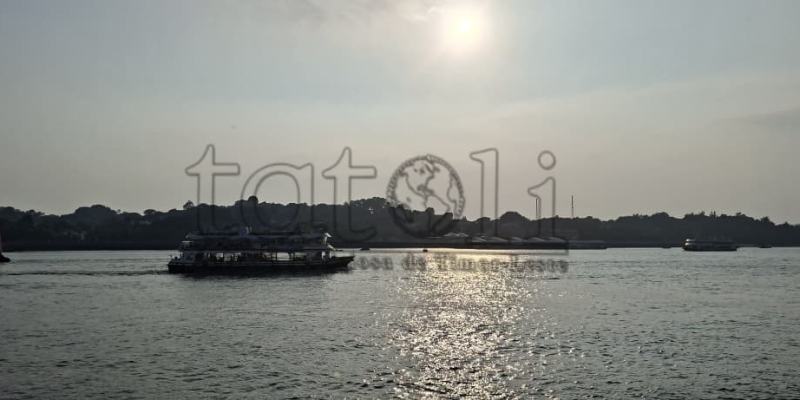
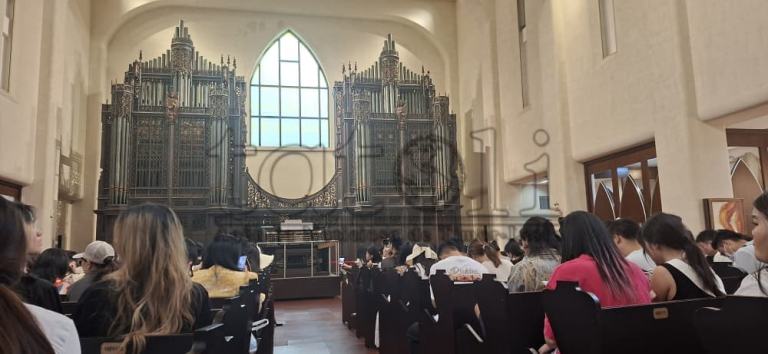
Shortly after arriving, the tour guide introduced the history of the island before taking the journalists to a music performance hall.
There, the delegation watched a pianist perform three pieces. One melody, familiar from the *Harry Potter* films, immediately caught the participants’ attention and was greeted with warm applause.
The performance served as an introduction to one of Gulangyu’s best-known identities as the “Piano Island.”
Gulangyu’s piano tradition developed alongside the island’s growing connections with the outside world beginning in the 19th century. Western music was introduced through international communities, schools, churches, and families before gradually becoming part of local cultural life.
After enjoying the performance, the delegation continued on foot, climbing a series of steps toward an area filled with historic buildings.
The columns, balconies, arches, windows, and villa-style designs of several buildings give the area a distinctly European architectural impression. However, Gulangyu’s historic buildings were not all built by Europeans.
The island’s development involved local Chinese communities, foreign residents, missionaries, consular officials, and overseas Chinese who returned from different parts of the world. The interaction among these communities gradually shaped Gulangyu’s distinctive architectural character.
The island’s transformation is closely linked to the opening of Xiamen as a trading port in 1843. Gulangyu later developed into an international settlement in 1903, becoming a focal point for exchanges between China and the outside world.
International communities brought various architectural influences and concepts of urban life. At the same time, Fujian residents and returning overseas Chinese, including those with connections to Southeast Asia, built houses and villas incorporating cultural and architectural experiences from the places where they had previously lived.
As a result, Gulangyu’s landscape reflects not simply Western architecture, but a fusion of different traditions.
UNESCO records 931 historic buildings as an important part of Kulangsu’s heritage landscape. These buildings display a variety of styles, ranging from traditional Southern Fujian architecture and Western Classical Revival to Veranda Colonial Style, Modernism, and Art Deco.
The interaction of these influences also contributed to the emergence of a distinctive architectural style known as Amoy Deco.
“Amoy” is the historical name for Xiamen, derived from the local Hokkien language. Amoy Deco combines Southern Fujian building traditions with international influences, particularly Modernism and Art Deco, as well as the cultural experiences of Fujian people who migrated overseas and later returned home.
This cultural exchange was among the reasons “Kulangsu, a Historic International Settlement” was inscribed on the UNESCO World Heritage List in 2017.
UNESCO considers the island an important example of the encounter and exchange of cultural and architectural values between China, Southeast Asia, and the West, particularly from the mid-19th century onward.
Efforts to preserve Gulangyu’s heritage are also connected to Chinese President Xi Jinping, long before he became the country’s head of state.
While serving as Vice Mayor of Xiamen in the 1980s, Xi was involved in developing Xiamen’s economic and social development strategy for the 1985–2000 period. The plan placed a strong emphasis on protecting Gulangyu’s historical, cultural, and environmental values.
One example came in 1986, when Bagua Mansion, or Bagualou, one of Gulangyu’s historic buildings—required renovation. Chinese government records state that Xi supported the allocation of 300,000 yuan in special funding for the building’s restoration.
The red-domed building, constructed in the early 20th century, was subsequently preserved and is now one of the important landmarks associated with Gulangyu’s musical heritage.
Xi’s role in Gulangyu’s modern history is therefore associated with the planning and preservation of the island, while most of its historic buildings featuring international architectural influences had been constructed long before that period.
The delegation then continued its visit to the Piano Museum, which houses a collection of historic pianos from different periods.
The museum’s collection showcases various forms and stages in the development of the piano from different countries and eras, including instruments originating from Europe, the United States, and Australia.
An important part of the museum’s collection is associated with Hu Youyi, a Gulangyu-born collector who later lived in Australia and brought a collection of historic pianos to be displayed in his hometown.
This collection, together with Gulangyu’s long tradition of music education and performances, has further strengthened the island’s identity as the Piano Island.
As 6:00 p.m. approached, after completing a visit that took them from a live musical performance to historic buildings and collections, the delegation returned to the pier and boarded a ferry back to downtown Xiamen.
The group then headed to XiamenAir Hotels to rest before continuing its activities in Xiamen the following day, marking the final day of the ASEAN Media Workshop program in Fujian Province.
After completing the Xiamen program, the delegation is scheduled to leave Fujian and continue its journey to Beijing in the evening.
Journalist: Cidalia Fátima
Editor: Rafael Ximenes de A. Belo