


Timor-Leste and EU review progress on public finance and digital transformation

DÍLI, 24 September 2026 (TATOLI) — Timor-Leste and the European Union have stepped up high-level political dialogue on public financial management and digital transformation, reviewing progress made and setting priorities to build a more efficient, transparent and modern public administration.
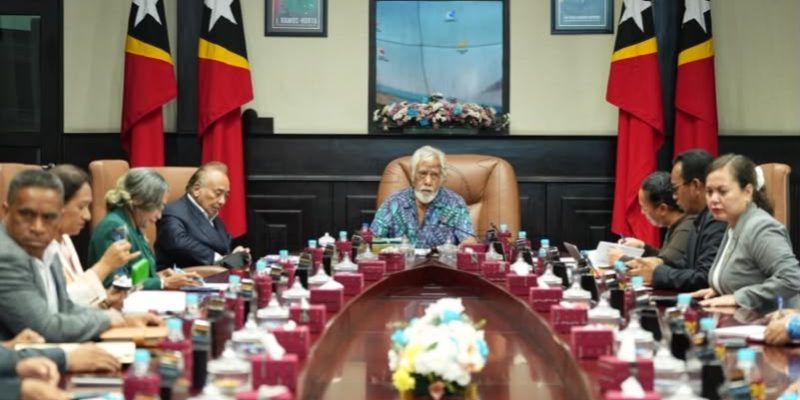
The first high-level political dialogue under the Partnership for Public Financial Management and Digital Transition in Timor-Leste (PADIT-TL) was held at the Ministry of Finance in Dili on Thursday.
The meeting brought together government officials, EU representatives, diplomats, development partners, civil society organisations and other institutions to assess ongoing reforms, discuss remaining challenges and identify measures to strengthen public financial management and accelerate digital transformation.
The dialogue was co-chaired by Finance Minister Santina Cardoso and EU Ambassador to Timor-Leste Thorsten Bargfrede.
Bargfrede said the dialogue came at an important stage for Timor-Leste as the country pursued reforms in public financial management alongside the digitalisation of government institutions.
He that these areas are closely connected and essential to strengthening state institutions and improving the delivery of services to citizens.
Bargfrede said the dialogue gives the government and the EU an opportunity to jointly assess the progress achieved, the challenges that remain and where efforts should be focused in the period ahead.
The discussions covered public financial management, financial and digital policy, budget transparency and oversight, budget execution, and a new policy-based approach to budget preparation.
Bargfrede said EU budget support was linked to performance indicators and reforms agreed with the Timor-Leste government, allowing both sides to assess results and determine the measures needed to meet agreed commitments.
PADIT-TL is designed to support the modernisation of public financial management systems and the digital transformation of government institutions. The partnership has total funding of €12 million, including €9 million in budget support and €3 million for e-governance and digital literacy.
Bargfrede said greater integration of government systems, including tax, customs, public procurement and human resources systems, could help the government make better use of information, strengthen accountability and improve decision-making.
The EU is also supporting the Dalan ba Dijitál project, implemented by the United Nations Development Programme, which is helping establish the foundations of Timor-Leste’s digital transformation ecosystem through infrastructure, legislation, institutional strengthening and capacity building.
The EU plans to complement this support with an e-justice programme implemented with Portugal, Lithuania and Italy to help digitalise the justice system.
Bargfrede said EU budget support was intended to accompany and sustain national reforms while strengthening political dialogue and helping translate strategic priorities into concrete results.
He identified national ownership, coherence and inclusion, and accountability as three guiding principles for the EU’s support.
While acknowledging significant progress, Bargfrede said challenges remained in budget execution, transparency, accountability, institutional coordination and the effective use of digital tools.
Minister Cardoso said the dialogue provided an opportunity to review achievements, discuss challenges, identify practical solutions and agree on priorities for the next phase of reforms.
She described the political dialogue as a central component of EU support because it provides a space for open and constructive engagement while keeping the focus on reforms and shared objectives.
The minister thanked the EU for its continued support, noting that it was currently the only development partner providing direct budget support to Timor-Leste.
She highlighted EU cooperation in areas including nutrition, justice, e-justice and agroforestry, saying previous EU programmes had helped strengthen public financial management, improve nutrition and support decentralisation.
Cardoso said the direct budget-support mechanism placed the government in the lead of the reform process and used national systems to ensure that supported activities benefited the population.
The mechanism combines fixed and variable components. The fixed component is linked to overall progress and implementation stability, while the variable component provides an incentive for achieving specific reforms within agreed deadlines.
Once results have been verified, the funds are disbursed directly to the government and integrated into the national financing system, providing greater flexibility and supporting the government’s fiscal position.
Cardoso said the public financial management support programme would run for three years, with potential funding of €9 million, aimed at improving efficiency, transparency, sustainability and equity throughout the budget cycle.
The programme also supports digitalisation and the secure use of e-government services, with particular attention to women and vulnerable groups.
Cardoso said the inauguration of the fibre-optic cable and progress in digitalising tax services had created opportunities to improve connectivity and strengthen regional integration.
She said these developments also highlighted the need to strengthen digital public services, expand access, improve transparency, simplify administrative procedures and enhance cybersecurity.
The minister said the Ministry of Finance received the first disbursement of the fixed component of the budget-support programme in 2025.
A comprehensive assessment for the second disbursement has recently been completed and is expected to cover both the fixed and variable components.
The current dialogue is expected to focus on results achieved in 2025, progress towards the 2026 targets and preparations for the programme’s 2027 targets.
Cardoso also called on development partners to consider results-based budget support in future cooperation arrangements, with greater use of national systems and a stronger country-led approach.
Through PADIT-TL, the EU is also supporting Timor-Leste’s alignment with ASEAN standards, international norms, regional cooperation and the objectives of the European Union’s strategy for the Indo-Pacific.
Journalist: Afonso do Rosário
Editor: Isaura Lemos de Deus
Translation: Filomeno Martins