


Timor-Leste seeks stronger cooperation to combat trade-based money laundering
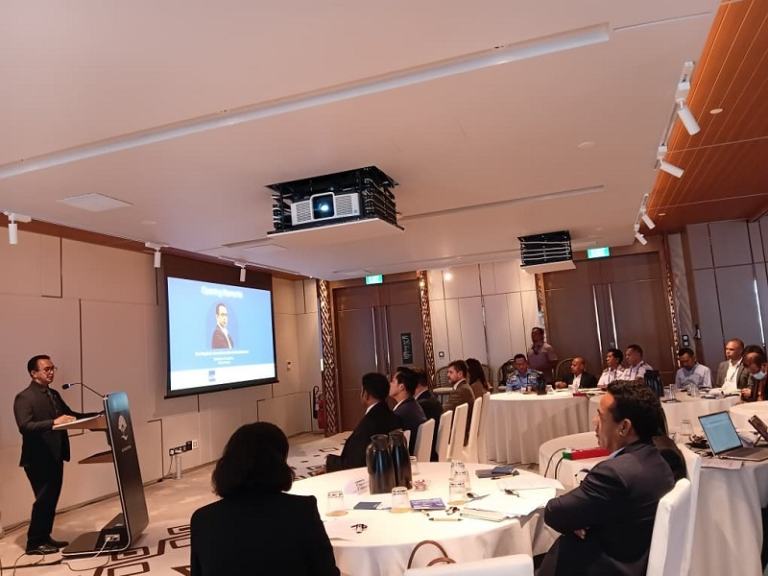
DÍLI, 21 October 2026 (TATOLI) — Timor-Leste is seeking to strengthen cooperation among national institutions to detect and combat trade-based money laundering, including through the development of national guidelines and improvements to suspicious transaction reporting mechanisms.
Justice Minister Sérgio Hornai, who co-chairs the National Commission for the Implementation of Measures to Combat Money Laundering and Terrorist Financing, announced the initiative at the opening of a national workshop in Dili aimed at strengthening the country’s response to financial crime.
The workshop, running until October 21, is titled Strengthening National Responses to Trade-Based Money Laundering: From Detection to Action. It was organised by the Asian Development Bank (ADB) in partnership with the United Nations Office on Drugs and Crime (UNODC).
The event brings together representatives from the Customs Authority, the Scientific Criminal Investigation Police, the Office of the Prosecutor-General, commercial banks, other financial institutions and the private sector to strengthen institutional and operational capacities to combat trade-based money laundering across Southeast Asia.
Hornai said the crime posed a complex challenge because criminals use seemingly legitimate trade transactions to conceal the illegal origins of funds and move money across international borders.
Common methods include falsifying invoices, deliberately underpricing or overpricing goods, and manipulating trade documents to disguise proceeds from criminal activities.
The minister said detecting such schemes was difficult because relevant information was often scattered across different institutions, including banks, customs authorities, law enforcement agencies and judicial bodies.
He called for stronger inter-agency cooperation and information-sharing between institutions responsible for analysing financial transactions and those monitoring goods crossing national borders.
The workshop is expected to support the development of national guidelines on combating trade-based money laundering and improve procedures for reporting suspicious transactions, Hornai said.
He added that these tools should be tailored to Timor-Leste’s institutional context to ensure that the identification of suspicious activities leads to concrete and effective action.
Hornai also reaffirmed the government’s commitment to aligning national measures to prevent and combat financial crime with international standards established by the Financial Action Task Force (FATF).
ADB country director for Timor-Leste Artur Andrysiak highlighted the importance of international trade to economic growth but warned that the complexity of cross-border transactions could also create opportunities for criminals to conceal illicit funds.
He said tackling the problem required effective coordination, information-sharing and a joint commitment from both the public and private sectors.
Andrysiak added that the workshop was part of a regional initiative led by the ADB and UNODC to strengthen institutional and operational capacity to combat money laundering across Southeast Asia.
Woody Tan, head of UNODC’s Global Programme against Money Laundering, explained that criminals could manipulate information about the price, quantity or quality of goods to move illicit funds through international trade.
He said fragmented information held by traders, banks, customs authorities and commercial registries made it difficult for authorities to identify the full scope of suspicious transactions.
Tan stressed that control mechanisms should improve the ability to identify high-risk transactions without creating unnecessary barriers for businesses engaged in legitimate trade.
He also highlighted UNODC’s technical assistance to member states, including risk-assessment tools and information-sharing mechanisms designed to strengthen the prevention and investigation of financial crime.
Over the two-day workshop, participants examine emerging methods of trade-based money laundering, exchange experiences, review practical cases and identify ways to improve cooperation among institutions.
Journalist: Afonso do Rosário
Editor: Isaura Lemos de Deus
Translation: Filomeno Martins