


Timor-Leste, São Tomé and Príncipe call for stronger cooperation against online fraud
DÍLI, 28 October 2026 (TATOLI) – Timor-Leste and São Tomé and Príncipe have called for stronger international judicial cooperation to combat online fraud, human trafficking linked to cybercrime and other forms of cross-border digital crime.
The countries stressed the need to improve investigative capacity, accelerate the exchange of digital evidence and strengthen measures to protect victims as criminals increasingly exploit digital platforms and operate across national borders.
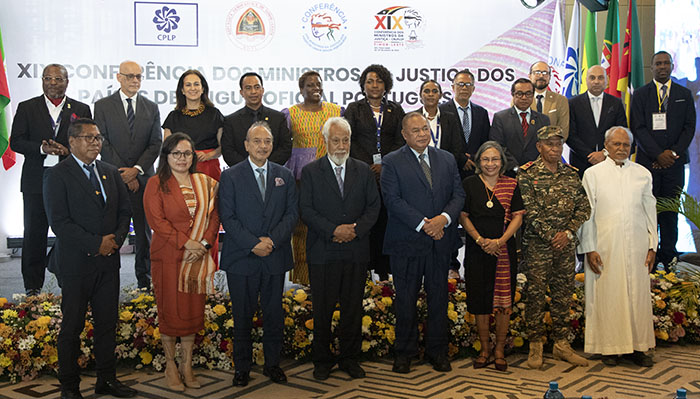
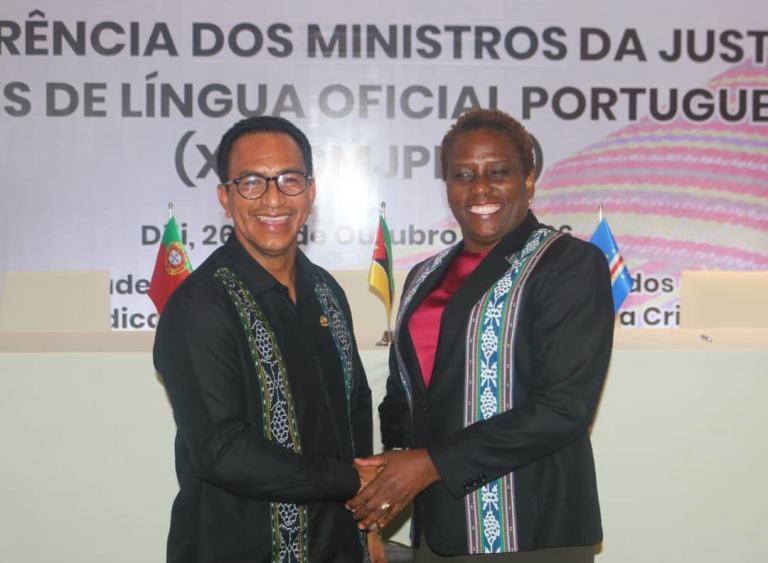
The call was made by Timor-Leste’s Justice Minister, Sérgio Hornai, and São Tomé and Príncipe’s Minister of Justice, Parliamentary Affairs and Women’s Rights, Vera Gomes Cravid, during the 19th Conference of Ministers of Justice of Portuguese-Speaking Countries in Dili on Wednesday, in Díli.
Addressing the conference, Hornai warned of indications that human trafficking networks were linked to online fraud in Timor-Leste, including cases involving fraudulent recruitment and coercion to carry out illegal activities.
“We must prevent these networks from establishing themselves and expanding, while strengthening our institutions’ capacity to prevent, investigate and cooperate,” he said.
Hornai said online scams posed a growing threat to individuals and businesses, causing financial losses and putting people’s safety at risk.
“A fraudulent message can cause a family to lose its savings. But these scams also harm businesses,” he said.
He called for a coordinated international response, arguing that stronger legal cooperation and more effective investigative capabilities were essential to tackling criminal activities that extend beyond national jurisdictions.
The minister also urged countries to exchange best practices in prevention and investigation, improve communication between relevant authorities and ensure digital evidence was preserved promptly before it could be lost or deleted.
He said the conference should produce practical measures to strengthen judicial cooperation and better protect citizens against emerging forms of crime.
Strengthening international judicial cooperation
Hornai also highlighted the importance of deepening Timor-Leste’s relations with the Association of Southeast Asian Nations (ASEAN), the European Union and ASEAN Plus Three, which comprises China, Japan and South Korea.
He said Timor-Leste’s links with both the Portuguese-speaking world and Southeast Asia offered opportunities to exchange expertise, train justice professionals and modernise judicial services.
The minister also emphasised the importance of facilitating the circulation and verification of notarial documents. He highlighted the need for technical discussions to prepare for Timor-Leste’s accession to the Apostille Convention, which simplifies the authentication of public documents intended for use in other member countries.
Hornai further called for clear, consistent and accessible legal rules to facilitate the implementation of legislation and strengthen legal certainty.
São Tomé and Príncipe urges faster exchange of digital evidence
Cravid said no country could effectively tackle online fraud and transnational digital crime on its own.
She noted that criminals often used false identities, digital platforms operating under different jurisdictions and financial transactions spanning several countries, making investigations more complex.
The offences included financial fraud, identity theft, phishing, social engineering scams and data manipulation, she said.
Cravid called for stronger mechanisms for mutual legal assistance, extradition, the transfer of criminal proceedings and the identification and tracing of suspects and assets linked to criminal activities.
She also stressed the need to improve procedures for obtaining and sharing digital evidence, noting that information essential to an investigation could be stored outside the country where the crime occurred.
“How can we obtain evidence held under the jurisdiction of another state quickly and in a legally valid manner?” she asked.
Cravid said addressing this challenge required faster, more secure and more efficient communication channels between national authorities.
However, she stressed that cooperation must respect the rule of law, due process, data protection and fundamental rights.
Prevention and protection of victims
Both ministers identified victim protection as a key priority in tackling online fraud and other forms of digital crime.
Cravid said efforts should go beyond prosecuting offenders and include preventive measures, public information campaigns and initiatives to improve citizens’ ability to recognise and respond to online threats.
She identified digital literacy programmes, public awareness of online risks and stronger reporting mechanisms as essential measures to reduce people’s exposure to scams and improve support for victims.
The São Toméan minister also called for greater knowledge-sharing, the exchange of best practices and stronger international judicial cooperation. She urged countries to jointly assess whether their national laws adequately address emerging technological challenges.
Cravid said the shared Portuguese language, common legal traditions and institutional ties among Portuguese-speaking countries provided a strong foundation for deeper cooperation.
The conference provides a forum for justice ministers from Portuguese-speaking countries to discuss common legal challenges and strengthen cooperation across their judicial systems.
Journalist: Afonso do Rosário
Editor: Isaura Lemos de Deus
Translation: Filomeno Martins