


Timor-Leste awards mineral exploration licences to 19 companies
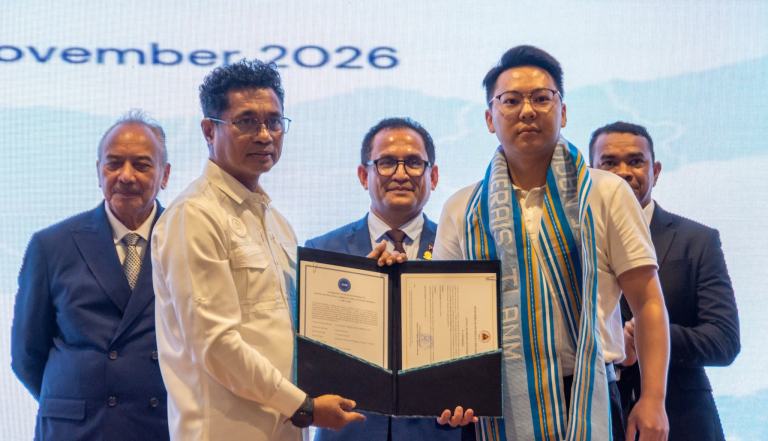
DILI, 10 November 2026 (TATOLI) — Timor-Leste has awarded mineral prospecting and exploration licences covering 30 concession areas to 19 national and international companies, as the Government seeks to attract investment and diversify the economy beyond oil and natural gas.
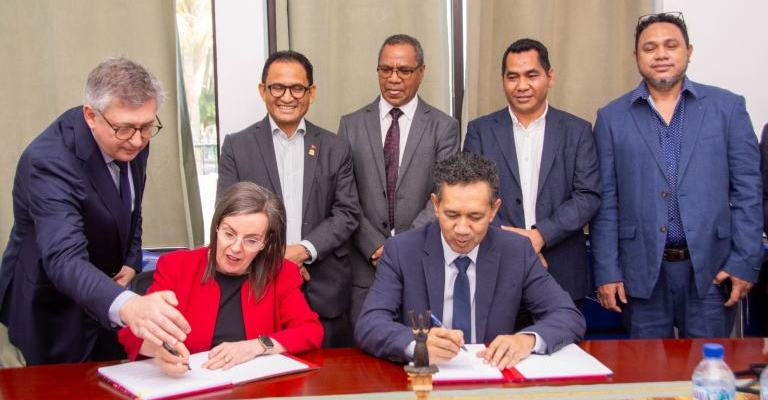
The licences were formally awarded on November 10 under the 2025 Second Public Tender for Mineral Resources at a ceremony held at the Grupo Media Nacional (GMN) Multipurpose Hall in Dili.
Vice Prime Minister, Minister Coordinator for Economic Affairs, and Minister of Tourism and Environment Francisco Kalbuadi Lay represented Prime Minister Kay Rala Xanana Gusmão at the ceremony, which was organised by the Ministry of Petroleum and Mineral Resources and the National Minerals Authority (ANM, in Portuguese).
The licensing initiative forms part of the 9th Constitutional Government’s strategy to develop the country’s mineral resources sector, encourage private-sector investment, create employment opportunities and broaden the sources of national economic growth.
Launched on November 24, 2025, the public tender offered 33 concession areas for the prospecting and exploration of metallic and non-metallic minerals across six mining zones.
According to the ANM, 31 companies initially participated in the tender, of which 24 passed the pre-qualification stage. Following an assessment of their technical and financial capacity and proposed work programmes, 19 companies were selected to receive licences covering 30 concession areas.
The licences are valid for four years and authorise the companies to undertake prospecting and exploration activities in their respective concession areas.
Speaking at the ceremony, Kalbuadi Lay said developing the mineral resources sector was important to diversifying the economy and reducing the country’s reliance on revenues from oil and natural gas.
“The Government remains committed to building a strong, sustainable, and diversified economy that does not depend solely on oil and gas resources, but also to developing agriculture, tourism, industry, and mineral resources,” he said.
He reaffirmed the Government’s commitment to creating a favourable investment climate through stronger legal certainty, improved business conditions and more efficient administrative procedures.
However, the Vice Prime Minister stressed that mineral exploration must comply with national legislation, environmental protection requirements and safeguards for local communities.
He said the development of natural resources should generate economic benefits for the country while protecting the interests of present and future generations.
Meanwhile, Petroleum and Mineral Resources Minister Francisco da Costa Monteiro said mineral sector development was incorporated into Timor-Leste’s Strategic Development Plan and formed an important part of the Government’s economic diversification agenda.
He highlighted the need to identify available mineral resources, assess their economic value and encourage the development of related industries to generate greater benefits for the national economy.
Monteiro urged the selected companies to begin implementing their approved work programmes, follow responsible mining practices and meet all legal and environmental requirements, including respecting local communities, their traditions and interests.
The authorised exploration activities include geological surveys, sample collection and analysis, geophysical investigations and other technical assessments to determine the presence, quantity, quality and economic potential of mineral deposits.
The resources covered by the licences include gold, silver, copper, manganese, nickel, zinc, iron, limestone, marble and rare-earth elements.
The concession areas are distributed across several municipalities and the Special Administrative Region of Oe-Cússe Ambeno.
The four-year prospecting and exploration period is intended to generate technical and geological information about the country’s mineral deposits and determine whether they could support commercially viable mining projects in the future.
The Ministry of Petroleum and Mineral Resources and the ANM will supervise the implementation of the companies’ work programmes to ensure compliance with the Mining Code and other applicable legislation.
The Government aims to develop the sector responsibly, attract investment and create new economic opportunities while ensuring that mineral resources contribute to Timor-Leste’s long-term development.
TATOLI