


Timor-Leste calls for increased international financing for vulnerable nations at COP31
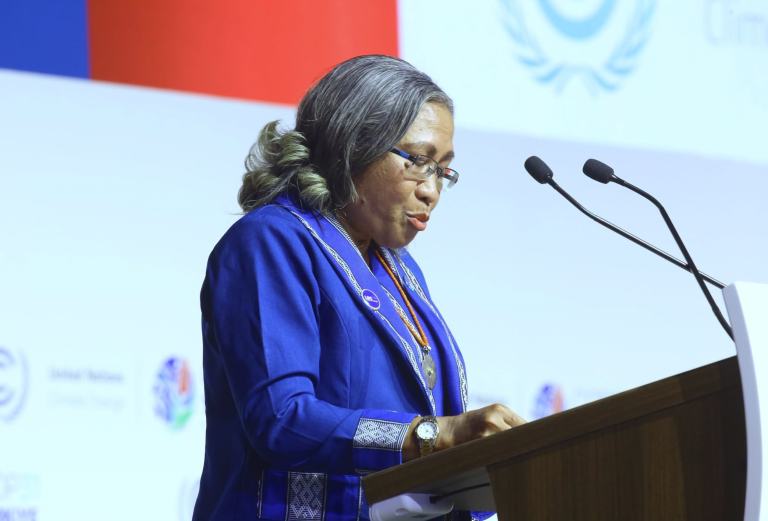
DÍLI, 18 November 2026 (TATOLI) — Timor-Leste has called for increased international climate financing, stronger adaptation measures and greater support for vulnerable countries as it represented the Least Developed Countries (LDCs) at the 31st United Nations Climate Change Conference (COP31) in Antalya, Türkiye.
Vice-Minister of Foreign Affairs and Cooperation Jesuína Maria Ferreira Gomes made the appeal during high-level discussions on November 16 and 17, representing both Timor-Leste and the LDC Group, which the country currently chairs for the 2026–2027 period.
She warned that developing countries, particularly the least developed nations, are increasingly exposed to climate-related disasters, including floods, tropical cyclones and other extreme weather events. These threats are placing additional pressure on agriculture, food security and economic development.
Speaking on behalf of the LDC Group, Gomes urged world leaders to ensure COP31 delivers tangible outcomes to keep the 1.5-degree Celsius global warming limit within reach, accelerate climate adaptation and honour existing international climate finance commitments.
She also called for greater contributions to the Fund for Responding to Loss and Damage and the Least Developed Countries Fund (LDCF), alongside stronger support for emissions reductions and a just energy transition.
The vice-minister also took part in ministerial consultations on climate adaptation convened by the COP31 presidency, alongside Nepal’s Minister of Agriculture, Forests and Environment, Gita Chaudhary.
The discussions focused on the Global Goal on Adaptation, the implementation of National Adaptation Plans and ways to strengthen financial and technical assistance for developing countries.
During the consultations, Gomes called on developed countries to increase international adaptation financing to at least US$120 billion annually before 2035. She also stressed the importance of ensuring universal access to effective early warning systems capable of addressing multiple climate-related hazards.
On the sidelines of the conference, Gomes met New Zealand’s Minister for Climate Change, Simon Watts, to discuss shared priorities and opportunities to expand bilateral cooperation in climate adaptation, financing and disaster response.
Watts reaffirmed New Zealand’s commitment to supporting Timor-Leste in addressing the impacts of the El Niño phenomenon and other climate-related vulnerabilities.
Gomes also met European Commissioner for Climate, Net Zero and Clean Growth Wopke Hoekstra, together with Timor-Leste’s Ambassador and Special Envoy for Climate Affairs, Adão Soares Barbosa, who also chairs the LDC Group.
Their discussions covered climate financing, adaptation, loss and damage, and the need for adequate, predictable and sustainable financial resources to help the world’s most climate-vulnerable countries.
Separately, Ambassador Barbosa represented the 44 LDC members at an event organised by the Global Environment Facility (GEF), which presented the financing strategies of the Least Developed Countries Fund (LDCF) and the Special Climate Change Fund (SCCF).
He highlighted the importance of increasing resources for climate adaptation and presented Timor-Leste’s IKAN Adapt project, supported by the GEF, which promotes sustainable fisheries and aquaculture while helping local communities adapt to climate change.
Barbosa also called for a resource mobilisation roadmap with measurable targets to be established ahead of COP32, scheduled to take place in Addis Ababa, Ethiopia.
Timor-Leste’s participation in COP31 reflects its responsibilities as chair of the LDC Group for 2026–2027 and builds on the priorities outlined in the Dili Ministerial Declaration, adopted in September 2026.
The declaration calls for stronger climate financing, greater protection for vulnerable populations and the effective implementation of international climate commitments.
COP31 is taking place in Antalya, Türkiye, from November 9 to 20, bringing together governments and international stakeholders to negotiate and advance global action on climate change.
TATOLI