


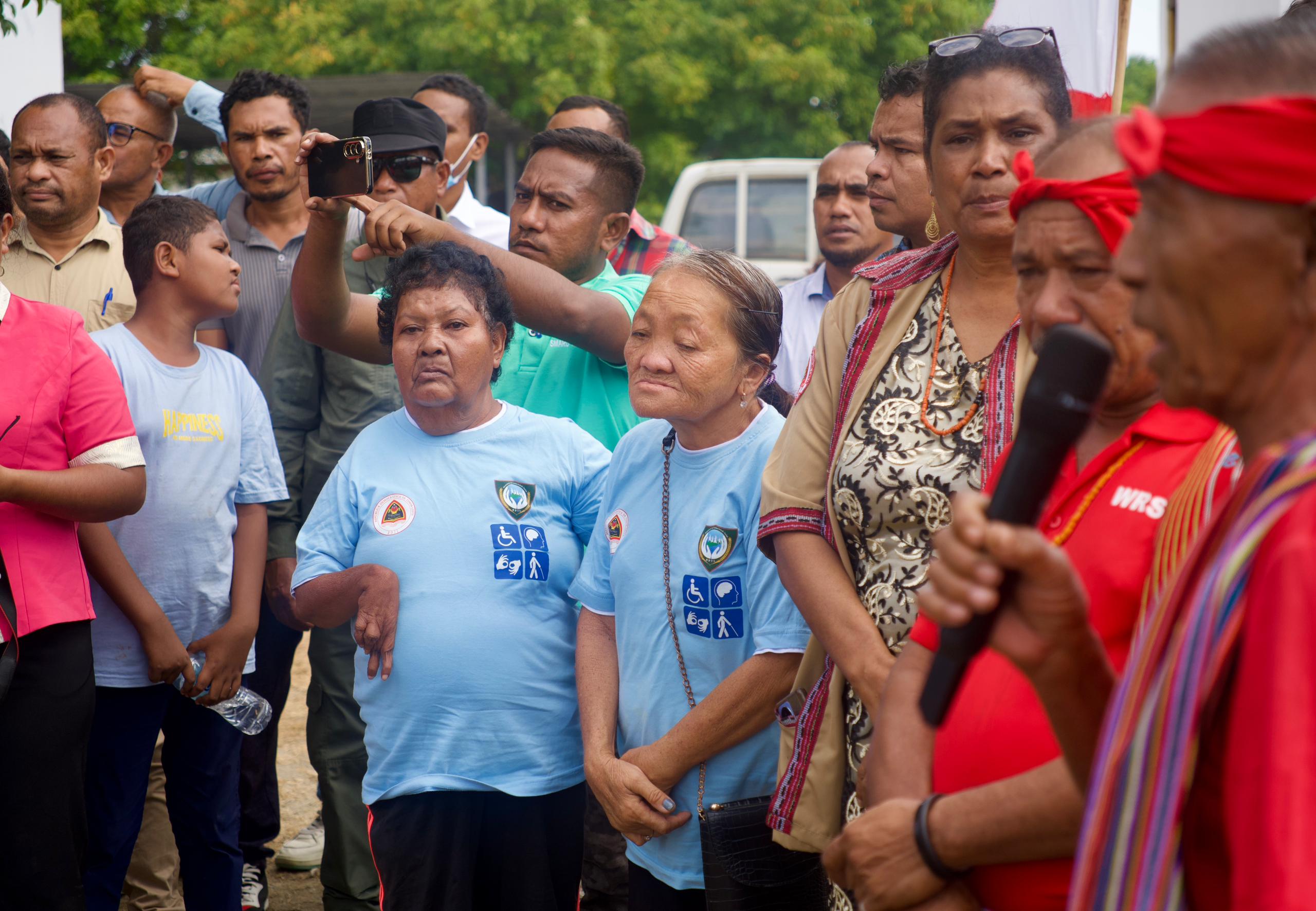
DILI, 04 July 2025 (TATOLI) – President José Ramos-Horta has called for greater inclusion, dignity, and opportunity for people with disabilities in Timor-Leste, urging all sectors of society to embrace the government’s commitment to “leave no one behind.”
The National Day for People with Disabilities, which is officially marked throughout the country on July 4th, and this year is celebrated in Manatuto Municipality.
The annual commemoration, held this year under the theme: ‘Promoting the Rights of People with Disabilities Through the Government’s Commitment to Leave No One Behind,’ the day serves as a clear call to action — to ensure that no person with a disability is excluded, in line with the Sustainable Development Goals (SDGs), particularly those focused on reducing inequalities.
Speaking at a ceremony in Manatuto to mark the National Day for People with Disabilities, President Horta praised the efforts of national institutions and international partners while acknowledging that significant challenges remain.
“We believe in a Timor-Leste for everyone, and this dream is realized in small and large actions: a well-built ramp, a civil document issued without barriers, an accessible school, respectful treatment at health centers and public services, dignified employment with adequate salary. Each of these actions translates into dignity, autonomy, and participation,” Horta said in a statement.
As Timor-Leste looks ahead to the World Day of Persons with Disabilities, to be celebrated on December 3, 2025, Horta encouraged all sectors of society and development partners to further promote initiatives that strengthen this inclusion, including: public debates, awareness campaigns, talent exhibitions, accessibility training, and concrete actions that bring practical and long-lasting results.
“We need to strengthen the role of Organizations of People with Disabilities – as protagonists and active partners in policy development. The voices of people with disabilities must be central to decisions that affect them,” Horta said.
He pointed out that Timor-Leste’s National Action Plan for the Inclusion of People with Disabilities 2021–2030 represents a fundamental milestone, providing for inclusion in the education, health, employment, justice, and civic participation sectors. “However, there are many challenges that require perseverance: much school and public infrastructure remains inaccessible, stigma and discrimination still exist in communities, and in many areas, services depend too heavily on non-governmental organizations.”
According to data from 2015, published in 2021, there are more than 38,000 people with disabilities in Timor-Leste, of whom more than 25,000 lack access to education, although organizations such as the Association of Disabled People of Timor-Leste (ADTL) estimate higher numbers.
Horta said this discrepancy underscores the urgent need for better data and stronger policies.
Horta extended his gratitude to Prime Minister Kay Rala Xanana Gusmão and the Minister of Social Solidarity and Inclusion (MSSI) for organizing the event, as well as to UN agencies and development partners including UN Women, UNICEF, and the Office of the High Commissioner for Human Rights for their technical and financial support.
The activities carried out in Manatuto – including the Thanksgiving Mass, March for Inclusion, and distribution of essential needs – serve as a good practical example that brings together national and local authorities and development partners with citizens, to promote respect for the dignity and rights of people with disabilities.
Manatuto was rightfully chosen to host this national celebration due to the significant number of citizens with disabilities and the urgent need to strengthen the State’s presence here.
Journalist: Camilio de Sousa
Editor: Filomeno Martins