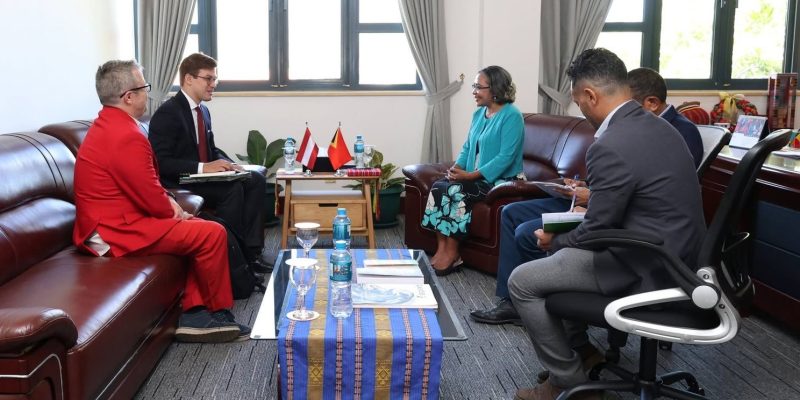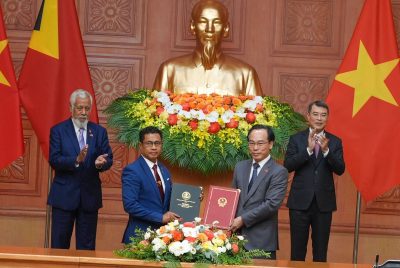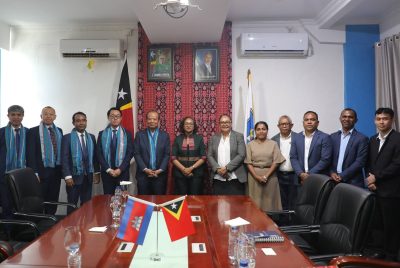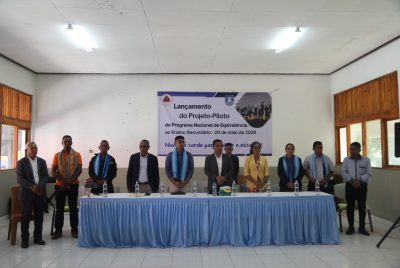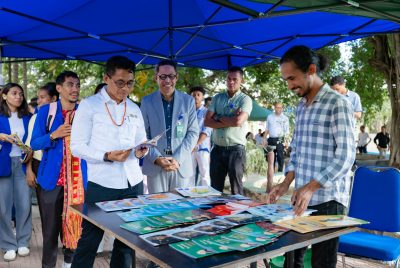



DILI, 20 January 2026 (TATOLI) – The State Secretariat for Cooperatives (SEKoop) on Tuesday welcomed a delegation from Fujian Agriculture and Forestry University (FAFU), People’s Republic of China, to introduce the implementation of Juncao agricultural technology in Timor-Leste.
Juncao technology is an agricultural innovation from China that uses a special variety of grass as a growing medium for mushrooms, animal feed, and environmental restoration. Known for its simplicity, low cost, and eco-friendly approach, the technology has been widely adopted in many developing countries.
State Secretary for Cooperatives Arsénio Pereira explained that Juncao grass is multifunctional: its roots help prevent soil erosion, it serves as fodder for livestock such as cattle and sheep, and it provides a medium for producing edible mushrooms.
He noted that Juncao technology has already been implemented in more than 100 countries across Asia, Africa, the Americas, and other regions.
“Juncao technology is excellent and can be applied in our country because it can be planted anywhere; on mountain slopes, steep terrain, or sandy beaches. This grass has many functions, including livestock farming and mushroom production,” Pereira told reporters after a meeting at the SEKoop Office Hall in Acait, Dili, on Tuesday.
Pereira emphasized that Juncao technology aligns with SEKoop’s programs, particularly in supporting dairy production and strengthening other productive sectors. He also highlighted opportunities for educational collaboration, noting that FAFU accepts Timorese students for master’s degree programs.
“I requested that we start a pilot project, as we have two centers in Betanu and Lospalos. We could use one to two hectares for this pilot project, with experts from China coming to teach and collaborate directly with the Timorese people. This is an investment for the future,” he said.
At the same event, Prof. Lin Zhanxi, Chief Scientist of the National Engineering Research Center for Juncao Technology at FAFU, expressed appreciation to the Timor-Leste Government for its support and the opportunity to introduce Juncao technology.
He explained that Juncao grass only needs to be planted once and can be harvested year-round. “Timor-Leste’s conditions are excellent for implementing this technology. Juncao grass can grow over one meter tall and can be harvested continuously for up to 20 years,” he said.
Prof. Lin added that Juncao technology strengthens sustainable and resilient food systems. By using fast-growing dry grass as a substitute for wood or straw in mushroom cultivation, the technology reduces pressure on forests while offering smallholder farmers a cost-effective and environmentally friendly option.
The approach contributes to improved nutrition and food security through the production of protein- and micronutrient-rich mushrooms, stabilizing food supplies and diversifying diets. It also builds local capacity through practical training to encourage the adoption of sustainable practices.
To advance this initiative, a special FAFU technical mission visited Timor-Leste from January 14 to 20, 2026, to support the development of an action plan for the pilot phase. The mission assessed technical feasibility, identified suitable pilot sites, and agreed on implementation mechanisms with national partners.
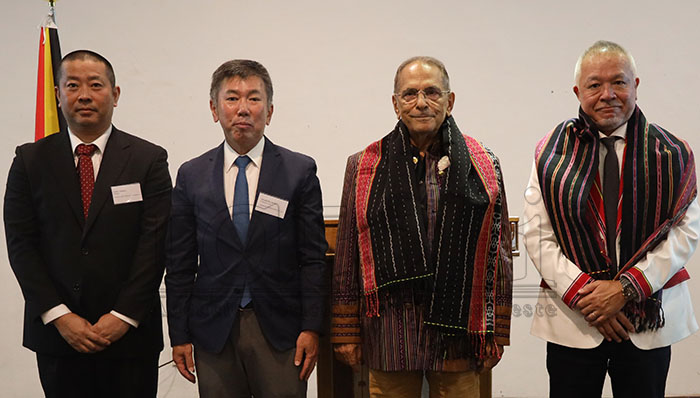
The FAFU mission team included Prof. Lin Zhanxi, Deputy Director Dr. Lin Dongmei, Technical Expert Dr. Cai Yangxing, and Project Manager Yan Fan.
The delegation visited Timor-Leste in collaboration with the World Food Programme (WFP) and the Government of the People’s Republic of China to implement a food value chain pilot project aimed at improving nutrition and food security in Timor-Leste.
Journalist: Arminda Fonceca / Translation: Camilio de Sousa
Editors: Maria Auxiliadora / Rafael Ximenes de A. Belo