


UNICEF – AIR and UNTL submit the Country–Led Evaluation of Preschool Education to MoEYS
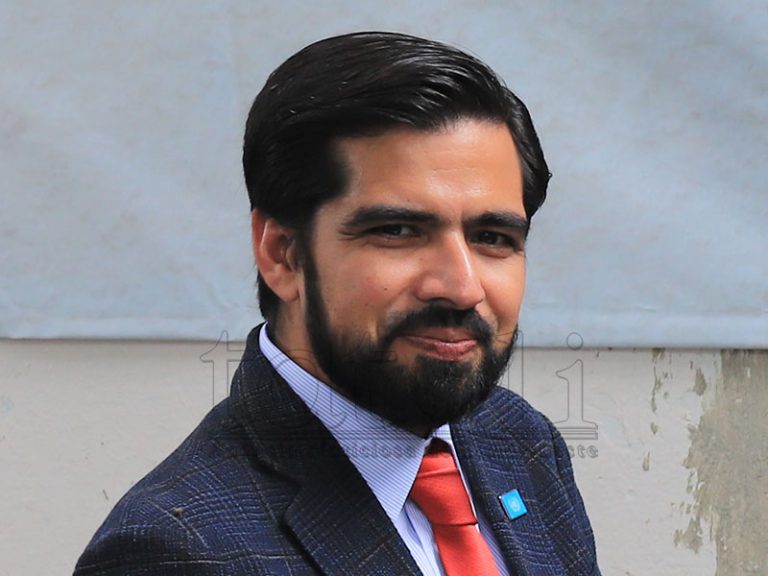
DILI, 30 june 2022 (TATOLI) – United Nations International Children’s Emergency Fund (UNICEF) – American Institute for Research (AIR) together with the National University of Timor – Leste (UNTL) present the result of research to the Ministry of Education, Youth and Sport (MoEYS) to be used as the Guidelines in developing the Preschool in Timor – Leste in the upcoming future.
UNICEF Country Representative to Timor – Leste, Bilal Durrani, in his statement said that a few days ago, speaking at the Timor – Leste Development Partner‘s Meeting, President Republic of Timor – Leste, José Ramos Horta, laid out his vision ‘to have a Timor – Leste where the child should be healthy, well-nourished, leaning and safe’.
To Achieve this vision President Horta proposed two priorities: the President‘s priority was to reduce child malnutrition and his second priority was two provide access to preschool education for every child in Timor – Leste.
Therefore, the launch of this report, the ‘Country–led Evaluation of Preschool Education in Timor – Leste 2012- 2022’ is therefore very timely. It comes at a time when there is an increased emphasis on building the blocks at the earliest stages of children ‘s lives to help them thrive as they learn and grow.
“I congratulate the Minister of Education Youth and Sport, Armindo Maia for his foresight in having commissioned this country-led evaluation of preschool education at a time when the report was perhaps most relevant and much needed. We know that preschool education lays the foundation for children ‘s learning and success through all subsequent stages of their education,’’ Bilal Durrani told TATOLI at Timor – Plaza, Sui room Dili.
The Country Representative of UNICEF, Durrani, added policies and planning for preschool education, budgeting, and financing, monitoring and quality assurance, governance and accountability among other things. Several findings relate to positive outcomes that can be replicated throughout the country. There is also a number of findings that showcase actions that need to be taken to improve and increase access to preschool.
“I am Confident that key recommendations and proposed action in the report will be used by the government of Timor – Leste and its partner to inform decision-making on policy and program design and implementation of preschool education in the country. I also hope that this can lead to increased public investment in the children of Timor – Leste. It is an investment in the preschool subsector. We know that investment in preschool education is not only the right thing to do – it is also a smart investment to make. Its investment in the children of Timor – Leste and the future. UNICEF will continue to work with the government and its partners to ensure delivery on the President‘s pledge to ensure access to preschool for every child in the country and our commitment to ensuring every child gets the best start in life,’’
Durrani explains that, according to the national data, only 1 in every 4 children under five has access to preschool education in Timor – Leste. Not only it’s way off the mark to achieve the MoEYS target to have a least 50 % of all pre-primary–aged children between the ages of 3-5 accessing early childhood education by 2024, but it would also mean that a large proportion of preschool-aged children will continue to not have access to these critical steps of learning and preparing for primary education and be more prone to repeating grades or dropping out of school altogether.
UNICEF hopes that the Government of Timor – Leste will consider the recommendation of this report to develop the preschool in the future.
“Therefore, on behalf of UNICEF I thanked the trust from MoYES to undertake this study and also thanked the research team from the AIR and UNTL for their professionalism in bringing this study to a timely and successful completion,’’ he concluded.
Before submitting the report of the Country–Led Evaluation of Preschool Education in Timor – Leste to MoEYS, researchers from AIR and UNTL call on MoYEs to consider 12 recommendations including;
- Develop a comprehensive and realistic national plan for preschool for improvement and expansion. The plan should define step by step how the country will achieve its goals (with costed activities) and should specify the roles of the actors in the subsectors in carrying out the plan.
- Improving financing of the subsectors. Carrying out recommendation 1 can help the government and partner project find needs, identify activities to prioritize with limited resources, advocate for funding from donors and create efficiencies in the system.
- Improving the timeliness and quality of EMIS data to facilitate planning and oversight. Expand the EMIS to comprehensively cover public and private preschool programming.
- Determine how to simultaneously build the skills of the country‘s largely untrained preschool workforce whilst working towards increasing the size of its qualified workforce. The Country needs a national recruitment and training strategy.
- Determine how best to build upon the diversity of preschool delivery models in use in Timor – Leste, to maximize efficient coverage and meet the needs of diverse communities.
- Tailor Timor – Leste’s standards for basic schools for the preschool class, reflect developmentally appropriate practice.
- Provide preschool programs with step by – step guidance on how to work towards meeting standards. This guidance should provide low-cost and feasible options where achieving some standards may seem costly or outreach.
- Establish working groups at the national and municipal levels to foster coordination within the subsectors as well as promote cross-sector collaboration for child and family well-being.
- Enact legal requirements for all preschool programming and activities to be registered with and approved by the national and /or municipal government.
- Provide preschool programs with guidance regarding the use of mother-tongue instruction, and work to ensure that all preschool programs have the basic materials they need to carry out the preschool curriculum.
- Broaden understanding of family and community engagement to include a strengths-based partnership with shared responsibility for meeting children ‘s needs.
- Complete a situational analysis of education for children with disabilities. The study should consider both the needs of the children and how educators and programs can be prepared to serve these children.
At the same place, the Minister of Education, Youth and Sports, Armindo Maia, highly appreciates the report Country-Led Evaluation of Preschool Education in Timor – Leste under UNICEF and AIR together with UNTL because it will greatly help MoEYS in making policies in building preschools in Timor – Leste.
“We will consider all recommendations to build preschools because, children are the future of the nation, therefore we have to start investing in preschools in Timor – Leste,” said Minster Maia.
Minister, Maia added that Timor – Leste must immediately provide human resources through early education to ensure the continuation of Timor – Leste in the future, thus the government will put a great budget on education including kindergarten to prepare the next generation of Timor – Leste.
Journalist: Camilio de Sousa
Editor : Nelia Borges