


Govt to form task force to address stunting in Timor-Leste

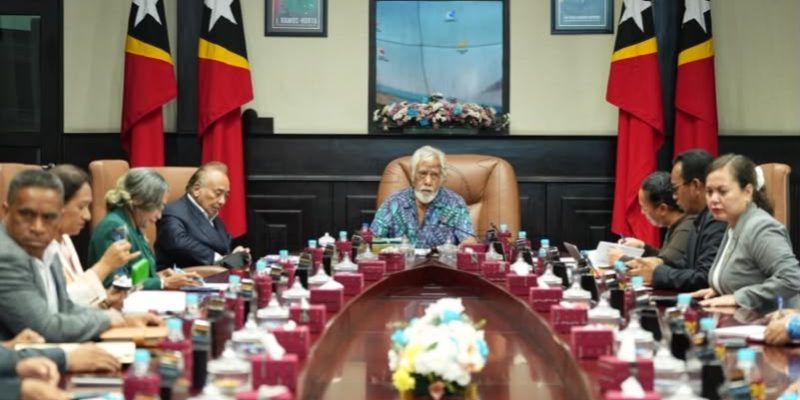
DILI, 04 november 2022 (TATOLI) – Prime Minister Taur Matan Ruak today presented Government’s initiative to set up a special task force to deal with stunting in Timor-Leste.
The creation of the Task Force aims to take multi-disciplinary and multi-sectoral action to combat stunting in the country.
“The task force will be responsible for drafting and implementing an action plan and measures to combat stunting in the country,” Minister of the Presidency of the Council of Ministers, Fidelis Manuel Leite Magalhães said at the Palace of the Government, today.
According to WHO, stunting is the impaired growth and development that children experience from poor nutrition, repeated infection, and inadequate psychosocial stimulation. Children are defined as stunted if their height-for-age is more than two standard deviations below the WHO Child Growth Standards median.
With almost every second child being stunted (47.1 percent of children under five years of age), Timor-Leste has the third highest prevalence of stunting and is among the only three countries in which at least half of children below 5 are stunted, according to UNICEF.
On may 5, the government of Timor-Leste together with the development partners and the United Nations Agencies in Timor-Leste, launched the National Health Sector Nutrition Strategic Plan for 2022-2026 to combat malnutrition, especially stunting in Timorese children.
In its Consolidated National Action Plan for Nutrition and Food Security (CNAP), the Government has set the goal to reduce stunting by 22% (from 47% to 25%) by 2030.
In addition, to combat malnutrition, especially stunting in Timor-Leste, the government had taken several important measures, including adopting the National Nutrition Strategy (2014-2019), National Policy for Food Security and Nutrition (2017), and the National Action Plan for Food Security and Nutrition (CNAP FNS 2022) under the aegis of KONSANTIL, as an inter-ministerial and inter-sectoral strategic body, composed of public and private entities, with representatives of development partners and civil society entities, both national and international.
With the launching of the CNAP, the government also committed to bringing down the prevalence of rickets from 8.6% in 2020 to 3.0% by 2030.
Journalist: Filomeno Martins
Editor: Nelia Borges