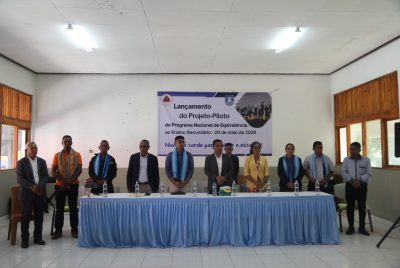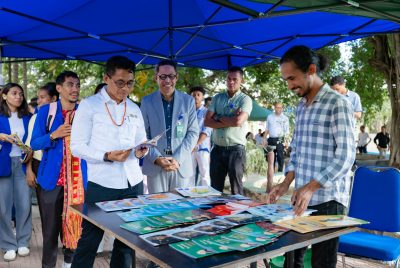




DILI, 27 June 2025 (TATOLI) — UN Women and the Secretary of State for Equality (SEI), on Thursday convened a national consultation in Dili to highlight the urgent need to recognize and invest in unpaid care and domestic work in Timor-Leste.
The event brought together government officials, civil society organizations, and development partners to strengthen support for the care economy as a key part of gender equality and national development.
UN Women Representative in Timor-Leste, Nishtha Satyam, emphasized that care work must be treated as a core issue. “Investing in the care economy is not a peripheral issue—it is central to gender equality, economic growth, and national resilience,” she said.
She explained that unpaid care work—including childcare, eldercare, health care, and household tasks—is still largely invisible and undervalued, both globally and in Timor-Leste.
Satyam noted that women and girls perform 2.5 to 2.8 times more unpaid care work than men worldwide. If this work were monetized, it would account for more than 9% of global GDP.
“Yet, it often goes unrecognized in economic planning and policy-making. This imbalance perpetuates gender inequality, it limits women’s access to education and decent jobs and pushes many into care roles, often without protections or rights,” she said.
In Timor-Leste, many women migrate abroad as domestic workers to support their families. While remittances are crucial, workers often face long family separations, low pay, unsafe conditions, and a higher risk of abuse.
Satyam warned that without formal care systems, risks such as exploitation, trafficking, and gender-based violence increase, especially among vulnerable groups.
The agency called for the urgent adoption of a Domestic Workers Law to protect the rights and dignity of care workers, formalize their jobs, and ensure access to social protection.
“Advancing this legislation is a critical step toward recognizing, valuing, and fairly compensating care work,” Satyam said.
To support this effort, UN Women facilitated Timor-Leste’s participation in the Asia-Pacific Care Economy Forum in Bangkok in April 2024. The event, themed “Transforming Care: Building Alliances, Empowering Women, Reshaping Economies,” brought together regional stakeholders to make care a development priority.
Building on that momentum, SEI, SEFOPE, UN Women, WWCTL, and Oxfam officially launched a national Technical Working Group on the Care Economy.
The group, established under a jointly drafted Terms of Reference, will lead policy discussions, collect data, and plan public investment to strengthen care services across the country.
Satyam said Timor-Leste is at a critical moment. With a growing population and rising care demands, the country must build systems that support women, allow children to thrive, and help older people live with dignity.
In her opening remarks, Secretary of State for Equality Elvina Sousa Carvalho stressed the need to shift how care work is viewed.
“The Government is prioritizing investments in unpaid care and domestic work as a vital strategy to defend women and girls and to support the achievement of our National Strategic Development Plan 2011–2030, as well as Sustainable Development Goal 5,” said Carvalho.
She highlighted SDG Target 5.4, which calls for recognizing unpaid care work through better public services, infrastructure, and social protection.
The consultation ended with a strong call to action. UN Women urged all sectors to take practical steps: adopt the Domestic Workers Law, fund inclusive care systems, and treat care work as a foundation for justice and sustainable growth.
“Investing in care is not only about supporting women—it is an investment in our shared future,” Satyam said.
Journalist: Camilio de Sousa
Editor: Filomeno Martins