


ICJ Landmark AO Declares Climate Change an “Urgent and Existential Threat”: Relevance to Timor-Leste
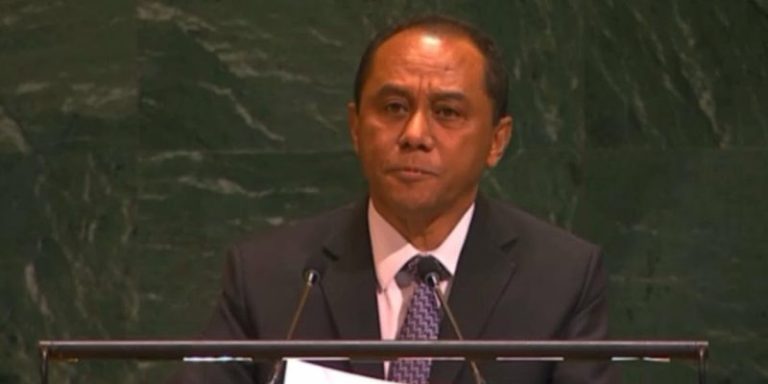
By: Dionisio Babo Soares
The recent advisory opinion (AO) of the International Court of Justice on 23-07-2025 marks a turning point in the world’s legal response to the climate crisis. Declaring climate change an “urgent and existential threat,” the Court has underscored that States bear binding obligations rooted in treaty and customary international law to curb greenhouse gas emissions and cooperate in good faith to protect the global climate system. By elevating the Paris Agreement’s temperature limits into legally enforceable duties, the Court has signaled that half-measures are no longer tenable and that every country must align its policies with the imperative of keeping warming below 1.5 degrees Celsius.
Beyond its broad pronouncements on emissions, the Court’s opinion offers unprecedented recognition of the plight of Small Island Developing States. In what will surely become a cornerstone of climate law, paragraph 363 affirms that the loss of territory, through rising seas, does not threaten statehood. By presuming the continuity of a State even if its landmass vanishes, the Court has answered a pressing concern voiced by SIDS for decades: that loss of soil should not translate into loss of sovereignty. This reasoning vindicates the arguments made at the Security Council signature event on sea-level rise in February 2023, when Timor-Leste, alongside its island peers, pressed for assurances that their nations would endure even as their shores erode.
This opinion also builds on Malta’s pioneering role in the 1980s, when it declared climate change a “common concern of mankind” and successfully placed it on the United Nations agenda. The ICJ has gone further still, reiterating that climate change is not only a shared challenge but a genuine existential threat to our collective future. By framing climate protection as a binding legal duty, the Court has echoed those who believe that only a robust, unified response can safeguard both present and yet-to-be-born generations.
This ruling resonates deeply for Timor-Leste, a young nation acutely vulnerable to climate-related disasters. Cyclones, floods, droughts, and the creeping intrusion of saltwater threaten every facet of life, from housing and agriculture to health and education, and exacerbate existing inequalities. Timor-Leste views climate justice as inseparable from social justice: resilience must be built not only into roads and seawalls but also institutional capacity, gender equality, and disability inclusion. Women and people with disabilities, who often bear the heaviest burdens in times of crisis, need a voice at the table as adaptation plans are drafted and funds are allocated.
However, vulnerability alone cannot be the end of the story. The Court’s decision underscores the necessity of predictable, dedicated finance and genuine international cooperation. Technology transfer, capacity building, and long-term climate funding must flow to those countries that lack the resources to implement robust mitigation and adaptation strategies independently. Only through partnerships grounded in equity and solidarity can small island and least-developed States transform legal obligations on paper into real-world resilience.
The ICJ’s advisory opinion challenges every nation to reconsider its climate commitments as matters of legal accountability, not mere political aspiration. By linking statehood to enduring global responsibility and by recognizing that no land lost to the sea can erase a people’s right to self-determination, this ruling has laid a new foundation for climate justice. The future now belongs to those who will act on these obligations: to protect the most vulnerable, share resources reasonably, and ensure that the world our children inherit remains habitable and sovereign. (*)