


Govt approves seven draft resolutions from National Parliament on ASEAN Instruments
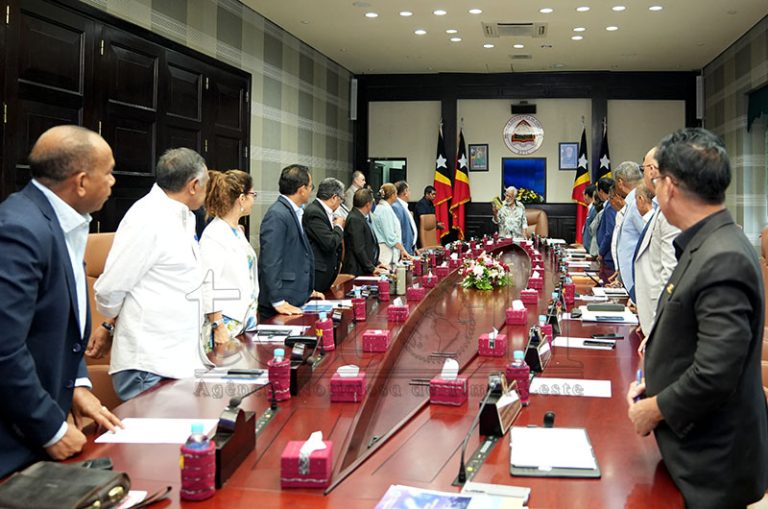
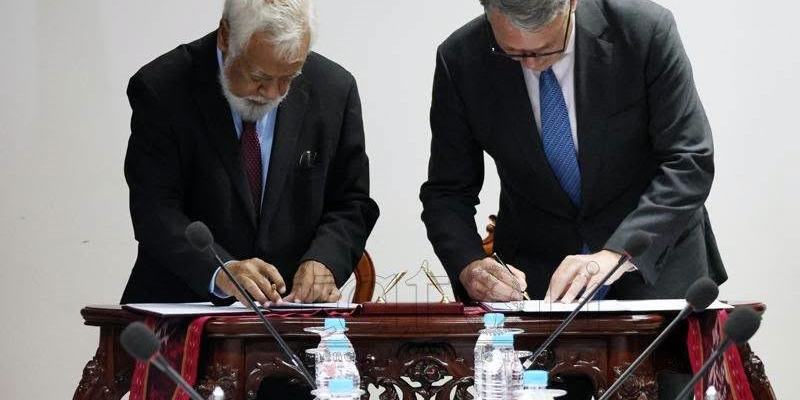
DILI, 04 September 2025 (TATOLI) – The Government of Timor-Leste, through the Council of Ministers meeting held on September 3 at the Government Palace in Dili, approved seven draft resolutions from the National Parliament concerning ASEAN instruments. These resolutions were presented by Vice Minister for ASEAN Affairs, Milena Maria da Costa Rangel, as part of the commitments outlined in the Roadmap for Timor-Leste’s full membership in the Association of Southeast Asian Nations (ASEAN).
The resolutions authorize Timor-Leste’s accession to the following instruments:
- ASEAN Agreement on Disaster Management and Emergency Response (AADMER): Adopted in Vientiane in 2005, this agreement serves as ASEAN’s primary legal framework for civil protection and disaster risk management. It establishes regional mechanisms for prevention, preparedness, response, and recovery in emergency situations. Timor-Leste’s accession will enable full integration into regional cooperation structures, enhancing technical and operational capabilities, information sharing, and access to humanitarian assistance when needed.
- Agreement on the Establishment of the ASEAN Coordination Centre for Humanitarian Assistance in Disaster Management: Adopted in Bali in 2011, this agreement created a permanent ASEAN structure to coordinate regional responses to disasters and humanitarian emergencies. It promotes cooperation among Member States and engagement with international organizations. Timor-Leste’s accession will facilitate access to shared information, rapid resource mobilization, and specialized technical assistance, strengthening national emergency response efforts.
- Treaty on the Southeast Asia Nuclear-Weapon-Free Zone (SEANWFZ): Adopted in Bangkok in 1995, this treaty commits Southeast Asian nations to maintaining the region free of nuclear weapons, supporting disarmament, non-proliferation, and regional peace and security. Timor-Leste’s accession was made possible by a May 2025 amendment that explicitly included its national territory and maritime zones within the treaty’s scope.
- Framework Agreement on Enhanced ASEAN Economic Cooperation: Adopted in Singapore in 1992, this agreement provides the legal and institutional foundation for trade liberalization, investment promotion, and economic collaboration among ASEAN Member States. Timor-Leste’s accession will enable full participation in regional economic mechanisms and integration into global value chains.
- Protocol on the Enhanced Dispute Settlement Mechanism: Adopted in Manila in 2019, this protocol ensures effective, predictable, and peaceful resolution of disputes among ASEAN Member States related to economic commitments. Timor-Leste’s accession will provide legal certainty in trade and economic relations, reinforcing trust in its adherence to ASEAN obligations.
- ASEAN Agreement on Tourism: Adopted in Phnom Penh in 2002, this agreement establishes a binding framework to promote ASEAN as a unified tourism destination. It includes provisions for visa exemptions, simplified travel procedures, development of transport and tourism infrastructure, and cooperation in vocational training and qualification recognition. Timor-Leste’s accession will support its tourism sector and regional integration.
- ASEAN Multilateral Agreement on Air Services (MAAS) and Supplementary Protocols: Adopted in Manila in 2009, this agreement aims to liberalize scheduled passenger air services among ASEAN Member States by granting reciprocal third, fourth, and fifth freedom rights for flights between capitals and subregions. Accession will strengthen Timor-Leste’s sovereignty in international transport policy, enhance air connectivity, and promote trade, tourism, and investment.
Journalist: Camílio de Sousa
Editor: Rafael Ximenes de A. Belo
Publisidade