


Timor-Leste and UN launch UNSDCF 2026–2030
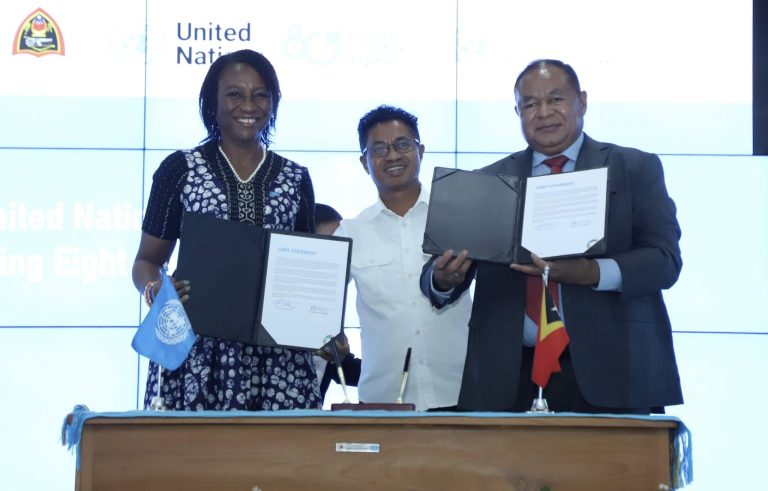
DILI, 12 december 2025 (TATOLI) – The Ministry of Foreign Affairs and Cooperation (MNEC) and the United Nations in Timor-Leste on Wednesday launched the UN Sustainable Development Cooperation Framework 2026–2030.
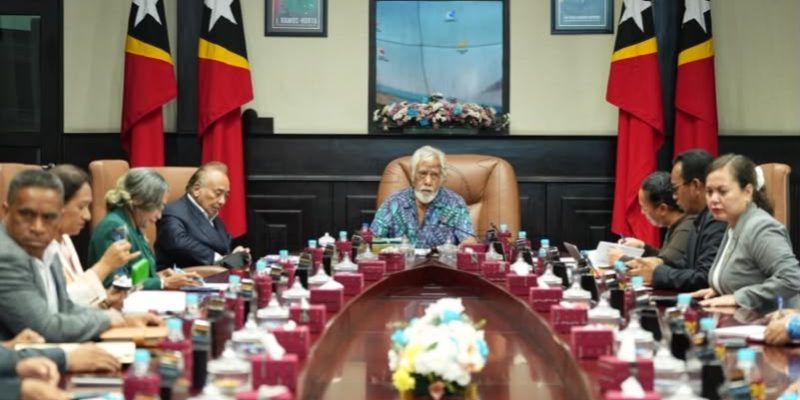
The UNSDCF 2026–2030 was signed by Foreign Minister Bendito dos Santos Freitas and UN Resident Coordinator Funmi Balogun, and witnessed by the Acting Prime Minister, Vice-Prime Minister, Minister Coordinator for Social Affairs, and Minister of Rural Development and Community Housing, Mariano Assanami Sabino.
The event brought together representatives from the Government, UN agencies, the diplomatic corps, civil society and development partners to commemorate the UN’s 80th anniversary, marked on 24 October.
The framework outlines the strategic vision that will guide UN support to Timor-Leste over the next five years.
The document, approved by the Council of Ministers, defines a shared vision for a more inclusive society, a diversified and modern economy, climate-resilient communities and stronger institutions. It aligns with the Strategic Development Plan 2011–2030, the Government Programme and the 2030 Agenda.
The framework results from a broad consultation process and sets out a common vision for a more inclusive, resilient and sustainable Timor-Leste. Cooperation is structured around four main pillars: improving access to inclusive services; promoting diversified economic development; strengthening climate resilience and infrastructure; and consolidating democratic governance.
The pillars also encompass cross-cutting priorities including gender equality, the protection of human rights, the inclusion of persons with disabilities and the commitment to “leave no one behind.”
The document highlights that the framework will also support Timor-Leste’s preparation for accession to the Association of Southeast Asian Nations (ASEAN) by enhancing economic competitiveness, institutional capacity and social protection systems.
Implementation will be coordinated between the Government and the UN to ensure alignment with national priorities and effective monitoring of progress.
In her remarks, Funmi Balogun highlighted Timor-Leste’s journey since the restoration of independence and the progress achieved, including increased life expectancy, reduced child mortality, expanded access to education, greater participation of women in Parliament and stronger community preparedness for climate risks.
She said these achievements reflect the country’s determination and its commitment to upholding human rights.
Minister Freitas reaffirmed Timor-Leste’s commitment to cooperation, solidarity and shared responsibility, noting that the country continues to strengthen its role within the multilateral system to contribute to global progress.
Journalist: Camilio de Sousa
Editor: Filomeno Martins