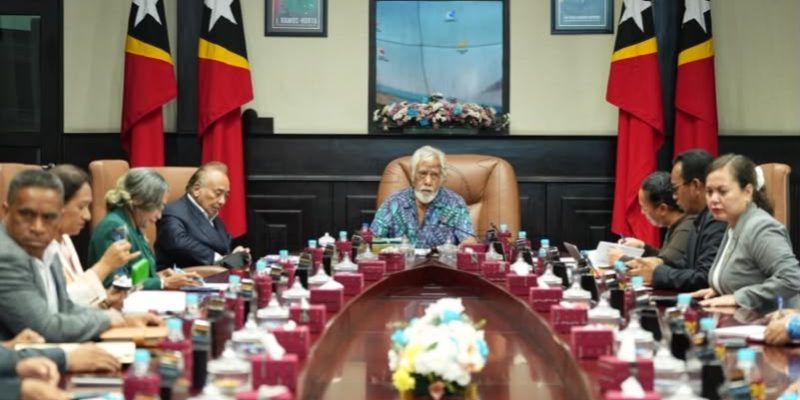



A Spirit of Dialogue in Action: Timor-Leste’s Path to Sustainable and Inclusive Development at the 2026 World Economic Forum

By: Remigio Alexandre do Carmo Vieira
Abstract
Timor-Leste, a young nation that achieved independence in 2002, has navigated its early development through principles of dialogue, compromise, and constructive multilateral engagement.
This paper examines President J. Ramos-Horta’s participation at the World Economic Forum (WEF) Annual Meeting 2026 in Davos, Switzerland, highlighting the strategic role of Timor-Leste in global diplomacy, sustainable development, and inclusive economic growth. WEF 2026, under the theme “A Spirit of Dialogue,” convened world leaders to address pressing geopolitical, economic, and environmental challenges.
This study analyzes Timor-Leste’s approach in advocating for regenerative economic models, entrepreneurial empowerment, and environmental stewardship, emphasizing the unique contributions of small states in shaping international agendas. Through qualitative analysis of WEF sessions, public statements, and international reports, this paper demonstrates that Timor-Leste’s integrated approach offers a replicable model for inclusive and sustainable development in small and developing nations.
The findings underline the potential of dialogue-driven diplomacy to facilitate global cooperation, enhance resilience in local economies, and provide actionable solutions for ecological and socio-economic challenges.
Keywords: Timor-Leste, World Economic Forum, dialogue, sustainable development, inclusive growth, regenerative economy, small state diplomacy
Full Narrative Analysis
Timor-Leste, a nation that emerged from decades of struggle for independence, has consistently emphasized dialogue and multilateral collaboration as cornerstones of its national identity. The 2026 World Economic Forum (WEF) Annual Meeting in Davos, Switzerland, provided a critical platform for President J. Ramos-Horta to communicate Timor-Leste’s vision of inclusive, regenerative, and sustainable development within the global arena. In a world marked by geopolitical fragmentation, economic inequality, and environmental crises, the forum’s theme, “A Spirit of Dialogue,” resonates deeply with Timor-Leste’s historical experience, demonstrating how persistent communication, negotiation, and multilateral engagement can foster stability and long-term prosperity.
From the perspective of Timor-Leste’s citizens, the country’s participation in WEF is not symbolic; it is a strategic articulation of national values and priorities. Globally, economic and political pressures increasingly manifest as “geo-economic conflicts,” with trade barriers, sanctions, and resource monopolies serving as instruments of influence. For small states like Timor-Leste, which rely on open markets, foreign investment, and stable economic partnerships, this environment presents both challenges and opportunities.
By emphasizing dialogue as the primary instrument for engagement, Timor-Leste positions itself as a constructive actor capable of contributing to global solutions while safeguarding its sovereignty and development interests.
Economically, WEF 2026 underscored the urgency of adopting inclusive and regenerative models to address persistent global inequalities. Reports from the Forum highlighted the rising demand for green jobs, sustainable technology, and resilient economic frameworks capable of withstanding shocks.
Timor-Leste’s advocacy for initiatives such as “100 Million Regenerative Jobs” illustrates its commitment to aligning national development goals with global sustainability agendas. By prioritizing local entrepreneurship, community-based agriculture, and regenerative tourism, Timor-Leste presents a model of economic growth that balances profitability with social equity and environmental stewardship.
Environmental sustainability was a central theme of WEF 2026, with sessions such as “Global Plastic Neutral: Turning Pollution into Jobs and Infrastructure” emphasizing the transformation of ecological crises into economic and social opportunities. Timor-Leste’s vulnerability to climate change, deforestation, and marine ecosystem degradation makes these discussions highly relevant for domestic policy planning. The country’s integrated approach to environmental and economic development demonstrates that even small nations can implement innovative, scalable solutions that contribute to global sustainability goals. By presenting these strategies on a global platform, Timor-Leste asserts leadership in environmental governance and regenerative development.
The forum also facilitated critical diplomatic engagement, allowing Timor-Leste to cultivate bilateral and multilateral relations with world leaders, global business figures, and international civil society actors. Participation in high-level dialogues, including the Informal Gathering of World Economic Leaders (IGWEL) and sessions with Global Citizen and Forbes, exemplified the soft power potential of small states. Timor-Leste leverages its historical experience and credibility as a nation built on dialogue and compromise to influence international policymaking effectively, demonstrating that moral authority and constructive engagement can complement traditional measures of power.
From an economic perspective, Timor-Leste’s participation in WEF 2026 highlighted the potential for foreign investment in sustainable, community-driven sectors. The country’s development strategy prioritizes agriculture, regenerative tourism, and creative industries, aiming to create inclusive employment opportunities while reducing reliance on extractive industries. By aligning domestic priorities with global trends, Timor-Leste enhances its economic resilience and ensures that local communities benefit from international partnerships.
Timor-Leste’s historical experience in peacebuilding provides valuable insights into international governance. The country’s development trajectory illustrates that sustainable growth is achievable through consistent dialogue, ethical policymaking, and inclusive governance. In the context of a global stage dominated by larger powers, Timor-Leste exemplifies how small states can play a constructive role in mediating conflicts, advocating for equitable solutions, and promoting cross-border cooperation.
The implications of Timor-Leste’s approach extend beyond national borders. By integrating regenerative economic principles, environmental stewardship, and community empowerment, the country challenges traditional paradigms of development that prioritize rapid industrialization over social and ecological well-being. This model underscores the potential of small states to influence global agendas by demonstrating that development can be simultaneously sustainable, equitable, and economically viable.
Furthermore, WEF 2026 highlighted the importance of equitable multilateral participation, ensuring that all nations, regardless of size, can access technological innovations, markets, and global decision-making forums.
Timor-Leste’s presence reinforces the idea that collaboration, inclusion, and regenerative policies are not only morally desirable but also strategically advantageous for addressing complex global challenges. In doing so, Timor-Leste positions itself as a bridge between developed and developing countries, advocating for global solutions that are inclusive, environmentally conscious, and socially equitable.
In conclusion, President Ramos-Horta’s engagement at WEF 2026 epitomizes a holistic strategy encompassing diplomacy, sustainable development, and global advocacy.
Timor-Leste demonstrates that successful nation-building is not measured solely by economic indicators but also by the quality of dialogue, inclusivity, environmental stewardship, and citizen participation.
This integrated model offers a replicable framework for other developing nations, illustrating that diplomacy and sustainable development can be mutually reinforcing and globally influential.
For the people of Timor-Leste, WEF 2026 validates the notion that small states can play a decisive role in global governance.
The strategies and policies presented by President Ramos-Horta—grounded in historical experience, ethical governance, regenerative economics, and environmental responsibility—offer a blueprint for inclusive global participation. By promoting dialogue-driven diplomacy, inclusive economic models, and sustainability,
Timor-Leste asserts itself as a constructive actor capable of shaping international discourse and contributing to actionable solutions for pressing global challenges.
References
- World Economic Forum. (2026, January 19). A Spirit of Dialogue Brings Record Numbers of World Leaders to Davos for WEF Annual Meeting 2026. https://www.weforum.org/press/2026/01/a-spirit-of-dialogue-brings-record-numbers-of-world-leaders-to-davos-for-world-economic-forum-annual-meeting-2026/?utm_source=chatgpt.com
- Presidência da República de Timor-Leste. (2026, January 19). President Ramos-Horta to Attend WEF Annual Meeting 2026. https://presidenciarepublica.tl/president-ramos-horta-to-attend-world-economic-forum-annual-meeting-2026/?utm_source=chatgpt.com
- Reuters. (2026, January 14). Economic Confrontation Replaces Armed Conflict as Top Global Risk — WEF Survey 2026. https://www.reuters.com/business/davos/economic-confrontation-replaces-armed-conflict-top-risk-wef-survey-2026-01-14/?utm_source=chatgpt.com
- The Guardian. (2026, January 14). Economic Conflicts Are World’s Greatest Risk — WEF Survey 2026. https://www.theguardian.com/business/2026/jan/14/economic-conflicts-are-worlds-greatest-risk-wef-survey-suggests?utm_source=chatgpt.com
- World Economic Forum. (2026, January). About the World Economic Forum Annual Meeting 2026. https://www.weforum.org/meetings/world-economic-forum-annual-meeting-2026/about/?utm_source=chatgpt.com
- World Economic Forum. (2026, January 21–22). Key Events and Side Sessions at WEF 2026. https://www.weforum.org/meetings/world-economic-forum-annual-meeting-2026/sessions?utm_source=chatgpt.com.