


A Tribute in Reflection to the Late Martinho Gusmão
By: Dionísio Babo Soares
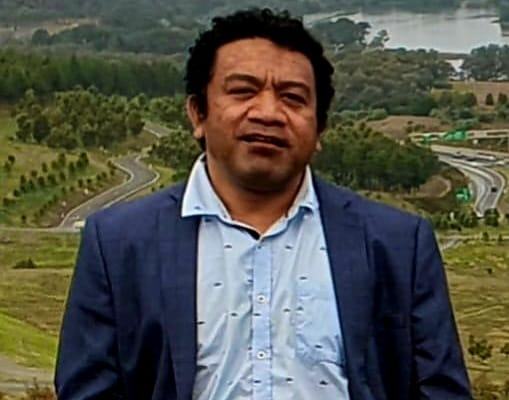
Martinho Germano da Silva Gusmão, who passed away in Díli on 22 August 2026, was a distinctive figure in Timor-Leste’s intellectual, religious and political life. His journey traversed worlds that are too often treated as separate: faith and reason, theology and political philosophy, reconciliation and justice, contemplation and public action. To remember Martinho, therefore, is not simply to recount the biography of a former priest, educator, thinker and presidential candidate. It is also to reflect upon the evolution of Timor-Leste itself and upon the difficult questions that our independence continues to place before us.
Born in Baucau on 22 May 1968, Martinho belonged to a generation whose intellectual and spiritual formation occurred under extraordinarily difficult historical circumstances. His generation grew up under occupation, witnessed resistance and suffering, experienced the emergence of independence, and then faced an entirely different challenge: how to transform liberation into democratic institutions, justice, and human development. These experiences inevitably shaped the questions he would wrestle with throughout his life.
He entered the seminary and pursued a vocation to the Catholic priesthood at a time when the Church occupied an exceptional position in Timorese society. During the foreign occupation (1975-1999), the Catholic Church was not simply a religious institution. For many Timorese, it became a sanctuary of language, identity, human dignity and, at crucial moments, protection. Martinho’s formation as a priest must be understood within this historical environment. His Catholicism was therefore never entirely detached from the people’s social condition.
However, Martinho was also intellectually restless. His interests moved beyond conventional pastoral concerns towards political philosophy, political science, justice and the moral foundations of public authority. He pursued further studies at the Pontifical Gregorian University in Rome and later taught at the Catholic Institute of Philosophy and Theology in Timor-Leste. Contemporary accounts of his transition into political life confirm both his Gregorian formation and his role as an educator.
This combination of priest and political thinker helps explain much of Martinho’s subsequent public engagement. He was interested not merely in what political institutions do, but in what gives them legitimacy. What makes authority just? What obligations does the State owe its citizens? Can reconciliation endure without truth? Can democracy survive without education? Can economic development be called progress when large sections of society remain excluded from its benefits? Moreover, ultimately, what is political power for?
These were not abstract philosophical exercises. They emerged from the particular history of Timor-Leste.
One important dimension of Martinho’s contribution that deserves to be remembered was his engagement with justice, peace and reconciliation. As Director of the Justice and Peace Commission of the Diocese of Baucau, he became involved in some of the most difficult moral debates confronting the new nation. Following independence, Timor-Leste faced a dilemma common to societies emerging from mass violence: how should a new State reconcile the political necessity of peaceful relations with its neighbours with victims’ moral claims for truth and accountability?
Martinho took a clear position in this debate. In discussions surrounding accountability for violations committed during the occupation, he argued that reconciliation could not simply mean forgetting wrongdoing. Scholars examining Timor-Leste’s transitional-justice process noted his insistence that democracy required recognising that nobody should stand above the law and that victims’ voices and rights had to remain part of the national conversation.
This is important for understanding him. Martinho was not opposed to reconciliation. Quite the contrary: reconciliation occupied a central place in his thinking. However, his conception of reconciliation demanded moral substance. Peace could not simply be the absence of confrontation; it required recognition, responsibility and human dignity.
That philosophy also informed his practical pastoral work. During the political and social crisis that divided communities in 2006 and 2007, when tensions between people identified as lorosa’e and loromonu threatened national cohesion, the Justice and Peace Commission in Baucau promoted encounters between young people from different parts of the country. Hundreds of young people participated in exchanges intended to encourage dialogue, mutual understanding and forgiveness. Martinho explained the initiative as an effort to overcome divisions through direct human encounters.
There is something profoundly Timorese in this understanding of reconciliation. Peace is not constructed exclusively through institutions or agreements. It must also be rebuilt through relationships — through meeting, listening, acknowledging injury, forgiving where possible and rediscovering membership in a common community.
Martinho therefore understood reconciliation not merely as a political settlement but as a cultural and ethical project.
The same intellectual continuity appears in his understanding of religion. In an international address in Seoul in 2020, Martinho organised his reflections around three ideas: justice, kindness and humility. Drawing on Catholic social teaching, he argued for a shift from what he called “powership” to leadership—a conception in which political authority takes the rights and dignity of human beings seriously. He connected justice with institutions, kindness with fraternity and peaceful coexistence, and humility with spiritual transformation.
That formulation captures something essential about his worldview. Politics, for Martinho, could never be reduced to the acquisition and distribution of power. Politics had to possess an ethical destination.
This was also why education assumed such importance in his thinking.
Martinho believed that a democratic society could not be sustained by elections alone. Elections determine who governs; education helps determine the quality of the society being governed. A population unable to question, analyse and distinguish argument from manipulation remains vulnerable even within formally democratic institutions. His later political platform consequently made educational transformation one of its central priorities. When he entered the 2022 presidential contest, he spoke of transformation in education, justice, and peace, and of equality among citizens. He even described his ambition as promoting a movement of “liberation pedagogy”.
This echoes a wider tradition of emancipatory thought associated with thinkers such as Paulo Freire: education is not simply the transmission of information but the formation of human beings capable of understanding and transforming their circumstances. For a young democracy such as ours, this distinction remains fundamental. We can build schools without necessarily cultivating critical citizenship. We can increase enrolment without necessarily teaching young people how to interrogate power, prejudice and inequality. Martinho understood that democracy requires citizens who can think.
His eventual decision to leave the clerical state and enter practical politics was consequently more complex than a simple abandonment of one vocation for another. He had requested dispensation before the 2022 election, and the Holy See’s decision returning him to the lay state was communicated in 2021.
His transition represented, at least intellectually, an attempt to move from reflection about society towards direct participation in its political transformation.
This transition inevitably generated controversy. It should not be romanticised. The vocation of a priest and the vocation of a politician operate under different institutional and ethical obligations, and moving from one sphere into another raises legitimate questions about religion, authority and political power. However, Martinho was willing to confront those questions personally.
In this respect, his trajectory fits within a wider historical phenomenon. Religious figures have periodically entered political life when they believed that pastoral responsibility required more direct engagement with structural injustice. Jean-Bertrand Aristide moved from the Salesian priesthood into Haiti’s presidency; Fernando Lugo moved from episcopal ministry to the presidency of Paraguay. Archbishop Makarios III combined ecclesiastical leadership with the presidency of Cyprus under very different historical circumstances. Elsewhere, clergy and theologians associated with liberation theology sought to connect Christian ethics with struggles against poverty, authoritarianism and structural inequality.
Martinho’s journey was uniquely Timorese, however. He did not enter politics as the leader of a mass religious movement, nor did he command a large political organisation. His significance lay elsewhere: in his attempt to insert moral and philosophical argument into political competition.
When he formally declared his presidential candidacy in January 2022, he presented it as inclusive and oriented towards national consensus and political commitment. He emphasised that he had not been a member of a political party and spoke of constructing a society that was both solidary and fraternal.
He did not win. His share of the national vote was modest. However, judging his candidacy solely by electoral arithmetic would miss its intellectual significance.
Democracy needs winners and losers because political authority must ultimately be decided. However, democratic culture needs something more: people willing to introduce ideas into public debate without knowing whether those ideas will produce immediate political rewards. Elections are therefore not merely mechanisms for selecting governments; at their best, they are national conversations about what kind of society citizens wish to inhabit.
Martinho contributed to that conversation.
His candidacy raised questions about education, social justice, national consensus, fraternity and the relationship between morality and political authority. Even where one disagreed with his conclusions, the questions themselves mattered. In this sense, Martinho increasingly occupied the space of a public intellectual — someone unwilling to confine knowledge to classrooms, seminaries or academic publications, but prepared to expose ideas to the uncertainty and criticism of the public sphere.
There is courage in that choice. It is much easier for intellectuals to discuss the imperfections of politics than to submit their own ideas to political reality. Theory enjoys the privilege of coherence; government rarely does. Philosophy asks what ought to be; politics must negotiate what is possible. Martinho crossed that boundary voluntarily. In doing so, he discovered, as many thinkers before him have discovered, that translating moral principles into political action is extraordinarily difficult. However, perhaps that difficulty was precisely the point.
To me, Martinho was more than the public figure described in newspapers or remembered through electoral statistics. He was a friend who carried what might be called the burden of imagination — the persistent belief that Timor-Leste could become something more than the sum of its institutions, political rivalries and material constraints.
He was willing to imagine. Moreover, imagination matters profoundly in nation-building.
Our independence itself began as an act of political imagination. Long before sovereignty became an internationally recognised reality, Timorese men and women had to imagine that another future was possible. The task after independence is different but related: we must imagine what kind of society independence should create.
This is where Martinho’s questions remain relevant.
What does freedom mean if poverty prevents citizens from exercising meaningful choices?
What does democracy mean if education does not equip citizens to scrutinise those who govern them?
What does justice mean if victims are asked to forget before their suffering has been acknowledged?
What does reconciliation mean if it merely suppresses disagreement rather than transforms relationships?
What does development mean if material progress is disconnected from human dignity? Moreover, what does political leadership mean if power becomes its own objective?
These questions are larger than any single individual, and Martinho did not possess definitive answers to all of them. Nor should we transform remembrance into hagiography. Like every person who enters public life, his ideas could be debated, his decisions questioned and his political choices assessed critically. Genuine respect does not require us to remove complexity from a person’s life.
Indeed, perhaps the greatest respect we can pay an intellectual is not to declare his ideas beyond criticism, but to continue the argument. Martinho’s legacy therefore lies partly in unfinished work. The narratives and theories he developed — about justice, education, reconciliation, fraternity, faith and political responsibility — must be examined, refined and carried forward by another generation. Ideas remain alive only when others are willing to question them.
His life also illuminates something larger about the relationship between the Catholic Church and the Timorese nation. Catholicism occupies an exceptional place in our modern history. During occupation, the Church became intertwined with the defence of identity and human dignity. After independence, however, the challenge changed. The moral authority accumulated during resistance had to coexist with democratic pluralism, constitutional government and a society becoming more diverse in its aspirations.
Martinho inhabited this transition precisely.
He belonged simultaneously to the Church shaped by resistance and to the democratic society created by independence. His intellectual journey reflected the tension between these two historical moments: from pastoral authority to civic argument; from moral resistance to institutional responsibility; from the struggle for liberation to the harder question of what liberation should produce. His life therefore mirrors Timor-Leste’s own unfinished conversation between faith and reason, memory and modernity, reconciliation and justice, authority and democracy.
Twenty-four years after the restoration of independence, our democracy has demonstrated remarkable resilience. Governments have changed through elections. Political disagreements have generally remained within constitutional institutions. Citizens speak freely, and political competition is vigorous. However, democratic consolidation cannot be measured only through the survival of institutions.
A mature democracy also requires an intellectual culture that can examine itself. It needs citizens who ask not simply who should govern? However, also how we should be governed.
It needs politicians who can think beyond the next electoral cycle. It needs academics willing to enter public debate without becoming instruments of political power. It needs religious leaders who can defend moral principles while respecting pluralism. It needs young people educated not simply to obey authority but to question it responsibly. Moreover, it needs public intellectuals prepared to remind the nation that economic development without justice, democracy without citizenship, reconciliation without memory and power without moral purpose are incomplete achievements.
Martinho Gusmão belonged to that conversation.
His death therefore represents more than the passing of a former priest or presidential candidate. It removes from our public life a voice that insisted upon asking fundamental questions. At only fifty-eight years of age, there might still have been many chapters left for him to write, many debates in which to participate, and many ideas to revise. That unfinished quality inevitably deepens the sadness of his departure.
However, intellectual lives do not end entirely when biological lives do. They continue whenever a question survives the person who first asked it. Martinho’s deepest question may ultimately have been a simple one: What is politics for? His life suggests an answer.
Politics is not ultimately about office. It is not about titles or winning an election, but about the State. Politics acquires meaning when it enlarges the possibilities of human life — when it protects dignity, creates justice, educates the young, reconciles divided communities, gives voice to those at the margins and allows human beings to flourish. Power is therefore a means, never the final destination. This is perhaps the most important reflection his life leaves with us.
In remembering Martinho Germano da Silva Gusmão, we remember a priest who sought to connect faith with the suffering and aspirations of his people; an educator who believed that democracy begins with the formation of critical minds; a thinker who wrestled with justice and reconciliation; a citizen who eventually placed his ideas before the electorate; and a public intellectual who refused to accept that politics should be emptied of moral purpose.
However, we should remember him also as a human being — a friend, a fellow Timorese, a man searching, like all of us, for ways to make sense of the extraordinary journey our country has travelled.
He did not complete that search, and None of us will.
Each generation inherits unfinished questions from the one before it. Martinho now leaves some of those questions to us. Our responsibility is not simply to repeat his words, but to engage with them; not merely to celebrate his ideas, but to improve them; not simply to remember the man, but to continue the conversation about the country he loved.
For ultimately, nations are built not only by those who exercise power, but also by those who question its purpose. Timor-Leste needs both: leaders capable of governing, and thinkers capable of reminding them why they govern. Martinho tried, in his own distinctive way, to inhabit both worlds.
May his memory remain with his family, his friends, his students and all those whose lives he touched. May his questions continue to provoke reflection. May the ideas he left unfinished inspire others to think more deeply about justice, education, reconciliation and democracy.
Moreover, may we remember, above all, the conviction that ran through his journey from seminary to philosophy, from pastoral service to public debate, and eventually from philosophy into politics: that the ultimate measure of political life is neither victory nor power, but the dignity and flourishing of the human person.
Requiescat in pace, my friend.
———-
*This reflection draws on the author’s own extensive knowledge and long-standing engagement with Martinho Gusmão’s writings, supplemented by research from various online sources. The bibliography is contained within the author.