


International negotiations key to Timor-Leste’s independence and future diplomacy, Says Ambassador Babo Soares

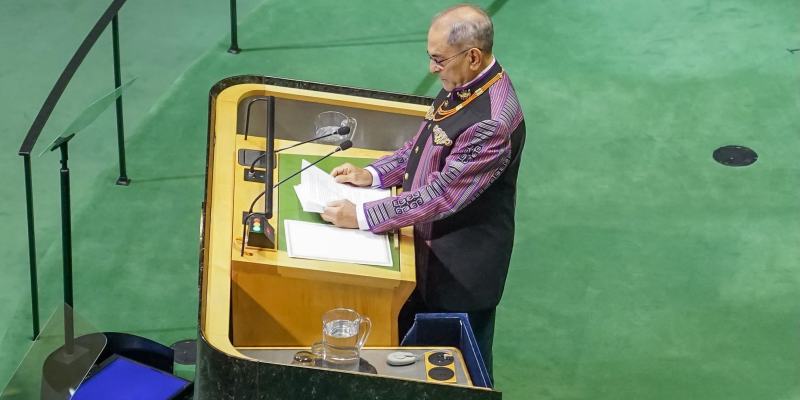
DILI, 16 October 2026 (TATOLI) — Permanent Representative of the Democratic Republic of Timor-Leste to the United Nations, Ambassador Dionisio Babo Soares, delivered a virtual address on October 8, 2026, to graduate students at Seton Hall University’s School of Diplomacy and International Relations, highlighting how international negotiations and multilateral cooperation shaped the nation’s path to restored sovereignty.
Reflecting on the historical struggle, Ambassador Babo Soares emphasized that the journey from empire and decolonisation to sovereign equality demonstrated the vital interaction between international law, political leadership, and global solidarity.
“This is not simply the story of a small nation achieving independence. It is a story about how international law, diplomacy, decolonisation, human rights, political leadership, and multilateral cooperation interact,” said Ambassador Babo Soares.
A Convergence of Theory and Practice
Analyzing the historic milestones—from the 1975 proclamation of independence to the 24 years of occupation and the pivotal Popular Consultation of 30 August 1999—the Ambassador noted that no single international relations theory entirely captures the outcome. Instead, success emerged from a convergence of power shifts, legal principles, and institutional engagement.
“Major diplomatic successes rarely emerge from a single source. Rather, they occur when power, legitimacy, institutions, law, and political leadership converge around a common objective,” he stated.
Highlighting the lessons learned for future diplomats, the Permanent Representative underscored that self-determination succeeds most effectively “when domestic resilience converges with international legitimacy”. Furthermore, he remarked on the nature of diplomatic breakthroughs:
“Successful negotiations are rarely events. They are processes,” noting that “the strongest negotiating position is not always the most powerful; often it is the most legitimate.”
Ongoing Nation-Building and Multilateralism
Reviewing Timor-Leste’s progress since restoring its independence in 2002, Ambassador Babo Soares acknowledged that while democratic institutions, peaceful elections, and global partnerships have flourished, state-building remains an ongoing responsibility. Challenges such as economic diversification, youth employment, and climate resilience continue to demand attention.
Concluding his address, the Ambassador reaffirmed the power of multilateral institutions in safeguarding small states against the arbitrary exercise of power.
“Diplomacy is not merely managing relationships between states. At its highest purpose, diplomacy converts conflict into cooperation, rights into reality, and aspirations into institutions,” Ambassador Babo Soares concluded.
TATOLI