


Foreign Minister Bendito Freitas highlights Timor-Leste’s vision for sustainable development at ESCAP
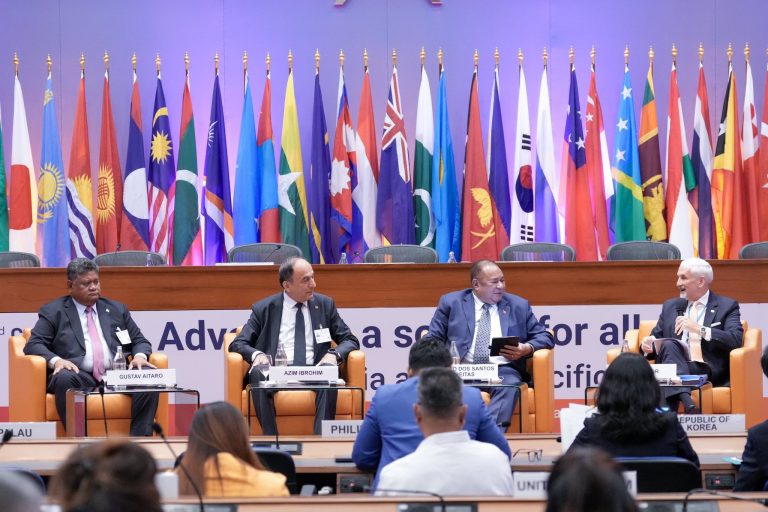
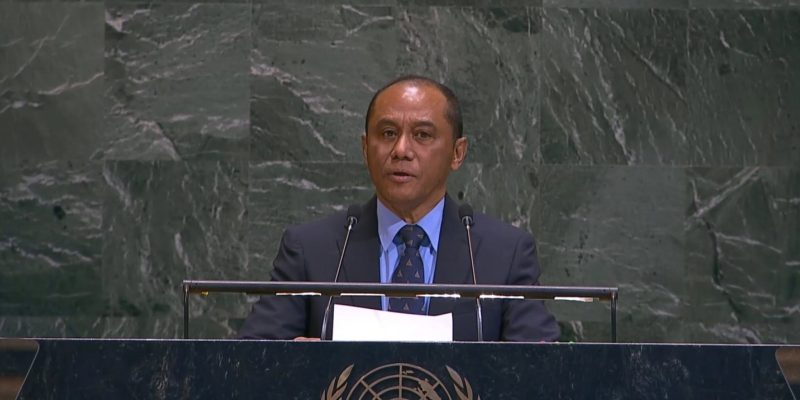
DILI, 22 April 2026 TATOLI) – Timor-Leste’s Foreign Minister Bendito Freitas dos Santos Freitas highlighted Timor-Leste’s vision for sustainable development at a high-level panel discussion during the 82nd session of the United Nations Economic and Social Commission for Asia and the Pacific in Bangkok.
Speaking at the discussion titled “Leaving No One Behind: Advancing a Society for All Ages in Asia and the Pacific,” Minister Freitas emphasized that Timor-Leste stands at the intersection of structural vulnerability and strategic opportunity as a Least Developed Country and Small Island Developing State.
He said that the country’s development pathway is shaped by persistent challenges—including climate vulnerability, geographic isolation, limited economic diversification, and institutional capacity constraints—while also benefiting from significant opportunities such as its young population, strategic location in the Indo-Pacific, and growing regional integration through ASEAN.
Minister Freitas stressed that for Timor-Leste, sustainable development is not merely about economic growth, but fundamentally about building resilience, dignity, and national sovereignty. He underlined the country’s vision to transform from vulnerability to resilience, from dependency to productivity, and from fragility to sustainable prosperity.
In outlining Timor-Leste’s strategic priorities for implementing the Antigua and Barbuda Agenda for SIDS (ABAS) and the Doha Program of Action for LDCs (DPoA), Minister Freitas highlighted five key pillars: economic transformation and productive capacity; climate resilience and environmental diplomacy; human capital and demographic dividend; institutional strengthening and state capacity; and multilateral solidarity and international partnerships. Minister Freitas underscored that Timor-Leste’s accession to ASEAN presents a critical platform to accelerate economic diversification, regional connectivity, and productive integration into regional value chains.
On climate diplomacy, Minister Freitas reaffirmed Timor-Leste’s commitment as Chair of the LDC Group on Climate Change for 2026–2027, stressing that climate justice, adaptation finance, and loss and damage mechanisms are existential priorities for vulnerable countries. Minister Freitas also emphasized that investing in youth, education, health, women’s empowerment, and skills development remains central to unlocking Timor-Leste’s demographic dividend and securing long-term national resilience.
Concluding his intervention, Minister Freitas stated that graduation from LDC status must not be viewed merely as an administrative milestone, but as a genuine development transition supported by resilience-building measures and sustained international solidarity.
Minister B Freitas reaffirmed Timor-Leste’s belief that vulnerability should not define destiny, and that with the right partnerships, strategic investment, and global cooperation, small states can become strong states.
“Timor-Leste remains fully committed to contributing constructively to this shared global agenda,” Minister Freitas concluded.
Journalist: Camilio de Sousa
Editor: Filomeno Martins