


Fear, shame and stigma: Why some survivors never return to school
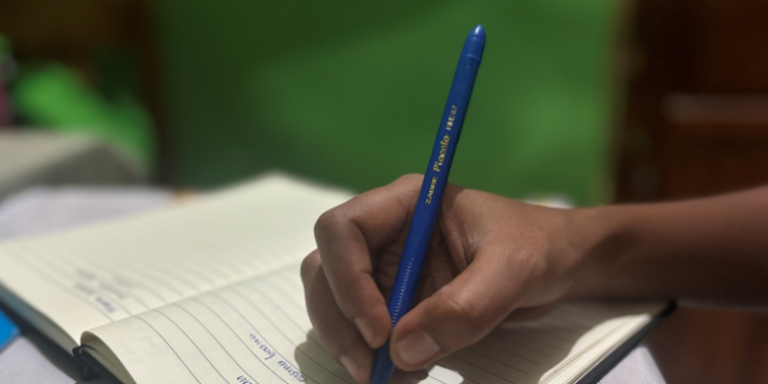
DILI, 11 May 2026 (TATOLI)—After a long night’s sleep, every morning, Maria de Jesus begins her day by cleaning inside a shelter house in Dili. Not many people know that the quiet young woman carries a deep wound that she has carried for the past seven years. A wound not only caused by trauma, but one that also took away her youth, education, sense of safety, and most of her dreams.
Inside the shelter, Maria (not her real name) still keeps her old school books. Books she left behind when her life changed drastically in 2018.
At that time, Maria was only 16 years old and studying at the Third Cycle of Basic Education (Junior Secondary School). She lived in an area in western Timor-Leste with her family. Like many girls her age, Maria only wanted to go to school, play with friends, and think about a simple future in her childhood, with her innocence and own dreams, which were not yet contaminated by the evils of the world.
But everything changed when she became the victim of sexual violence committed by a close family member himself, who should have been a great pillar to protect her from life’s wind and rain. A few months later, Maria became pregnant—a result she was neither capable of nor ready for at her age, let alone resulting from a family member. She recalled that from that moment on, her life became filled with fear and pressure.
“During that time I felt a bit sad because the problem was too big to explain,” Maria told TATOLI.
What made Maria’s heart feel ‘tortured’ and hurt the most was not only the violence she experienced, whether physical or verbal, but also how some people began to look at her. Likewise, how she was considered, treated, and judged. Between the feelings of losing dignity and the psychological effects, both direct and indirect, on herself.
“At the moment of the incident, they were angry. They (the family) said that since she was pregnant, they pressured to hack her and bury her together with the child,” she recalled.
The psychological intimidation made Maria remember how she began to feel ashamed to leave the house. She felt as though everyone’s eyes looked at her full of judgment and contempt. While her friends continued school and enjoyed their youth, Maria stopped school and lived in the darkness of fear, inside an invisible prison built by actions she never expected, never chose, and never dreamed would happen in her life.
“Returning home did not feel good because there was a problem, so I could not walk around freely anymore. I felt sad because during that time I used to go to school with my friends, but in the end, I had to stop halfway through,” she added.
Eventually, Maria left her home and moved to a shelter in Dili. There, she slowly tried to rebuild her life piece by piece, like someone trying to gather broken glass from the ground. However, rebuilding life after such trauma is not an easy thing, as it requires time, patience, and a lot of support.
When trauma makes school feel so far away
In Timor-Leste, education is often seen as the only hope to break the cycle of poverty and build a dignified future, especially for girls. But for survivors of sexual violence, returning to school is not simply an administrative matter or a formality of sitting in a classroom or wearing a new uniform. This is a struggle of the heart that forces them to confront deep trauma, the crushing weight of shame, and the fear of judgment or contempt from a society that often lacks sensitivity, understanding, and empathy for their wounds or pain.
Maria said that during her time at the shelter, she often felt sad and heartbroken when she saw other children going to school while she remained inside the shelter.
“I thought a lot because other people could go to school, but my problems stopped me from going,” she said.
For many survivors, the sense of shame becomes a huge, tall, and strong wall blocking their path to learn and dream again.
For many survivors in Timor-Leste, shame is not just a feeling. Shame becomes a huge wall standing firmly between the darkness of past trauma and the light of the future they want to achieve. Shame acts as an invisible barrier that prevents them from returning to school, regaining control over their own lives, and telling the world that they have a right to a better future.
The Team Leader of The Asia Foundation’s Nabilan Program, Xylia Ingham, said that gender-based violence and sexual violence against women and girls remain widespread in Timor-Leste.
According to her, most cases involve perpetrators known to the victim, including close family members. However, many victims choose to remain silent because they fear bringing shame to their families. Furthermore, they fear that the family’s dignity will become a permanent stain—making them worthless in the eyes of the community.
“Many victims experience long-term trauma; fear, shame, loss of self-confidence, dropping out of school, and social isolation because of stigma from the community,” she said.
She explained that survivors living in shelters may feel physically safer, but they still face mental pressure because they are separated from their families, forced to go through long legal processes, and constantly reminded of traumatic experiences.
Shelters become places to begin a new life
For Maria, the shelter became the first place that gave her the opportunity to regain confidence in herself: renewing her hope, weaving back her bright future which was drowned in past trauma, from her dark story. The shelter helped her find the courage to return to school after two years away, from the 9th grade of Basic Education until she finally completed Secondary School successfully.
“I am grateful to the shelter because it allowed me to continue school again, starting from SMP (junior secondary school) until graduating from SMA (senior high school),” she recalled with hope.
Now Maria works and slowly tries to save money piece by piece, from her own hard work and ‘bitter’ sweat with dignity so that one day she can continue her studies at university, higher education, to also hold onto the light of a bright future like everyone else, even though it takes time and a process. “I want to continue school so I can help my family and pay for my child’s education,” she said, committing to her own dreams and hopes.
Her child, who was born from this tragic event, is now seven years old and in the first grade of primary school.
Although her personal and financial life is not yet stable, Maria has one simple yet meaningful dream: to become a midwife. “I want to help mothers during childbirth.”
Executive Director of the Fundação Forum Comunicação Juventude (F-FCJ), Domingas Perreira, said that many victims who come to the shelter have a strong desire to learn, and some have never sat in a classroom in their entire lives.
“Often through our counseling and our approach with them, when they arrive here (at the shelter) we discover through their stories that they want to study, and some say they have never gone to school/entered school, so the team makes efforts to bring them to school,” she said.
Since 2021, the F-FCJ shelter has run a school package program for victims of sexual violence with support from the wife of the former President of the Republic, Cidália Lopes Mouzinho Guterres, The Asia Foundation, and international organizations such as Plan International.
By 2026, a total of 75 survivors had received assistance to access formal education again through this program. Some have even managed to continue to university.
But, Domingas emphasized, this struggle is not easy. She acknowledged that financial support from the government for the education of survivors remains extremely limited.
“Because sometimes international NGO support can end, so we continue submitting proposals to the MSSI (Ministry of Social Solidarity and Inclusion) so they can assist. We request School Scholarships or School Packages, but they said they cannot do this, so they do not propose funds for this; they only allocate money for their food and drinks, things like that,” she said.
Slow legal processes make victims lose their futures
For the past seven years, Maria has been waiting for justice that still has not arrived. While she waits with a wounded heart, the perpetrator remains free outside, as if nothing happened.
“During this time (seven years), I only went to court twice. Afterward, they said to wait to hear the results, and that’s as far as it went. It could not be resolved; the family could not resolve it, which is why it had to be brought to court to be resolved, but in the end, the suspect has not been detained,” she said.
Executive Director of the Judicial System Monitoring Programme (JSMP), Ana Paula Marçal, confirmed that cases of sexual violence against women and girls remain very high in Timor-Leste. During JSMP’s monitoring in 2025 across four courts in Timor-Leste, there were a total of 747 cases monitored, including 58 cases of sexual violence. Most of the victims were girls.
Ana Paula said one major problem is the very slow legal process. “We monitor, analyze, and look back at cases; an incident might occur in one year, but to be tried in court, the case happens more than three or four years later. Imagine for cases of sexual violation, sexual abuse of minors or children, if it is only tried after three or four years, what is the quality of justice like?”
According to her, the long process forces survivors to reopen old wounds they have been trying to heal.
JSMP also observes that many survivors lose confidence in the justice system because of the lack of sensitivity toward the victims’ psychological conditions.
“But after many years we reopen it; sometimes they (the victims) try to close it, but we reopen it. Because with such a long delay, it’s not just the victim, this also makes the community and ourselves lose confidence in the justice sector if it takes so long,” she said.
The director of the civil society organization also highlighted with concern that there are still some survivors who eventually stop school because of trauma, relocation, and lack of capacity to pay for new school registration fees.
“I believe shelters or networks have already helped, but sometimes they still have to pay for registration fees and uniforms, which must be paid; sometimes shelters have no money and must ask the family. If parents have no money, rightfully MSSI or the Government should look into this and allocate funds for it; we do not want our children to stop school just because of this,” she added.
Many cases reported, but many more choose not to speak out
Data from the National Directorate for Gender Equality Policy under the Secretariat of State for Equality (SEI) shows that from 2023 to March 2026, the Vulnerable Persons Unit (VPU) of the National Police of Timor-Leste (PNTL) recorded a total of 770 sexual assault cases, including 24 cases in the first quarter of 2026.
However, civil society organizations believe the real number could be much higher. Many victims do not report because of fear, shame, or lack of support from their families.
“For some people, sexual violation happened to them from childhood until adulthood; 10 or 15 years is not easy for them to suddenly say the perpetrator is gone so I am fine now. Sometimes they have endured this from a young age until adulthood before finally reporting; we must also look at the severity of the case,” Ana Paula considered.
In addition, The Asia Foundation’s Nabilan Program Team Leader, Xylia Ingham, reinforced that gender-based violence (GBV) remains very common in Timor-Leste, and most cases involve perpetrators known to the victim, including their own family members.
She said many survivors experience long-term trauma, fear, shame, loss of self-confidence, dropping out of school, and social isolation because of community stigma.
“Many victims feel physically safer in shelters, but they still face mental pressure because they are separated from their families and forced to go through very long legal processes,” she said.
According to Xylia, one major challenge is social stigma and family pressure that make victims choose to remain silent. “Many girls are afraid of bringing shame to their families, so they do not report,” she said.
Government presence still considered insufficient
Member of Commission F of the National Parliament, Nurima Alkatiri, stated clearly that the State must guarantee that victims can continue their education even while undergoing legal processes.
She also encouraged educational institutions to be sensitive toward victims and create a safe environment free from stigma or bullying.
“Even if the young sisters are in shelters, it does not mean they cannot go to school while waiting for the process; it is also important for the State and government to see how they can ensure that girls, even while waiting for the judicial process to move forward, can still continue their studies,” she said.
The member of the legislative body also critically assessed that the government does not yet have sufficient resources and sensitivity to handle cases of sexual violence victims.
“I think government resources are still limited in providing assistance for all cases, and efforts have not yet reached that point. I think we do not yet have the necessary sensitivity to focus on this,” Nurima said.
Meanwhile, Deputy Minister of Social Solidarity and Inclusion (MSSI), Céu Brites, defended that the government continues to work together with shelters, schools, and civil society organizations to assist in the reintegration of survivors into the community.
“This is a matter of good coordination; often one does not speak to the other, and some victims who come lack information, so we must help. In terms of support to obtain documentation, MSSI works together with the Ministry of Justice and Local Authorities because they know the communities best,” she said.
The Timor-Leste government itself allocates an annual budget to Social Solidarity Institutions (ISS) across Timor, including shelters, to support their assistance activities.
On the other hand, the President of the Republic of Timor-Leste, José Ramos-Horta, reaffirmed that the protection of women and children must be the State’s top priority.
“What is a priority, priority number one (1) when we hear about and find these victims is to provide protection for them, to seek all means so they can recover and study further. The number one priority in Timor is how we provide stronger protection for infants, children, and much better protection for women to end domestic violence and abuse,” Ramos-Horta said.
“School is hope”
Although her life remains filled with darkness and uncertainty, Maria still consciously chooses to stand firm and look forward with hope. She firmly believes that education is a torch that will light the path to change her destiny and write her new story. Despite the lingering trauma and a heart that is not yet fully healed, Maria still keeps her courage and embraces hope as the strength to face tomorrow with faith.
“If they face a problem like this, they should try to keep standing up so they can become strong women. They must look for ways to file a complaint with the Police so it can be brought to Court and resolved according to the existing law,” she said.
For Maria, school is not just a place to sit inside a classroom. School is the shelter for her dreams and a second chance offered by the world. There, she learns to gather and embrace her dignity again, and renews her belief that her story and life do not end with the tragedy that occurred, but instead transform into a new beginning—a new chapter with its own version and value.
Journalist: Cidalia Fátima
Editor: Rafael Ximenes de A. Belo