


Japan pledges continued support for Timor-Leste’s ASEAN integration
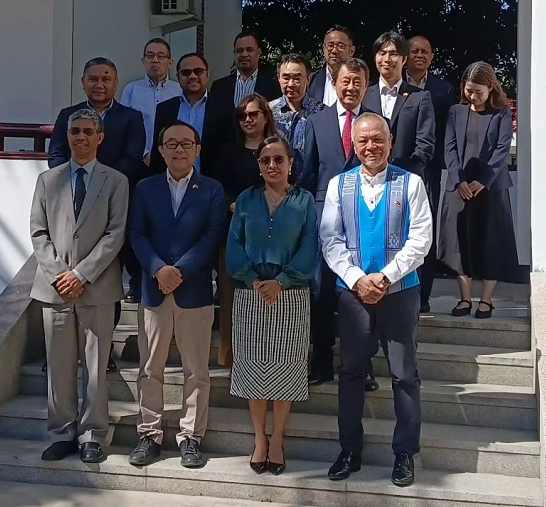
DÍLI, 14 August 2026 (TATOLI) — Timor-Leste and Japan strengthened coordination and cooperation to support Timor-Leste’s integration into the Association of Southeast Asian Nations (ASEAN), as the country prepares for its future responsibilities within the regional bloc.
The commitment was made during the second meeting of the Joint Coordination Committee overseeing a Japan International Cooperation Agency (JICA) technical cooperation project on ASEAN integration.
The meeting was held at the Ministry of Foreign Affairs and Cooperation in Dili and attended by Vice-Minister for ASEAN Affairs Milena Rangel and Japan’s Ambassador to Timor-Leste, Yasushi Yamamoto.
Rangel said the meeting reviewed JICA-supported activities, assessed progress and identified areas for further cooperation through 2027.
She said the discussions also focused on challenges facing Timor-Leste and areas where additional support was needed to meet the country’s commitments as an ASEAN member.
Rangel said the government was continuing to implement its ASEAN integration roadmap, with JICA helping identify priorities and activities for the next stages of the process.
One area of work involves meeting requirements associated with 87 legal instruments covering ASEAN’s three pillars: the Political-Security Community, the Economic Community and the Socio-Cultural Community.
Rangel also highlighted JICA’s assistance in translating ASEAN documents into Tetum and Portuguese and supporting Timorese officials to attend ASEAN meetings and other regional activities.
“During Malaysia’s chairmanship last year, JICA facilitated the participation of several Timorese officials in ASEAN meetings, allowing them to learn how meetings, agendas and protocols are managed,” she said.
She said the practical experience was helping strengthen the capacity of government officials and prepare Timor-Leste for more effective participation in ASEAN mechanisms, including its planned chairmanship of the bloc in 2029.
Rangel said the government was also considering expanding cooperation with higher education institutions following Timor-Leste’s participation in the ASEAN University Network.
She said stronger links between universities, students and academics could increase the involvement of the academic sector in ASEAN-related issues and the country’s broader regional integration process.
Yamamoto said Timor-Leste had made progress in several areas of ASEAN integration but warned that the process would require sustained effort.
He compared the process to a marathon, saying it would continue beyond the immediate goal of preparing for Timor-Leste’s ASEAN chairmanship in 2029.
“It is a long journey, like a marathon. The journey goes first to 2029, with the chairmanship, and then beyond that,” he said.
Yamamoto said Japan would continue supporting Timor-Leste through cooperation and a joint-learning approach.
He identified three priorities for the remaining phase of the JICA project.
First, he said Timor-Leste needed to define its long-term objectives for ASEAN integration and establish clear priorities for the next one, five and 10 years.
Second, he called for closer coordination among development partners to avoid duplication and make more effective use of available resources.
Third, he said Timor-Leste could draw on Japan’s extensive experience of working with ASEAN, including its support for the integration of newer member states through JICA, the Japan-ASEAN Integration Fund and other initiatives.
“During the remaining months, I believe this project can also draw on Japan’s experience to respond to Timor-Leste’s needs,” Yamamoto said.
He described ASEAN integration as a significant new chapter in Timor-Leste’s nation-building, while acknowledging that major challenges remained.
JICA Timor-Leste National Director Daisuke Fukumori said the agency remained committed to working with the government to strengthen institutional capacity and support preparations for the 2029 ASEAN chairmanship.
The technical cooperation project is scheduled to continue until March 2027, during which JICA will seek to maximise its support for Timor-Leste, Fukumori said.
He also highlighted other Japan-backed projects, including the expansion of Nicolau Lobato International Airport, construction of a paediatric care unit at Guido Valadares National Hospital and industrial development cooperation with relevant government ministries.
Although these initiatives are not directly focused on ASEAN integration, Fukumori said they would contribute to Timor-Leste’s broader development and, indirectly, its capacity to deepen regional integration.
TATOLI