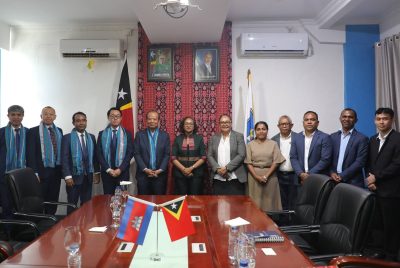




DILI, 23 April 2026 (TATOLI) – In Ermera Municipality, Timor-Leste, the KAMAAN Project is supporting communities in Atsabe to improve nutrition and promote gender equality.
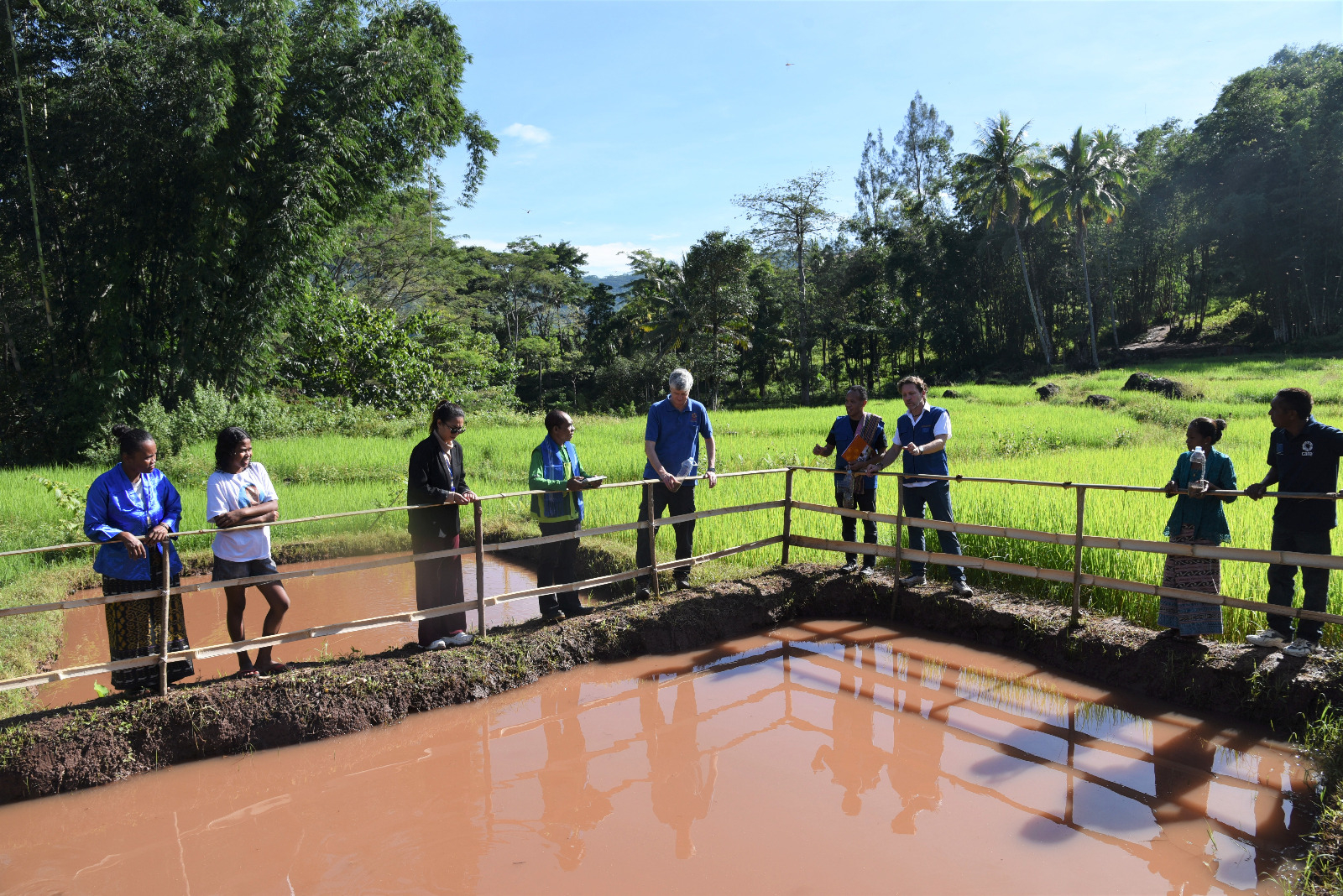
On 21–22 April 2026, Thorsten Bargfrede, EU Ambassador to Timor-Leste, and Peter Goodfellow, Country Director of CARE in Timor-Leste, visited Atsabe to follow the progress of the project, a joint EU–CARE initiative addressing malnutrition and gender inequality at their root causes.
The KAMAAN Project—Komunidade nia Asaun Hamenus Malnutrisaun ba Inan ho Oan is a development initiative funded by the European Union with a contribution of EUR 665,000 (covering 95% of the budget) and implemented to support communities in one of Timor-Leste’s most vulnerable regions. In Ermera Municipality, where child stunting rates remain high, the project aims to contribute to improved nutrition and strengthened community resilience through targeted interventions.
During their time in Atsabe, Ambassador Bargfrede and Mr. Goodfellow met with community members and project stakeholders involved in the implementation of the KAMAAN Project. They met fathers who have taken on caregiving roles, contributing to more balanced household responsibilities. They also spoke with mothers managing nutrition gardens, which support household food production and dietary diversity. In addition, they exchanged with local leaders and health workers, who are supporting the integration of project activities into community practices and local health services.
Reflecting on the visit, Thorsten Bargfrede said: “Walking through Atsabe, we didn’t just see a project, we saw living proof that change is possible. The KAMAAN Project stands as a testament to what can be achieved when the European Union, CARE in Timor-Leste, and communities come together with trust, innovation, and a shared vision. This is what sustainable development looks like in action.”
Peter Goodfellow added: “The KAMAAN project provides a unique opportunity for local people in Atsabe to take action on their priorities in relation to improved nutrition for the next generation. Our visit was not just about seeing progress; it was about listening and recognizing the priorities of the local people who are challenging beliefs and attitudes in relation to nutrition in rural Timor-Leste.”
This visit marks an important step in the implementation of the KAMAAN Project in Atsabe. As the project continues, it aims to support sustainable improvements in nutrition and community resilience, contributing to ongoing efforts to address key development challenges through community-led approaches.
TATOLI